Troy Epoxy Flooring
Charcoal epoxy garage floor in Troy, MI with orange flake.
Troy, Michigan · Epoxy Flooring Pros

Epoxy Flooring in Troy, MI

Showroom-grade garage floor coatings, basement floors, and concrete floor coatings — installed by a local Troy contractor, built for Michigan winters.

One-day install. Indoor, year-round.
Serving Troy and surrounding Oakland County
Booking June installs
Free · 24-hour response

Get Your Free Quote

Response under 24 hours. No spam. Contact info is used only to send the quote.

Free · 24-hour response

Get Your Free Quote

Response under 24 hours. No spam. Contact info is used only to send the quote.

1 DayMost residential garages
4 LayersReal coating system
IndoorYear-round install
24 hrDrive-on cure
Same DayWalk-on cure
Troy, MI · the information you need today

What epoxy flooring is, and why it lasts in Michigan

Epoxy flooring is a durable, seamless resin coating applied over prepared concrete that seals the slab into a smooth, glossy surface water, road salt, gear oil, and brake fluid can't soak into. The material itself is a two-part system, a resin and a hardener that react once mixed and cure into a plastic layer tougher than the concrete it protects. That matters in Troy and the rest of Oakland County for one specific reason: Michigan concrete is subjected to freeze-thaw cycles for roughly six months of the year, and the same road salt that comes in on every SUV tire eats unsealed garage slabs from above and below. Depending on the room, people call it a garage floor coating, a basement floor coating, or a concrete floor coating — the name changes with the space, but the layered resin system underneath is the same.

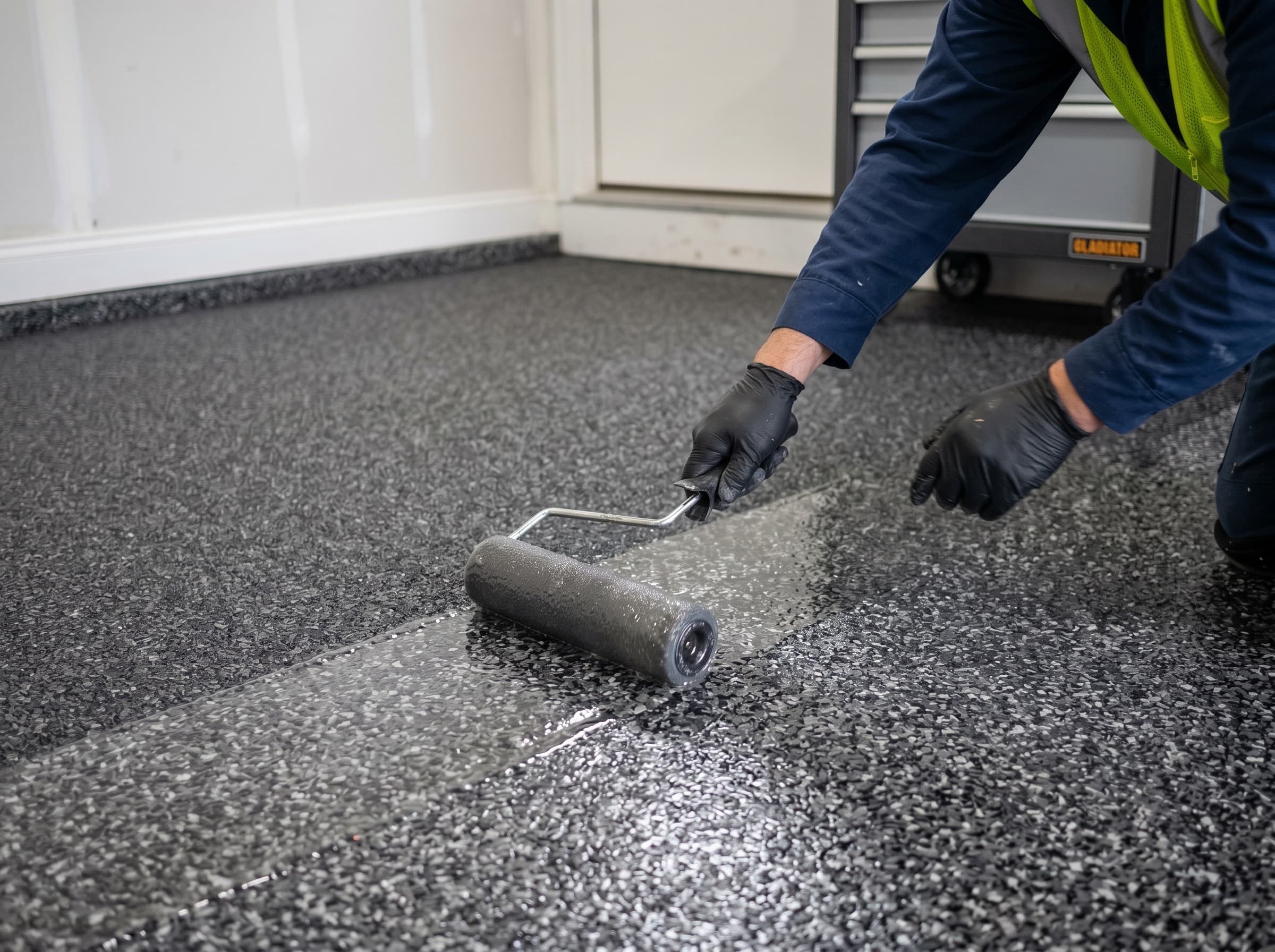
A proper epoxy flooring system consists of four layers, not just one. Start with a primer that prevents moisture vapor from penetrating basement and garage slabs in spring. Over that primer goes a 100% solids epoxy base coat, which forms the structural bond to the concrete. A full vinyl flake broadcast settles into the wet base and creates the depth, the grip, and the textured finish that hides scuffs. The final pass is a polyaspartic topcoat, which cures harder than a commercial floor sealer, stays clear under UV, and lets a vehicle drive on it within 24 hours.

Many retail epoxy kits sold at a big-box store are a single layer of water-based coating. They tend to cure soft, yellow within a season, and pick up hot-tire transfer in the first summer — many peel outright within 1 to 3 years. A professionally installed system, by contrast, holds up 10 to 20 years, and 15 to 20 when the job starts with diamond-grind prep and finishes with a urethane or polyaspartic topcoat. The layered system described above is what a quality epoxy floor install actually uses, and the same stack scales from a 400 sq ft two-car garage to a 1,200 sq ft finished basement to a 10,000 sq ft warehouse — only the materials volume scales up.

Where these floors go

Eight surfaces a Troy, MI coating system covers.

An epoxy floor isn't only for industrial buildings. The same coating stack (primer, base, flake, polyaspartic) works under a car, under a basement living room, and under a forklift. For anyone weighing the wider field of coatings: epoxy is the base chemistry that bonds hardest to concrete; polyaspartic is the fast-curing, UV-stable topcoat we finish every system with; polyurea is a softer, more flexible cousin better suited to crack fill and joint work than to a whole floor; DIY kits are thin water-based versions of the base layer sold without real prep; and interlocking tiles are a floating cover that hides a slab rather than sealing it. Here's how each install looks in practice.

Garage Floor Epoxy

Most Troy garages get the full flake system. The sequence is straightforward: moisture-check the slab, grind to a CSP-3 profile, prime against vapor, base-coat in 100% solids epoxy, broadcast with vinyl flake to rejection, then lock everything under a polyaspartic topcoat. The result is a floor that resists hot-tire pickup, gear oil, brake fluid, and Michigan salt. Drivable 24 hours after the topcoat goes down.

See full garage floor epoxy install detail

Basement Floor Epoxy

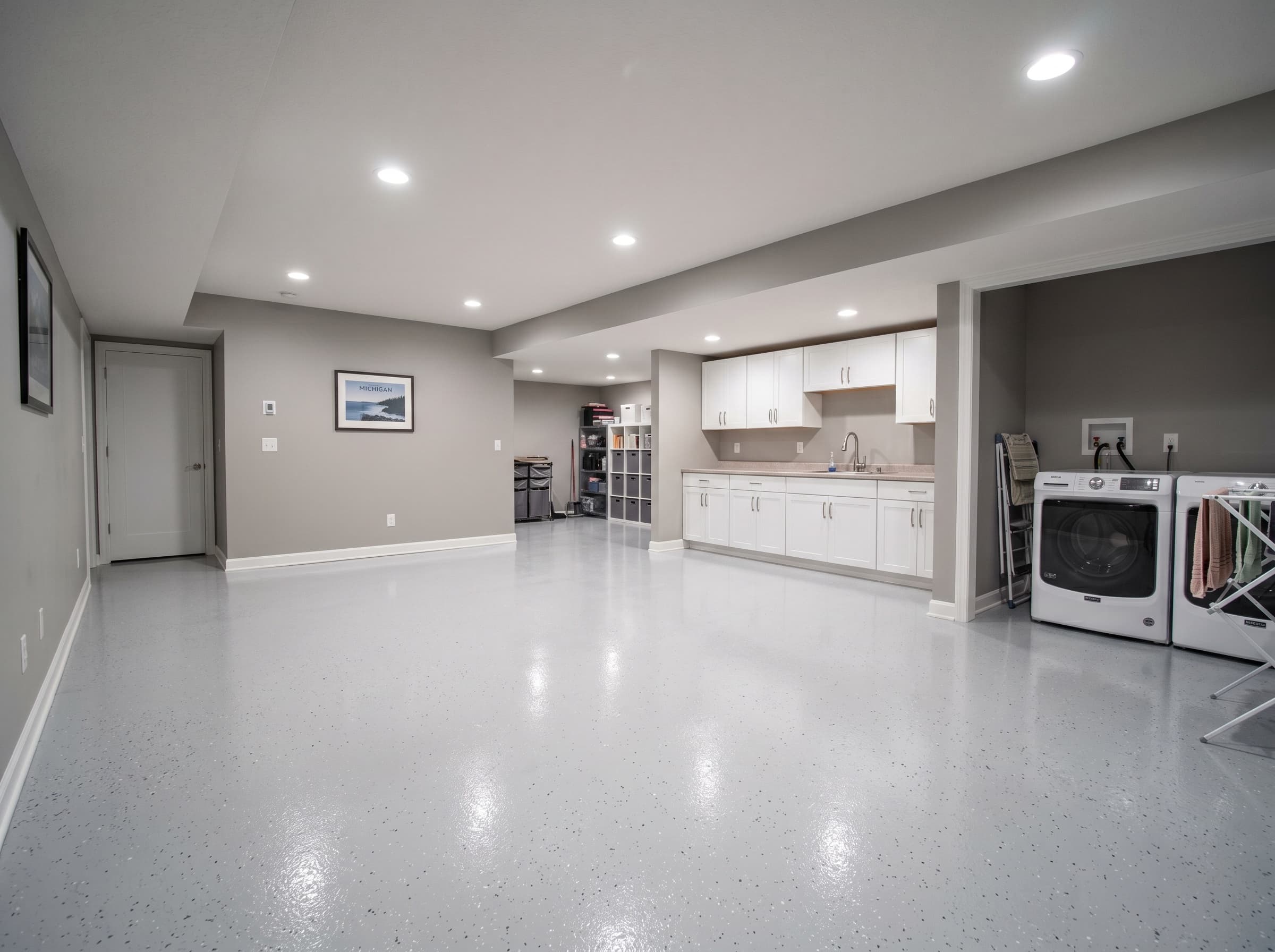
Michigan basements push moisture vapor up through the slab year-round, which is why most paint-and-roll basement floors fail in a season. A proper install starts with a moisture test, then a vapor-mitigating primer rated for the reading, and finishes with a softer slip-rated polyaspartic that holds up under furniture, treadmills, and finished-basement traffic. The floor is walkable the same evening.

See full basement floor epoxy install detail

Commercial / Warehouse Epoxy

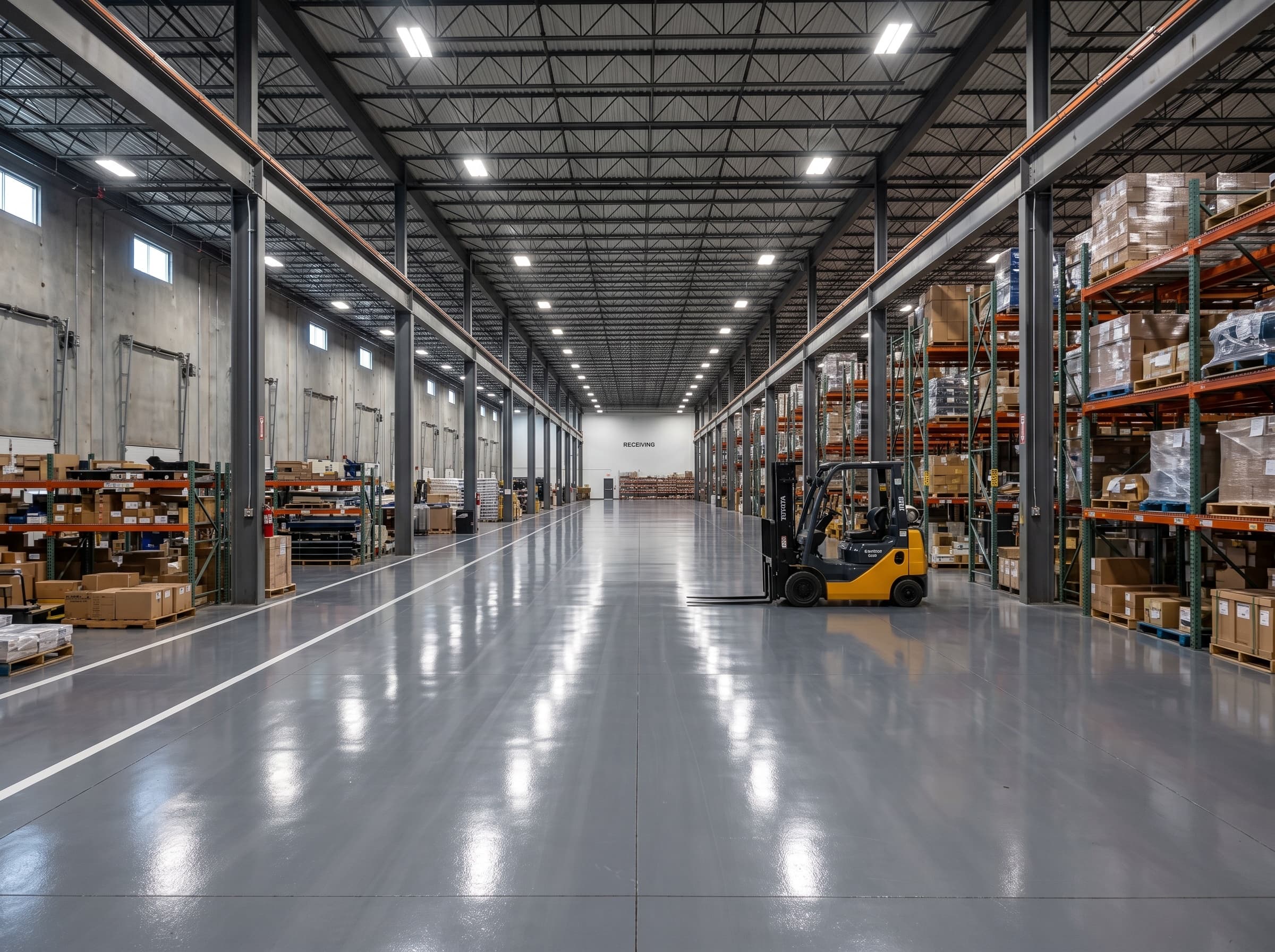
Warehouse and shop floors take forklift skids, oil drips, and weekend-only install windows. Commercial installers typically run weekend and overnight crews to keep the floor open during business hours, install MIL-spec systems rated to 10,000 PSI compressive strength, and stripe-mark traffic lanes inside the polyaspartic. Quoted per square foot after a free site walk-through.

See full commercial / warehouse epoxy install detail

Polyaspartic Coatings

Polyaspartic is the topcoat that makes a one-day install possible. It cures harder than industrial floor sealer in roughly two hours, stays UV-stable so it doesn't yellow under skylights, and bonds chemically to the epoxy base below. If you've had an epoxy floor that turned amber or got tacky in the summer, polyaspartic is what was missing on top.

See full polyaspartic coatings install detail

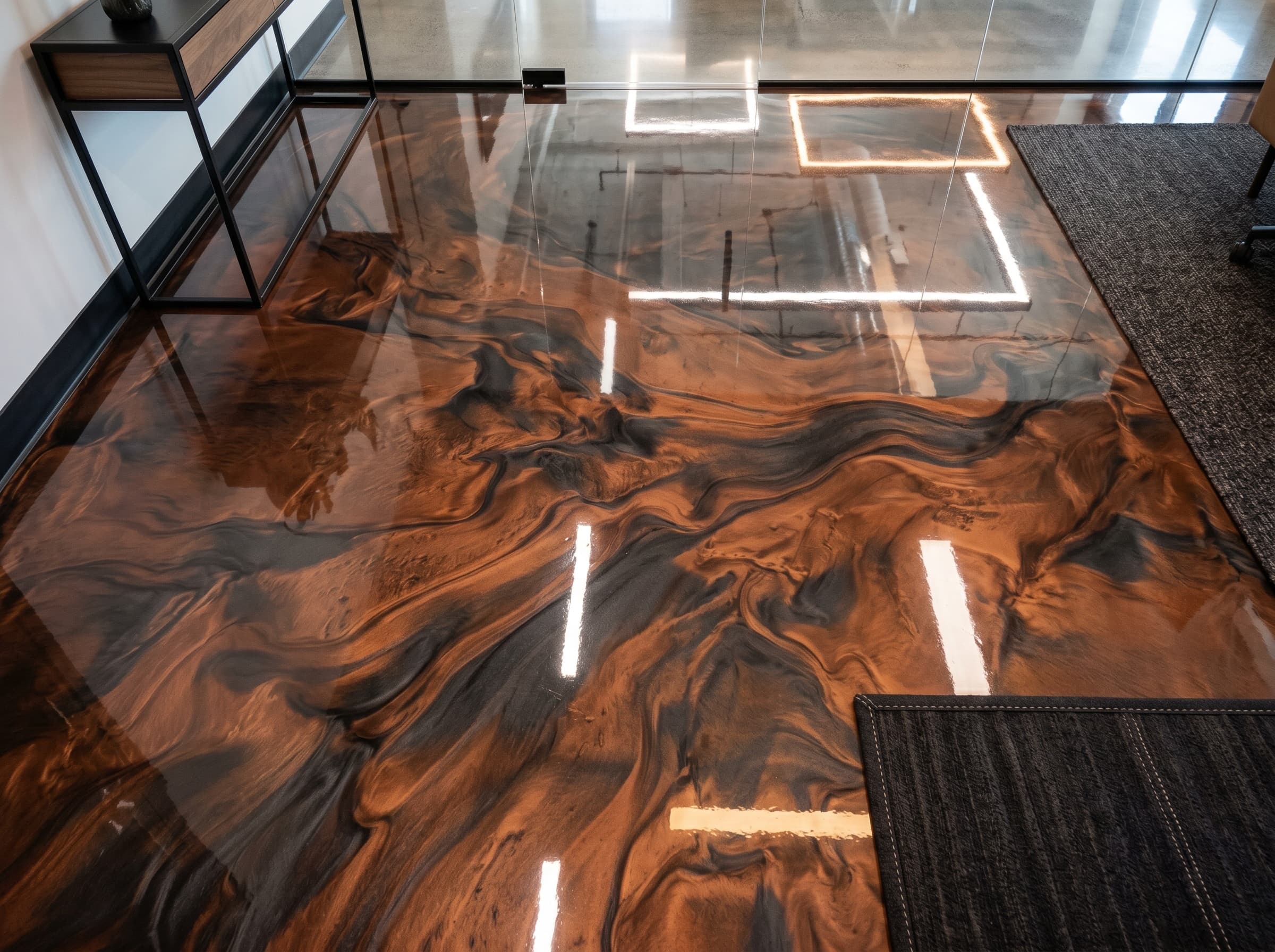
Metallic Epoxy

Metallic epoxy is a designer floor. Pigmented mica is mixed into the resin, then manipulated wet to create a swirled, deep, almost-3D finish. Common pulls are copper-and-charcoal, polished-nickel, and storm-grey. The system is the same four layers underneath; the metallic pigment lives in the base coat. Best for showroom garages, basement bars, and entrance lobbies.

See full metallic epoxy install detail

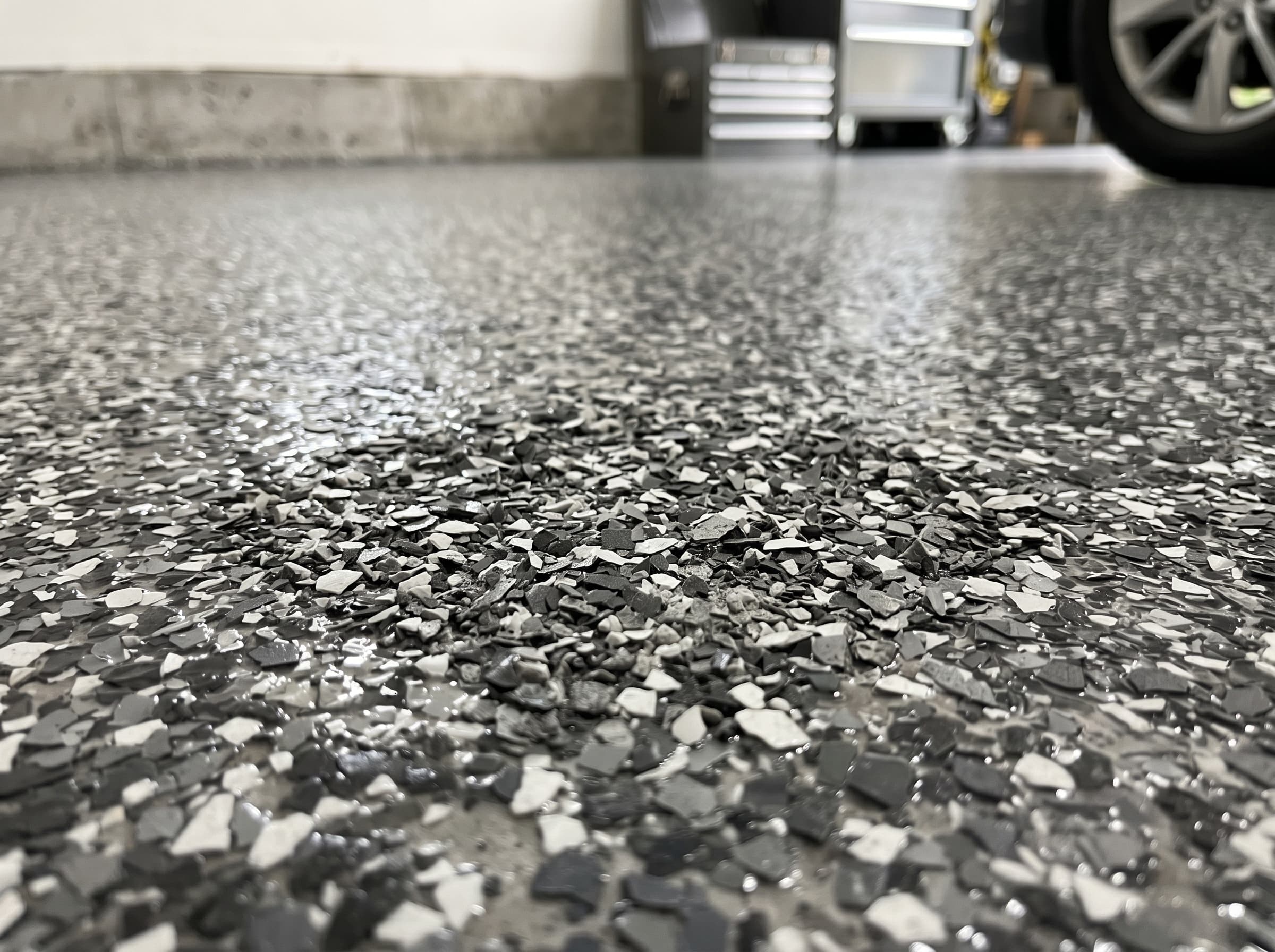
Decorative Flake / Chip

Full-broadcast vinyl flake is the most common residential finish installed in this region. The flake is broadcast to rejection (the wet base disappears under coverage) and then trapped under the polyaspartic. The result: grip, depth, easy cleanup, and a finish that hides scuffs, without the slick look that turns into a bobsled run in winter.

See full decorative flake / chip install detail

Concrete Polishing

Polished concrete is the lowest-maintenance natural floor available. The process diamond-grinds through three to seven progressively finer steps, densifies the concrete with a lithium hardener that chemically locks the surface, then seals it. No coating to peel, no recoat schedule. Just a satin-to-mirror finish that lasts the life of the slab.

See full concrete polishing install detail

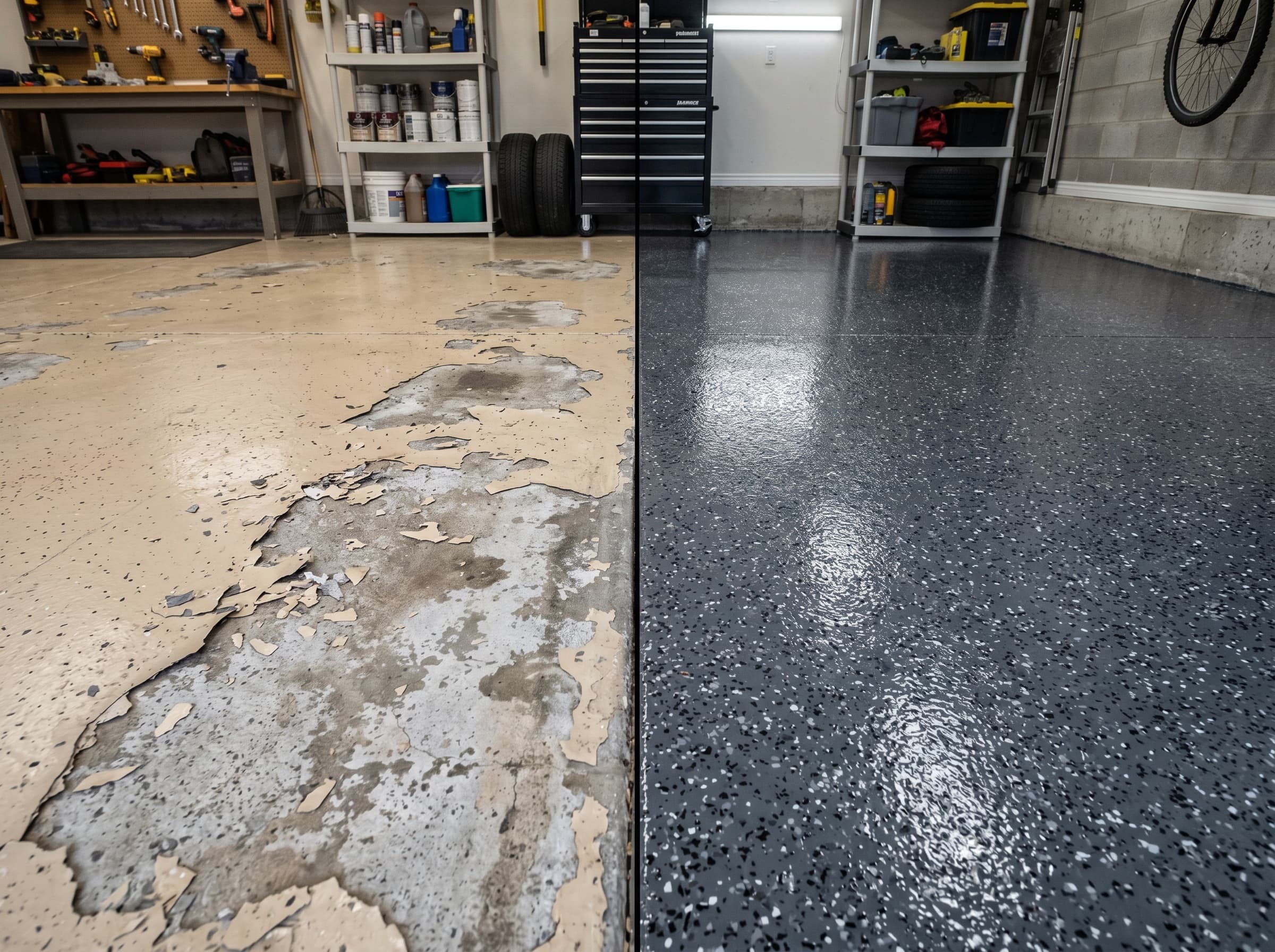
Epoxy Repair and Recoat

If a Troy garage already has a peeled, hazing, or hot-tire-damaged epoxy floor, the fix is a re-grind of the failed coating, slab repair where the bond pulled chunks of concrete with it, and a reinstall of the full coating stack that should have been there the first time. Most repair jobs are one day in and out, and the new floor performs the same as a fresh install on virgin concrete.

See full epoxy repair and recoat install detail
How it works

Quote on Monday. Walk on it by Friday.

STEP 01

Free Quote

Submit a few photos or book a free 15-minute on-site visit. The result: a fixed written quote, not an estimate range.

STEP 02

Floor Prep

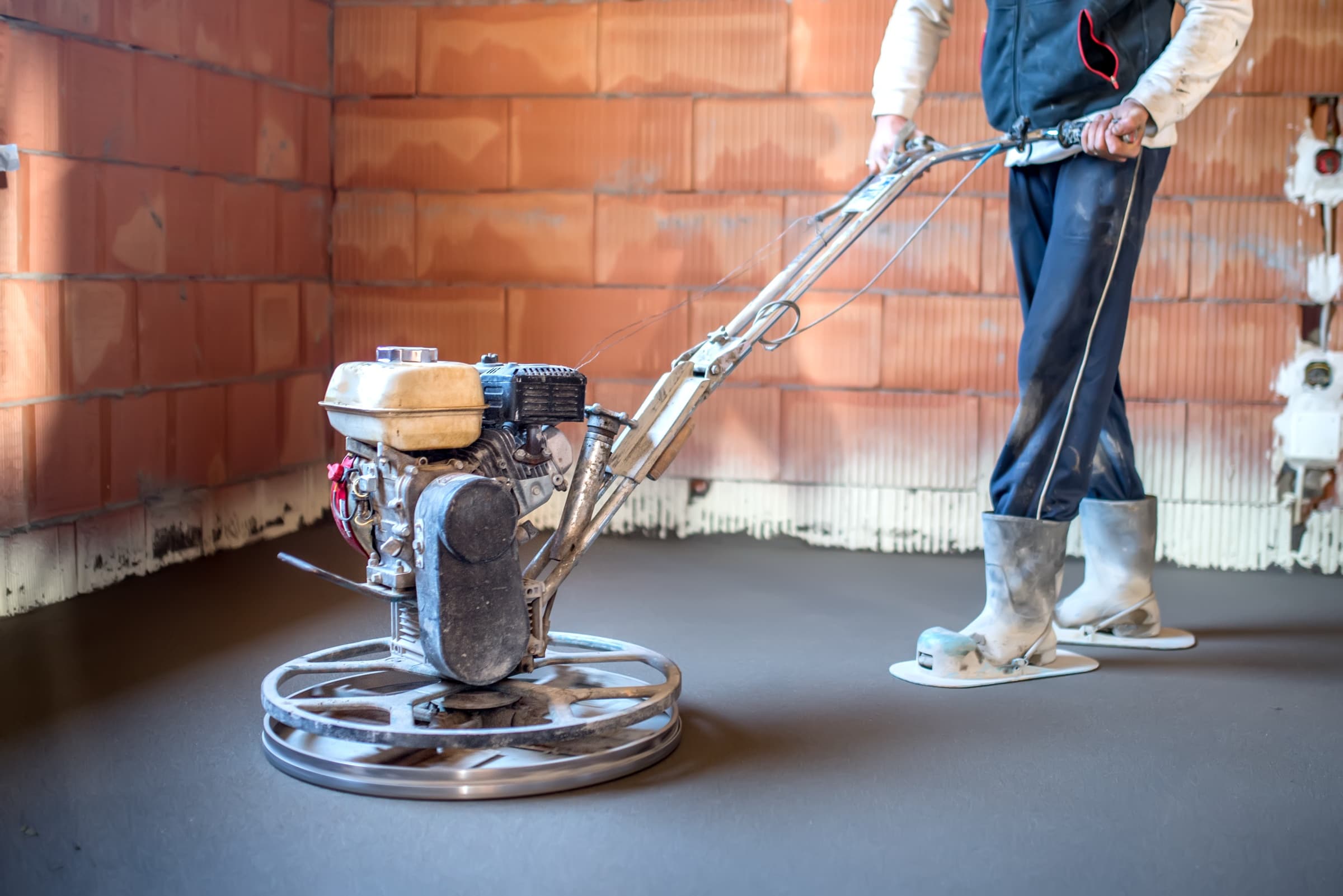
Diamond-grind the slab, patch every crack, vacuum-fill control joints, and prime against moisture vapor.

STEP 03

Coating

100% solids epoxy base, a full flake broadcast for grip and depth, then a polyaspartic topcoat.

STEP 04

Cure & Enjoy

Walk on it the same evening. Park on it 24 hours later.

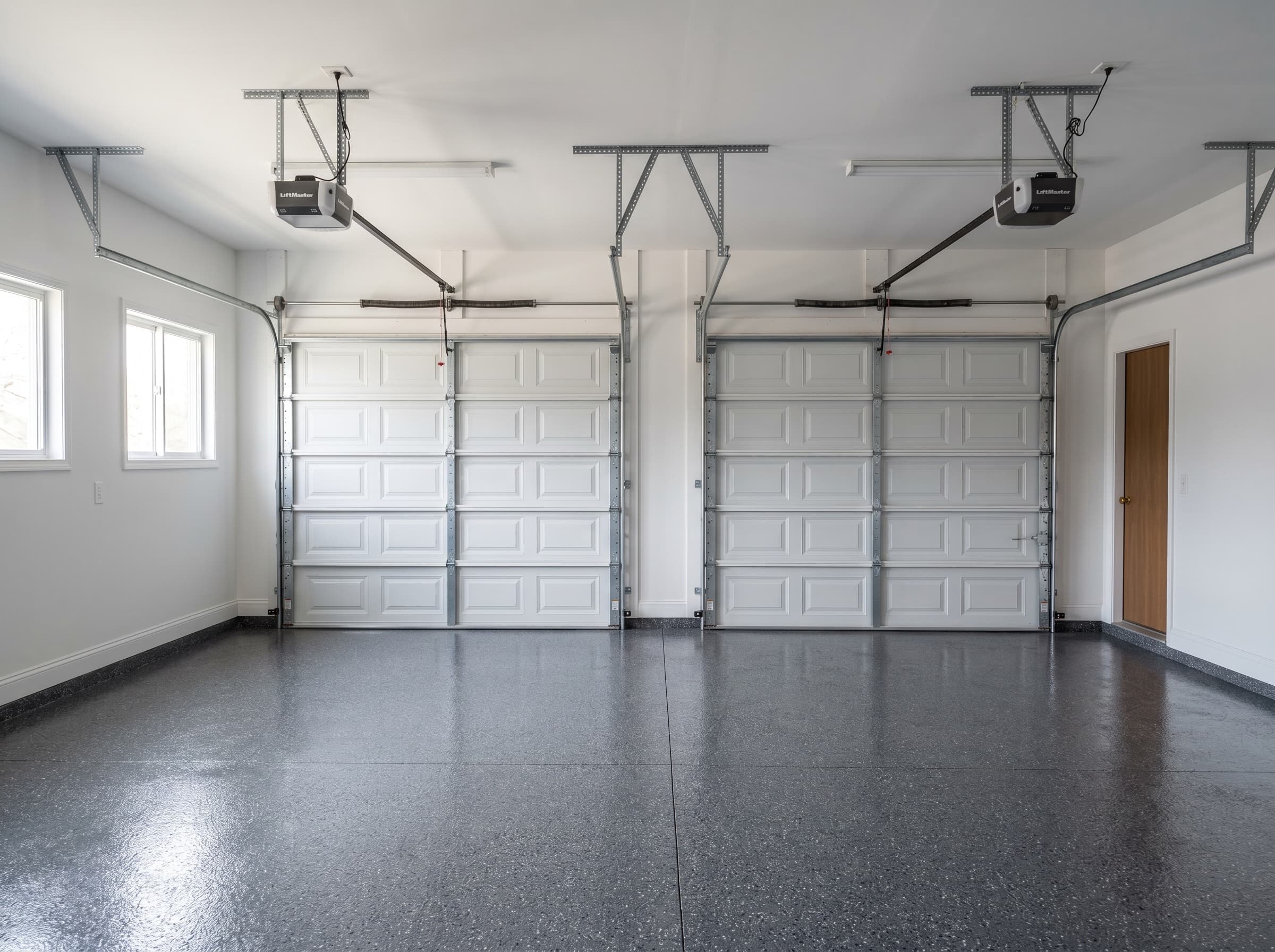
Finished residential garage floor in Troy, MI with a full vinyl-flake epoxy and polyaspartic finish.
Inside a Troy garage

The floor a Troy driveway wants under it.

Most Troy garages start as porous, stained slabs that trap moisture and salt. A garage epoxy flooring install fixes that: after one day of prep and a polyaspartic topcoat, they cure to a glossy, chemical-resistant surface that holds up to road salt, brake fluid, and hot tires.

About Troy epoxy flooring

Why Troy garages need a coating built for Michigan

A Troy garage in February sees freeze-thaw cycles, road salt, and basement humidity all at once. Untreated concrete takes that abuse from above and below the slab, which is why a coating spec'd for a dry Arizona warehouse can peel here within two winters. The standard epoxy flooring in Troy has to meet a higher bar, and the system that meets it is the four-layer install detailed below.

A durable epoxy flooring system is built in four layers, not one. The first layer is a vapor-mitigating primer that handles the moisture rising up through basement and garage slabs in spring. The second layer is a 100% solids epoxy base coat, which forms the structural bond to the concrete. The third layer is a vinyl flake broadcast that settles into the wet base for grip, depth, and texture. The fourth layer is a polyaspartic topcoat that stays clear under UV, cures harder than a commercial floor sealer, and handles the calcium-chloride brine tracked into Oakland County driveways every winter. Most retail epoxy kits at a big-box store skip the first and the fourth, which is why home-center floors fail within two seasons.

Most epoxy floors don't fail because the slab is bad. They fail because the coating wasn't matched to the slab's moisture reading or the salt chemistry it sees every winter.

The service area extends across Troy and the surrounding Oakland and Macomb communities — Royal Oak, Birmingham, Rochester Hills, Sterling Heights, Madison Heights, Ferndale, Auburn Hills, Bloomfield Hills, Clawson, and Warren. A typical residential epoxy flooring install runs one working day: a morning grind, then the base coat and flake broadcast through the afternoon, and the polyaspartic topcoat the following morning. The floor is driveable 24 hours after the topcoat goes down. Basements take one to two days depending on slab condition, and commercial floors get quoted case by case after a site walk-through.

  • One-day install on a standard two-car garage, with a written cure schedule.
  • Indoor work year-round (a portable heater handles winter cures).
  • A vapor-mitigating primer rated for Michigan basement vapor pressure.
  • A slip-resistant flake or quartz finish that's safe for children, pets, and snowy boots.

If a garage, basement, or shop floor is cracking, dusting, or peeling, another coat of paint won't fix it. The slab needs a primer matched to its moisture vapor reading, a 100% solids epoxy base, a flake broadcast, and a polyaspartic topcoat — the full garage epoxy flooring system. As a local Troy floor coating contractor, we can turn a same-week quote around — tap the number above, or send a few photos through the form to request a free on-site visit.

Common questions

Questions Troy homeowners ask

Common questions before booking. If yours isn't here, tap the number above or send a photo through the form.

Plan on 10 to 20 years from a professionally installed system, and 15 to 20 when the slab gets a real diamond grind up front and a urethane or polyaspartic topcoat on the finish. That wear layer cures harder than industrial sealer, which is why salt, warm tires, and the freeze and thaw swing of our winters do not break it down. Big box kits are a different story. They often start peeling within 1 to 3 years, and warm tire pickup is usually where the peeling starts.
Across the market, professionally installed solid color epoxy generally runs $3 to $8 per square foot, with most jobs landing between $5 and $7. Decorative flake systems tend to price at $7 to $12, and metallic finishes at $8 to $15, with slab condition driving most of the spread. Michigan sits toward the lower end of those national figures. Most homeowners here pay around $4 to $7 per square foot for solid color. Treat all of that as market data, not our number. Our quote is a fixed written figure after a free walk through, because the slab itself decides how much prep is in the job.
For a Michigan garage or basement, yes, with one condition. It has to be a full coating system over ground concrete, not a single coat of paint. Built that way, you get a floor that shrugs off salt brine, oil, and slab moisture for 10 to 20 years, wipes clean with a damp mop, and makes the whole room brighter. Where it stops being a good idea is over a slab with an unfixed water problem, or as a one day kit rolled over unprepped concrete. Both of those roads end in a peeled floor and a second bill.
Not the way we build them. A full flake broadcast gives the surface a texture with genuine grip underfoot, and on smooth or high gloss finishes we blend an anti-slip additive into the polyaspartic topcoat, so the floor stays slip resistant even when it is wet with snowmelt. A bare high gloss coating with neither of those can get slick, which is one more reason cheap single coat jobs disappoint in a Michigan winter.
No, and an installer who says yes is setting up the next failure. Epoxy bonds by biting into the open pores of bare concrete, so tile, paint, old sealers, and failed coatings all have to come off first. We grind every floor back to fresh concrete before the primer goes down. That grind is the single biggest reason one floor lasts 15 or more years while another peels in two.
Ready when you are

Get a fixed quote on your Troy epoxy floor this week.

Free on-site walk-through and a one-day install on most residential garages.

Call (947) 218-1225Get My Free Quote
Call NowFree Quote