Troy Epoxy Flooring
Service · Troy, MI

Epoxy Repair and Recoat in Troy, MI

We grind off a peeled, yellowed, or hot tire damaged coating, then reinstall the full system that should have been there. Most of these are done in a single day.

1 day
Typical install time
Free · 24-hour response

Quote: Epoxy Repair and Recoat

Response under 24 hours. No spam. Contact info is used only to send the quote.

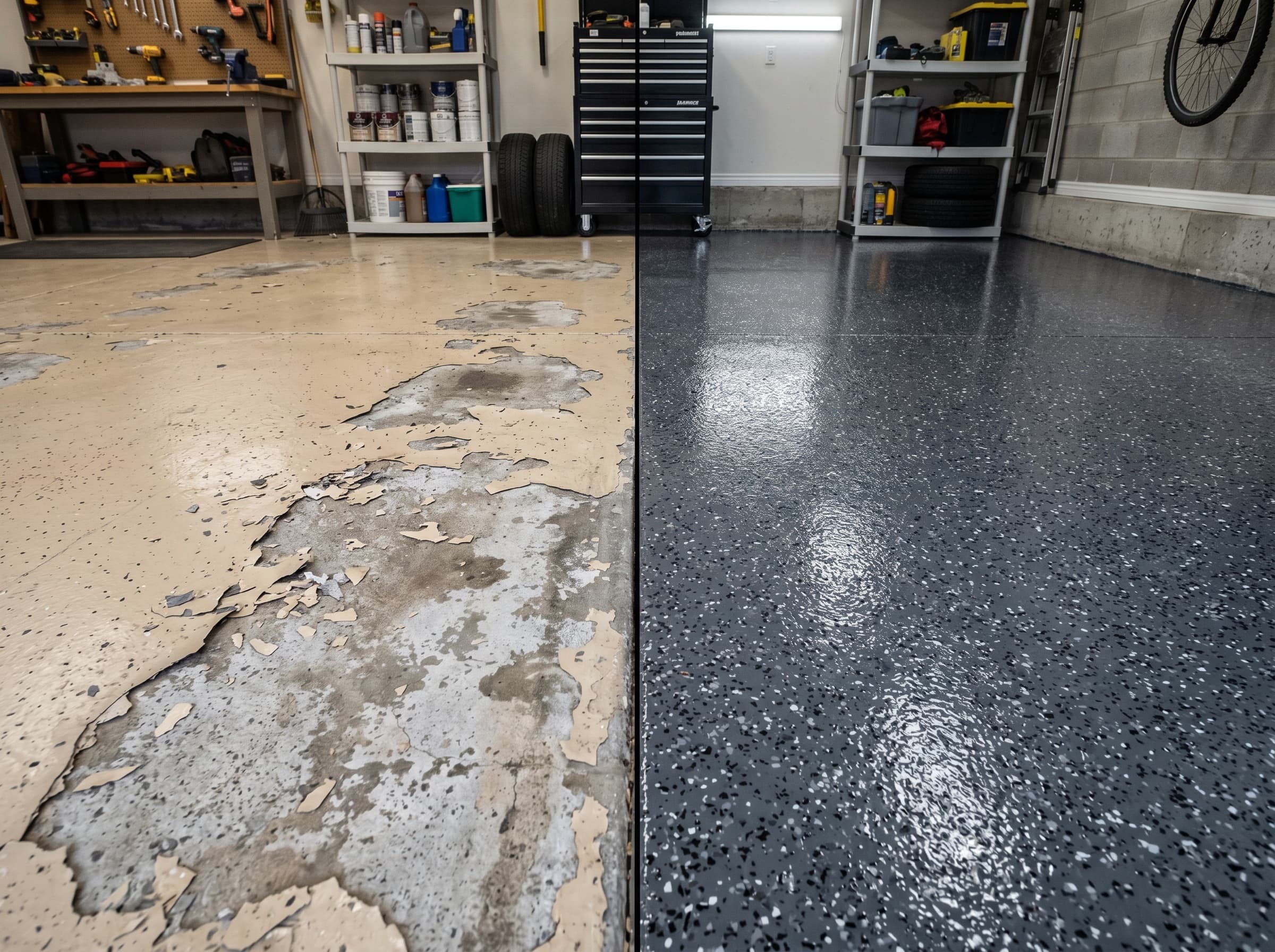
Failed epoxy coating beside a fresh polyaspartic recoat.
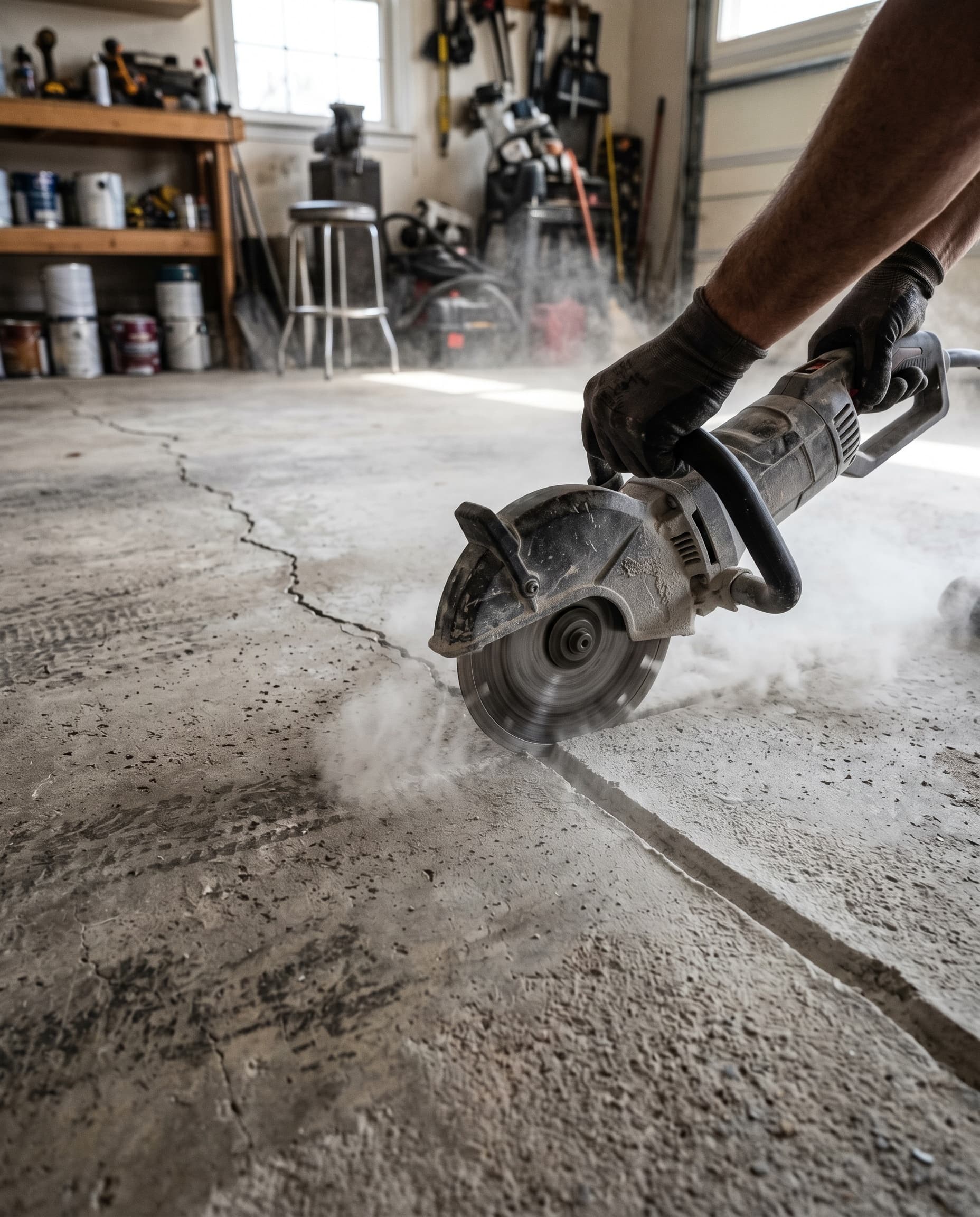
Crack-chase saw opening a hairline crack in Troy concrete slab.
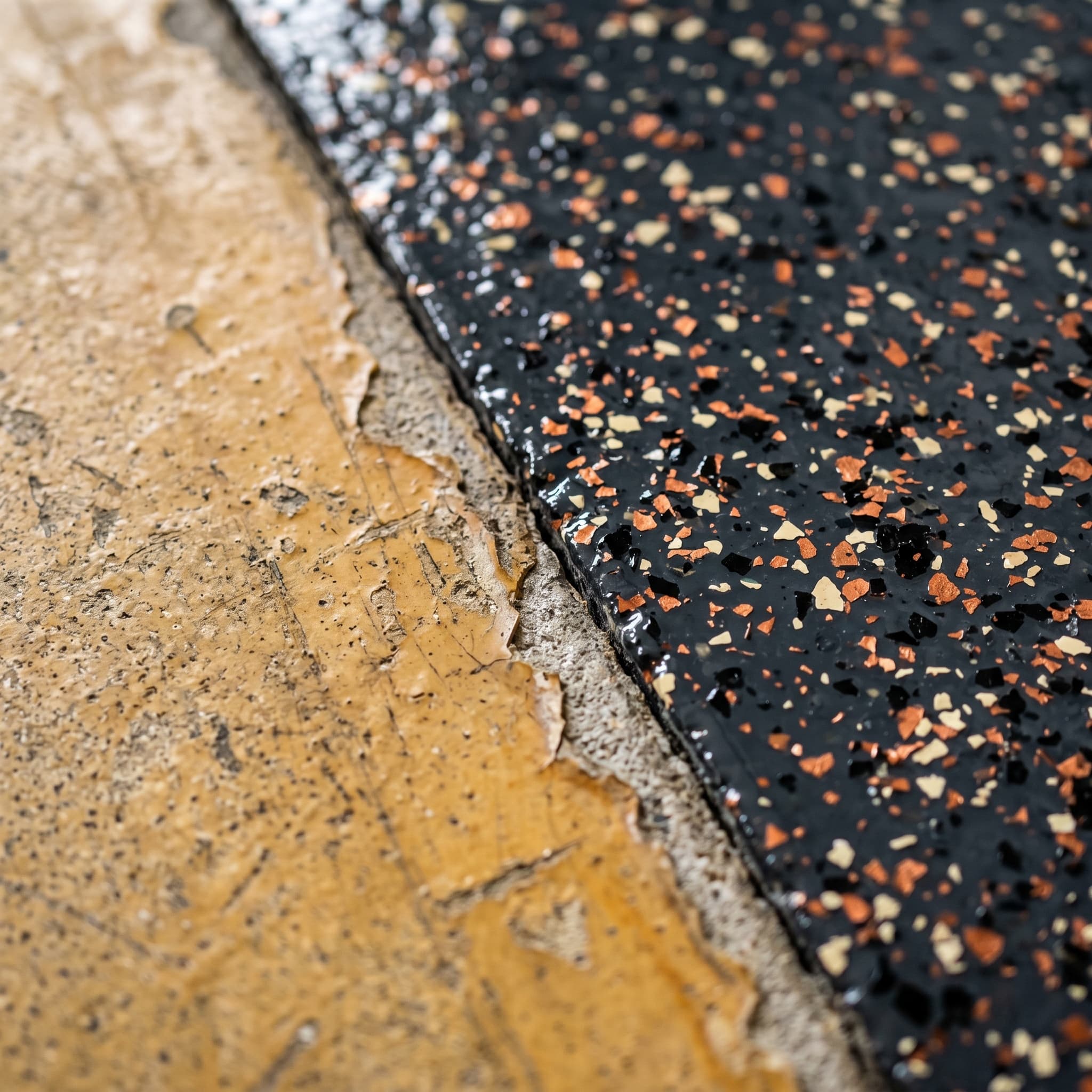
Seam where yellowed old epoxy meets fresh charcoal flake recoat.
Why epoxy repair and recoat

Why most epoxy floors fail in the first place

If a Troy garage has a peeled, chipping, hazed, or tacky epoxy floor, the slab usually isn't the problem. The original coating was. The common failures fall into three groups. Thin water based kits from the chain store peel within 2 to 3 winters. Floors with epoxy alone and no polyaspartic topcoat yellow and get tacky in summer. And floors put down over an unprimed slab with moisture vapor lift in whole sections. All three are fixable. But that only happens once the bad coating comes off.

A real repair and recoat starts with a 12 inch test grind. It shows how the original coating stuck and whether the slab is sound underneath. Most jobs then need a full grind to expose fresh concrete, crack repair where the bond pulled chunks of concrete up with it, and a reinstall using the four standard layers: a primer that blocks moisture vapor, a 100% solids epoxy base, a flake broadcast, and a polyaspartic topcoat. The new floor acts just like a fresh install on raw concrete.

  • A 12 inch test grind before the quote. No guessing.
  • Full removal of the failed coating, not a thin recoat over it.
  • Slab repair for sections where the bond pulled concrete out.
  • Same install steps and same materials as a fresh concrete job.
  • Most one and two car garages: one working day in and out.

A lot of these calls come from homeowners who tried a DIY kit two years ago and now stand on flakes. Others hired a cheap installer who skipped the moisture primer. Both are fixable. Whether to recoat or tear out and replace depends on the slab, and that is why a 12 inch test grind on the walk through is the standard.

A failed epoxy floor isn't broken concrete. It's a wrong coating on good concrete.

If your epoxy floor is failing, send photos through the form. A local installer will book a free walk through with the test grind. Most homeowners are surprised how much the fix saves over a full tear out.
The material

What the 12 inch test grind tells you about the failure

Most failed epoxy floors fail for a few clear reasons. The 12 inch test grind sorts out which one before any quote gets written. The installer marks off a square foot, runs a small grinder over it, and watches how the coating reacts. A coating that peels off in clean sheets after light grinding never stuck well in the first place. That usually means the prep was an acid etch or a pressure wash instead of a real mechanical grind. A coating that pulls chunks of concrete up with it stuck too hard to a slab that was already weak, from water damage, freeze thaw spalling, or old chemical exposure. The easy case is a coating that grinds off in one even layer with the concrete sound below it. The slab is fine. The coating was simply the wrong product for the conditions.

Once the test grind shows the way it fails, the repair goes one of two ways. The common path is a full grind and reinstall. The other is a partial repair with spot slab patching, used only when concrete came up with the old coating. The reinstall uses the four pass system: a primer that fights vapor and is rated for the slab's current moisture reading, a 100% solids epoxy base, a full flake broadcast, and a polyaspartic topcoat. The diagnosis is built into the quote. So the new floor acts just like a fresh install on raw concrete instead of carrying over whatever was wrong with the first one.

  • A 12 inch test grind before the quote, never after.
  • Three ways it fails that the grind identifies: bad prep, weak slab, wrong product.
  • Full removal beats a thin recoat in every case where the first coating failed.
  • Slab patching only when concrete came up with the failed coating, not by default.
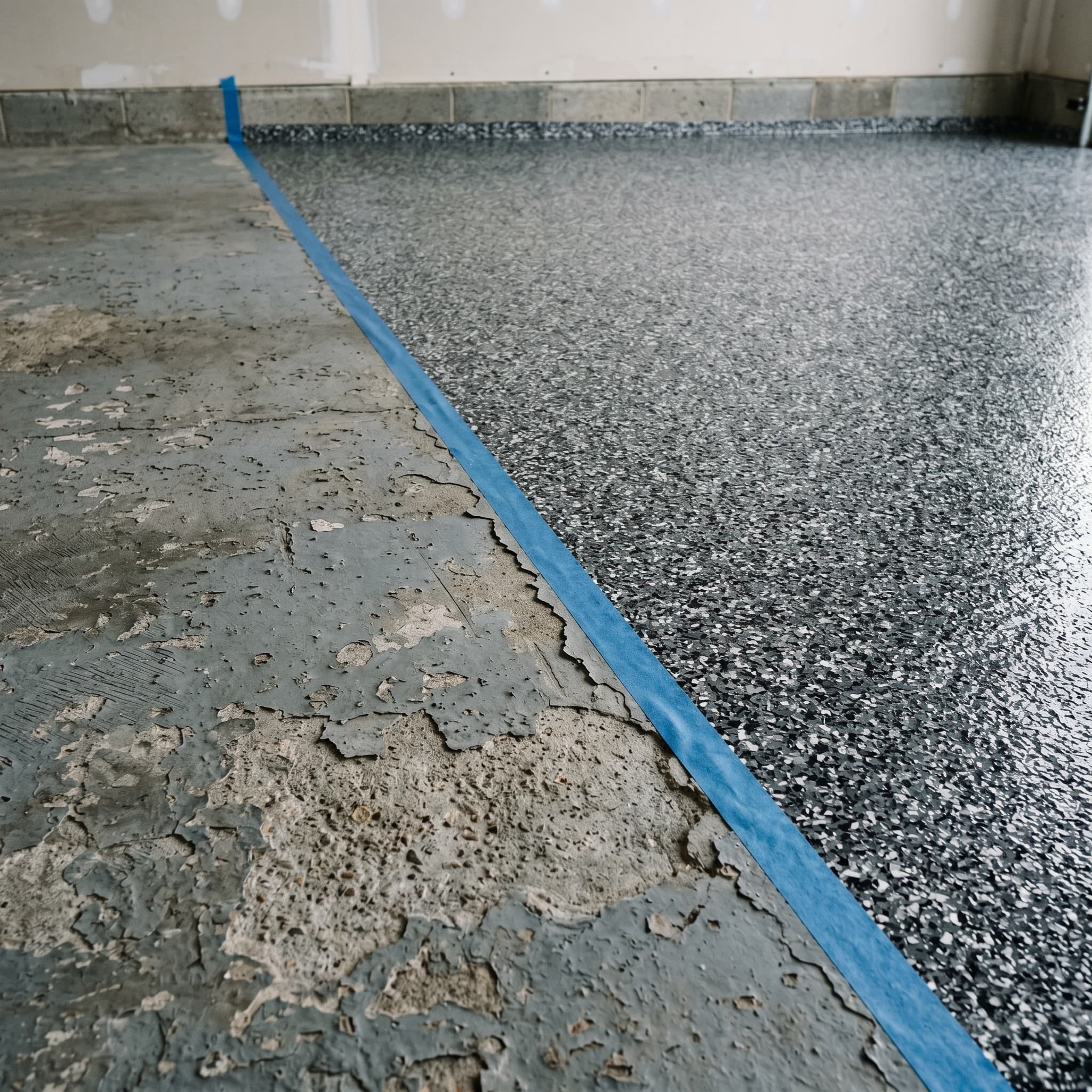
Half a Troy garage floor: failed coating beside fresh recoat.
Wide finished Troy garage after recoat, uniform charcoal flake floor.
Compared to

Recoat options compared, by what they actually fix

When a homeowner has a failing epoxy floor, the bids that come in usually fall into one of the four buckets below. Only one of them actually fixes the underlying problem.

Paint over the failed coating
Cheapest cosmetic fix. It sticks to the failed coating, not the slab. It fails again in 6 to 18 months, with both layers lifting together.
Skip
Thin "refresh" coat over the existing floor
Adds a clear or pigmented sealer over the failed coating. Buys 2 to 3 cosmetic years at most, doesn't fix bond or moisture issues.
Skip
Localized patching only
Acceptable if the failure is one small zone (less than 10 percent of the floor) and the rest is genuinely sound. Rare to be that contained.
Acceptable
Full grind and reinstall
The real fix. It removes the failed coating, shows the way it fails, and reinstalls a system sized for the real conditions. The new floor acts like a fresh install.
Recommended
Tear out and replace the slab
Last resort, used only when the concrete itself is structurally compromised (large settling cracks, deep water damage). Rare on residential garages.
Acceptable
The install

From quote to walk-on, fast.

STEP 01

Free Quote

Submit a few photos or book a free 15-minute on-site visit. The result: a fixed written quote, not an estimate range.

STEP 02

Floor Prep

Diamond-grind the slab, patch every crack, vacuum-fill control joints, and prime against moisture vapor.

STEP 03

Coating

100% solids epoxy base, a full flake broadcast for grip and depth, then a polyaspartic topcoat.

STEP 04

Cure & Enjoy

Walk on it the same evening. Park on it 24 hours later.

Before you book

What to ask a repair and recoat installer before signing

Repair work attracts more shortcut bids than fresh installs because the homeowner already paid for a floor once and is sensitive to price. The questions below catch the bids that will fail the same way the first one did.

Is a test grind included in the quote?

It should be, at no cost. A solid repair installer does the 12 inch test grind during the on site walk through, which takes about 20 minutes, and writes the way it fails into the quote. A quote without a grind rests on what the homeowner can describe, not on what the slab actually shows. That is how repair jobs end up failing the same way the first one did.

If the test grind shows the slab pulled concrete with it, how is that handled?

We patch with a polymer concrete repair compound, let it cure, then grind it level with the slab around it before the new system goes down. Patched spots should disappear once the coating cures, because the flake broadcast above hides them. An installer who coats straight over a spalled slab without patching is skipping a step that will show through the new floor.

Will the recoat color exactly match the rest of the floor (in a partial repair)?

Custom flake blends can be matched closely if the original installer documented the blend, but exact matches are rare. A small patch in a corner is usually invisible after cure. A large patch (more than 20 percent of the floor) usually shows as a subtle shade difference under certain lighting angles. Most homeowners doing partial repairs accept this. Full grind and reinstall avoids the matching problem entirely.

What coverage applies to a recoated floor?

A solid installer stands behind the new system for the same span as a fresh install, as long as the moisture reading and prep were right. That coverage does not include the first failure coming back if the real cause was never fixed, like heavy basement moisture or repeat chemical exposure. Ask the installer to put in writing which ways of failing the coverage does and does not include. A clear answer in plain language is the sign you want.

What if the failure was caused by something we can't fix, like a wet basement slab?

An honest installer will say so before quoting. Coating over a slab with chronic moisture is a sure repeat failure within a few years. The fix there is the drainage or a vapor barrier, not the coating. A walk through that names the deeper problem and tells you to fix it first, sometimes through a different contractor, is the sign of a solid installer. One that just keeps quoting another coating job is selling you something that will not last.

After the install

Keeping the recoat from failing the same way

A recoated floor needs the same care as a fresh install, with one added habit. The way the first floor failed usually points to a habit or a condition that helped break it. If it peeled from basement moisture, the new floor still needs the dehumidifier and sump pump running. If it failed from chemical exposure, like battery acid or raw degreaser, the spill habit has to change. The recoat itself is built to last. Whether it lasts depends on whether the conditions that broke the first one were truly fixed.

  • Run the dehumidifier in basements every season, especially spring and early summer when slab vapor peaks.
  • Keep entry mats at every doorway. Salt grit fed most garage floor failures even when it wasn't the headline cause.
  • Catch oil, brake fluid, and antifreeze spills the same day. Sitting overnight is when the chemistry starts to eat the topcoat.
  • Do a quick visual check at every season change for new efflorescence, fine cracks, or a dulling coating. It catches a repeat problem in the first year instead of the fifth.
  • If anything starts to look off, call the installer right away. Issues in the first year are usually covered, while problems years later are not.
See the work

What a repaired and recoated floor looks like

Failed epoxy coating beside a fresh polyaspartic recoat.
FAQ · Epoxy Repair and Recoat

Common repair and recoat questions

A properly installed three coat polyaspartic system on a home garage in Michigan usually lasts well past a decade before it needs any recoat. The wear layer is harder than industrial sealer. That hardness is why salt, warm tires, and the freeze and thaw swing of our winters never break it. Cheaper single day kits from a chain store tend to fail inside two or three winters, because they skip the moisture primer and lean on a softer topcoat.
Epoxy is the base layer that bonds to the concrete. Polyaspartic is the topcoat that adds UV stability, chemical resistance, and a fast cure. A floor that is epoxy only stays softer, yellows in sunlight, and stays tacky longer while it sets. A good install uses both, so an epoxy primer grips the slab and a polyaspartic top lets a car roll back in within a day. Most quality crews in Michigan run that same stack for that same reason.
The number rests on three things. Those are square footage, slab condition, and the finish you pick. A slab with deep cracks, oil soaked spots, or moisture trouble adds prep work, and that prep raises the cost. Metallic and heavy flake finishes sit at the upper end. You get a fixed written quote after a free walk through on site, with no vague ranges and no surprise extras once the crew starts. Most honest crews will not post a price per square foot, since that figure misleads anyone before they see the actual slab.
Yes, and the season barely matters. The whole job happens indoors. As long as the garage holds around 55 degrees while it cures, the coating sets fine. Most winter jobs run a portable heater for a few hours during the topcoat stage. Spring and fall stay the busiest stretch for crews around here, so a winter slot often books faster for a Troy homeowner who wants the floor done before the next salt season rolls in.
Warm tire pickup is the failure that quietly ruins cheap epoxy coatings. A polyaspartic topcoat cures harder than the rubber of a tire. Because of that, it stays locked to the base coat even after a long summer drive. Many quality crews fold a first year callback into the work for tire transfer or any lift, so it pays to ask each crew about their callback policy before you sign anything.
Ready when you are

Get a fixed quote on your Troy epoxy floor this week.

Free on-site walk-through and a one-day install on most residential garages.

Call (947) 218-1225Get My Free Quote
Call NowFree Quote