Troy Epoxy Flooring
Service · Troy, MI

Basement Floor Epoxy in Troy, MI

What it takes to coat a Michigan basement floor that won't peel next spring.

1-2 days
Typical install time
Free · 24-hour response

Quote: Basement Floor Epoxy

Response under 24 hours. No spam. Contact info is used only to send the quote.

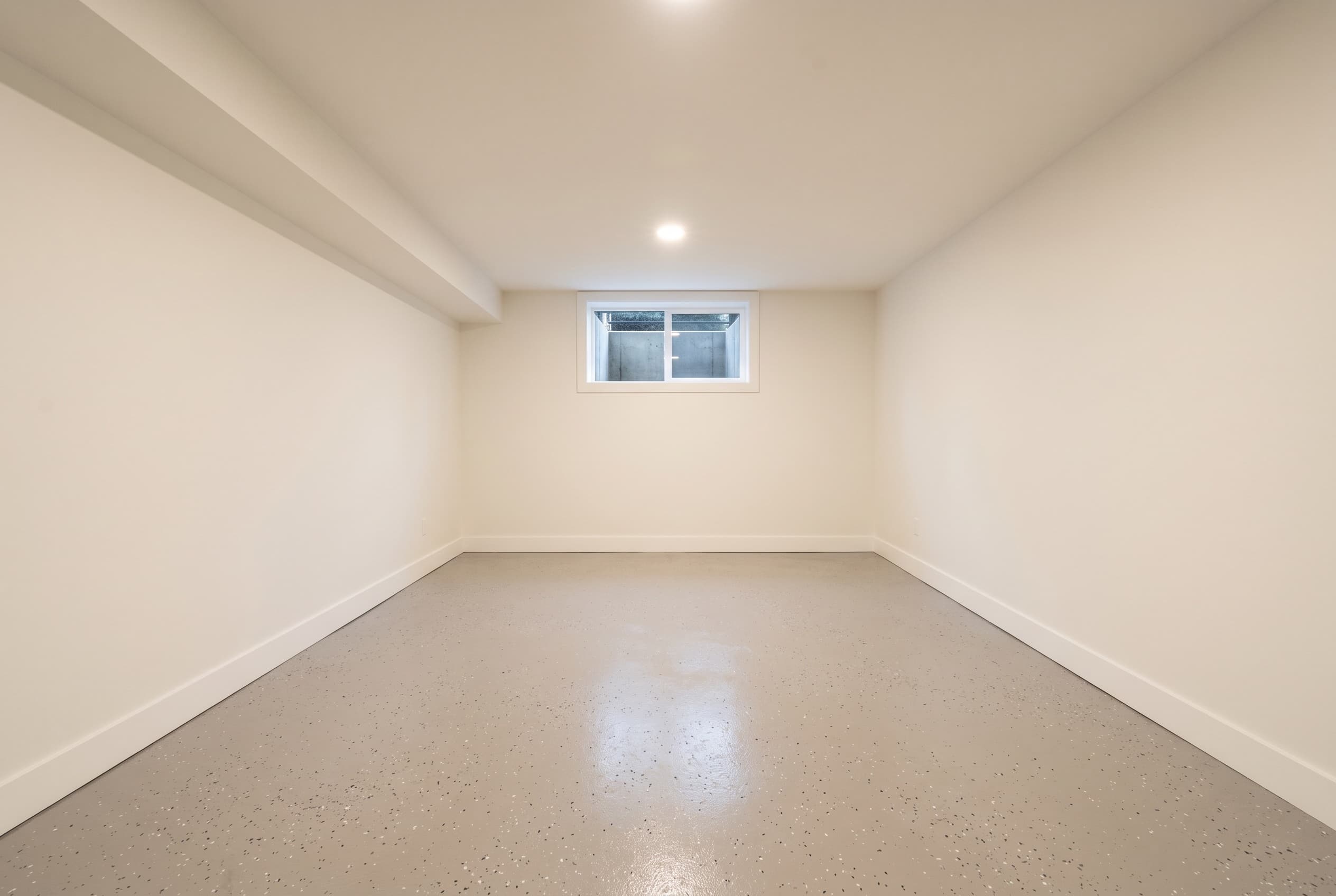
Finished Troy basement with warm grey vinyl-flake epoxy floor.
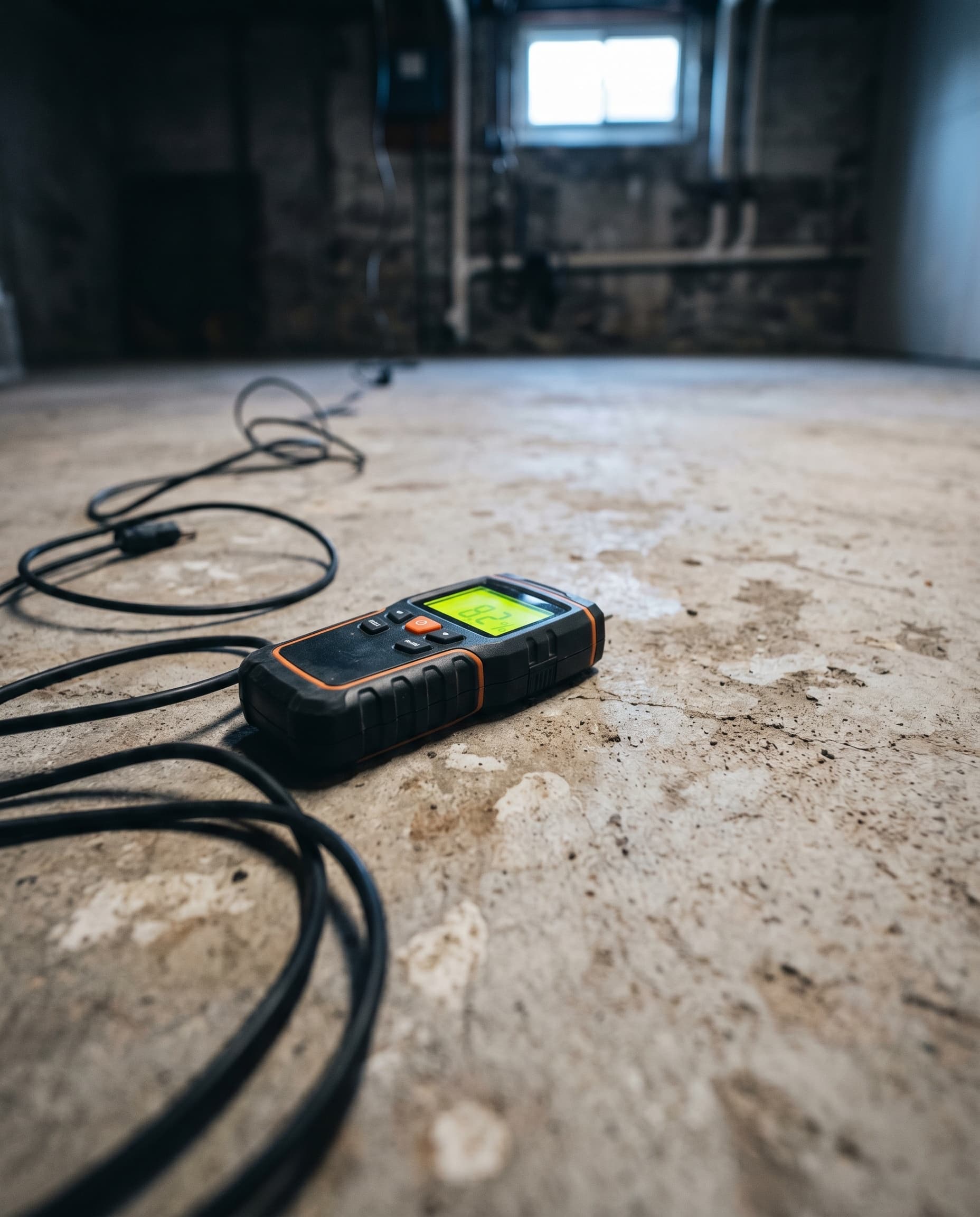
Moisture meter testing vapor on a bare Troy basement slab.
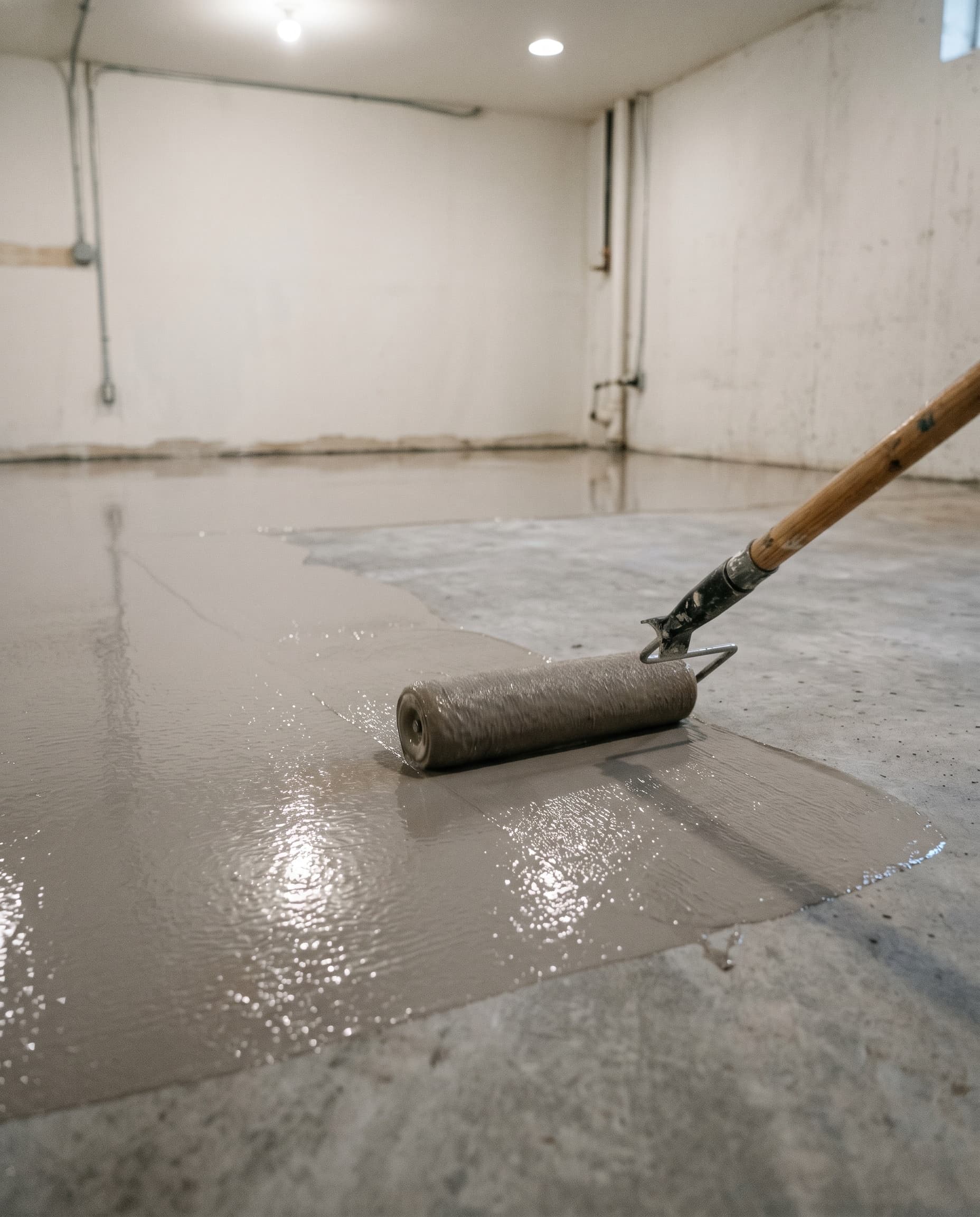
Roller applying warm grey epoxy base on basement slab.
Why basement floor epoxy

Why basement coatings fail, and what a proper install does about it

A Michigan basement pushes moisture vapor up through the slab all year. That is why most painted floors fail in a season. It is also why peel and stick tile lifts at the seams. The slab is rarely the problem. The coating simply was not built for the real vapor reading. Put a cheap coating over a basement floor with no primer and you pay twice, once for the coating and again for the tear out when it fails.

A real basement install starts with a calcium chloride moisture test, then a primer rated for the vapor pressure that is actually coming up through the slab. Over that goes a 100% solids epoxy base in a light grey or beige, because a basement needs to feel bright. Then comes a partial flake broadcast for grip or a smooth polyaspartic, depending on how the room gets used. A finished basement with a carpeted seating area usually gets the finer flake. A utility room with washer and dryer traffic gets the standard system.

  • A primer that holds back moisture, matched to the slab's real vapor reading.
  • A light grey or beige base brightens the room instead of darkening it.
  • Slip rated polyaspartic stays safe under furniture, exercise gear, and pets.
  • You can walk on it the same evening, and it is ready for furniture in 24 hours.
  • A good crew brings a dehumidifier and exhaust fans so the odor is gone before the day ends.

Most basement coating jobs across Troy and the rest of Oakland and Macomb run one working day. Plan on two days when the slab needs real crack repair before the primer can go down. A walk through is the only honest way to quote a basement.

Basements don't fail because the slab is broken. They fail because the coating wasn't sized for the moisture.

If a basement has water staining, efflorescence (the white salt residue), or an old coating that already peeled, a free walk through with a local installer will find the cause and quote a real fix.
The material

Why a basement system isn't a garage system in a lighter color

Concrete in a Michigan basement is a different problem than concrete in a garage. The slab sits below grade, surrounded by soil that holds water, so it spends every season trying to release moisture vapor upward. A coating that ignores that vapor has nothing to bond to, because the moisture keeps pushing it off from below. It also traps humidity against the slab, and that is what creates the mildew smell some basements pick up after a cheap coating goes down. A thicker coating will not fix it. The fix is a coating chemistry rated for the real vapor pressure coming off that one slab.

The install starts with a calcium chloride moisture test. A small disc gets taped to the slab for 60 to 72 hours, and it gives a vapor reading in pounds per thousand square feet. That number picks the primer. A light reading takes a standard primer that tolerates moisture, while a heavy reading needs an epoxy built to hold the vapor back. Over that primer goes a 100% solids epoxy base in a light grey or warm beige, since a basement needs to feel bright. Then comes a fine partial flake broadcast or a smooth polyaspartic, based on whether the room has carpeted seating, exercise gear, or laundry traffic.

  • A calcium chloride moisture test picks the primer, so nobody is guessing.
  • A light grey or warm beige base brightens the room instead of darkening it.
  • Fine flake adds grip without the rough texture of a garage floor.
  • The polyaspartic topcoat seals against humidity and stays UV stable under skylights.
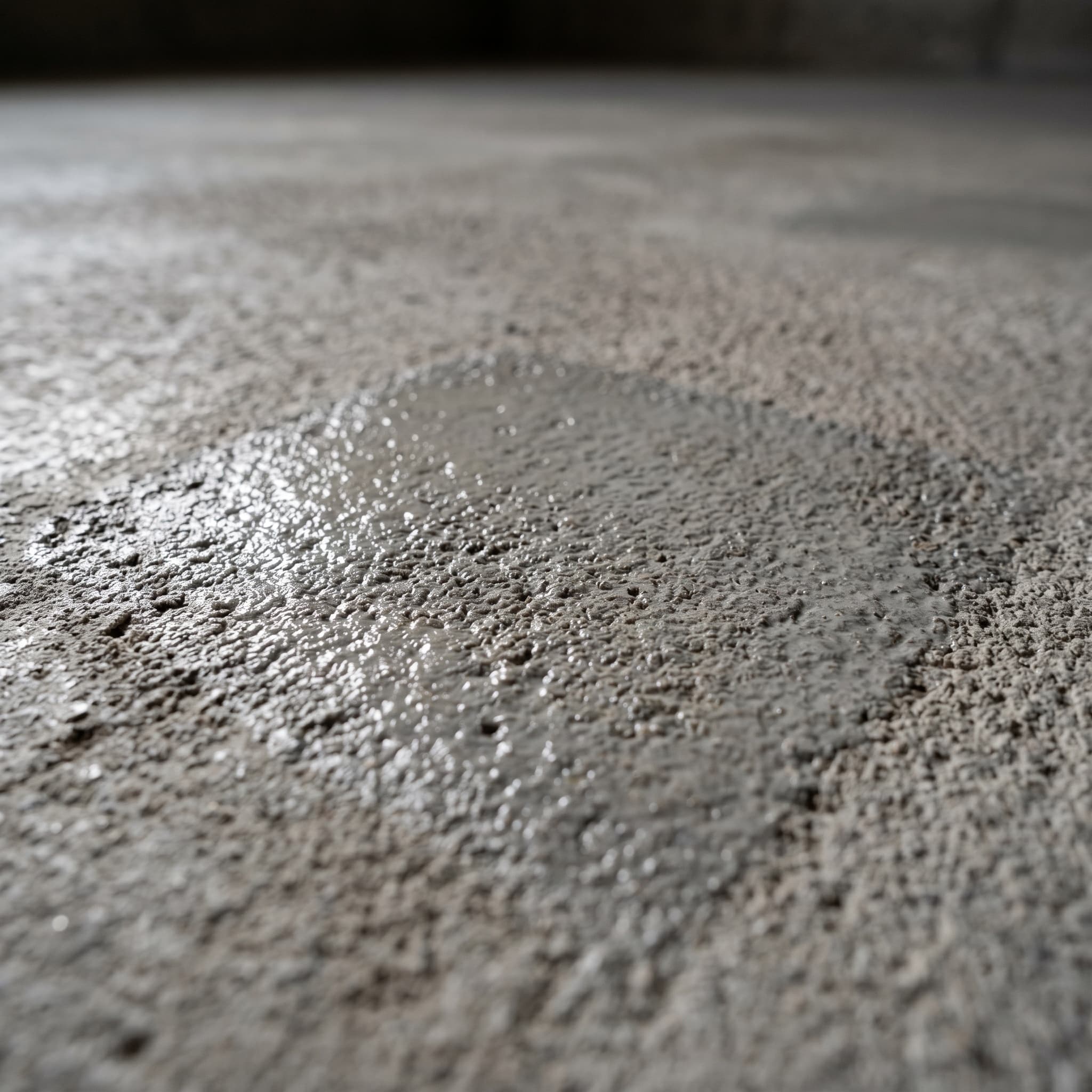
Macro of moisture-mitigating primer curing on bare basement concrete.
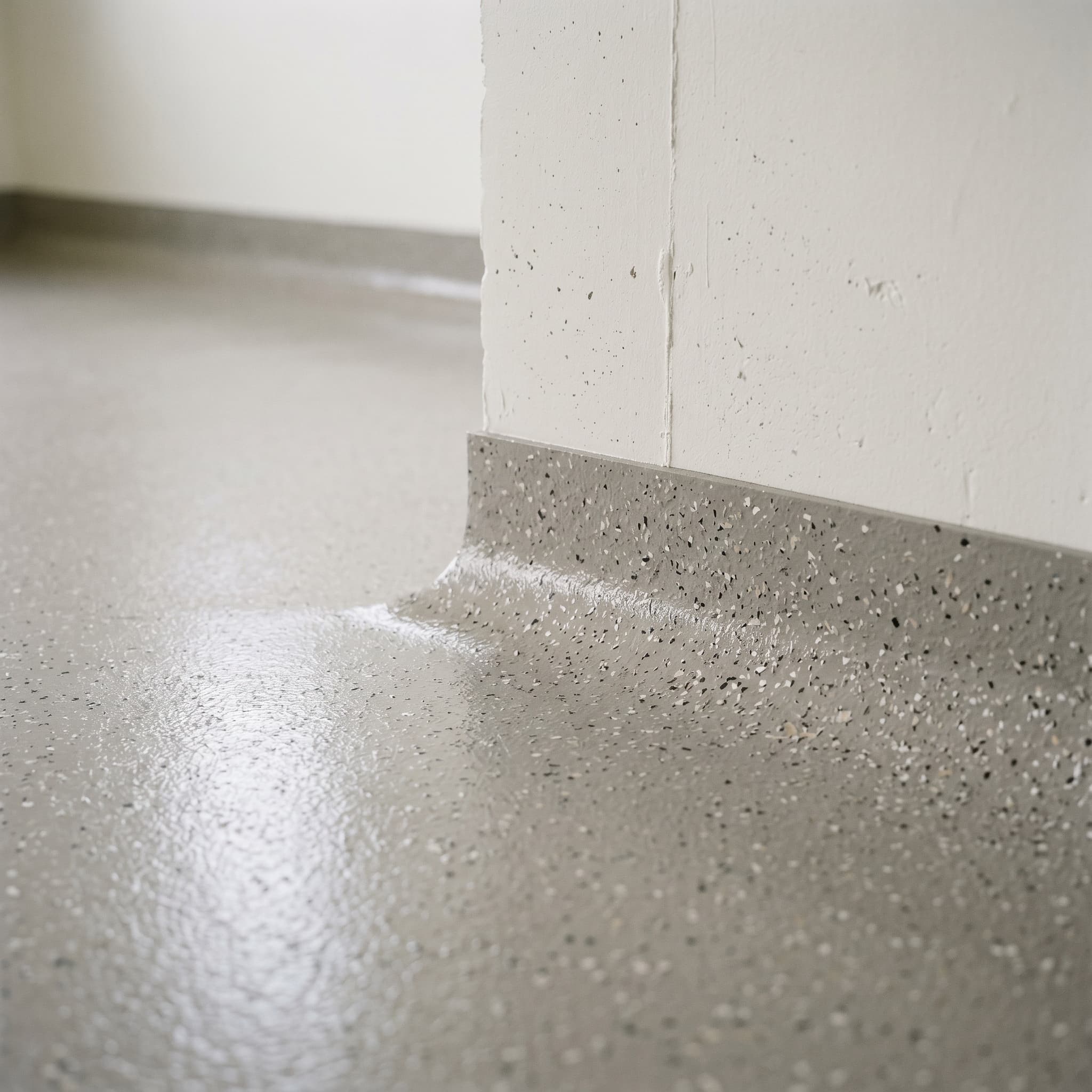
Floor-to-wall cove transition on a finished basement epoxy floor.
Compared to

Other basement floor options and how they age in Michigan

Most basement floors people look at seem fine in the showroom, then start failing within a year or two once they are underground. Here is the honest version of what each option does after the moisture starts pushing up through the slab.

Paint or stain on bare concrete
The cheapest cosmetic fix. It lifts at the edges within a season, especially near drains and along the perimeter wall.
Skip
Peel and stick LVP or vinyl tile
Looks like real flooring on day one. The adhesive softens under vapor pressure, and the seams lift after one humid summer.
Skip
Carpet tile over the slab
Warmest underfoot. It holds moisture and mildew unless the slab is already coated and sealed. Use it only on a slab that is fully handled.
Acceptable
Engineered hardwood on sleepers
Looks premium. It adds height and hides moisture problems instead of solving them, then fails badly once water reaches the wood.
Skip
Epoxy and polyaspartic system that holds back vapor
The install described above. It tolerates the slab's real vapor, brightens the room, and stays put for decades.
Recommended
The install

From quote to walk-on, fast.

STEP 01

Free Quote

Submit a few photos or book a free 15-minute on-site visit. The result: a fixed written quote, not an estimate range.

STEP 02

Floor Prep

Diamond-grind the slab, patch every crack, vacuum-fill control joints, and prime against moisture vapor.

STEP 03

Coating

100% solids epoxy base, a full flake broadcast for grip and depth, then a polyaspartic topcoat.

STEP 04

Cure & Enjoy

Walk on it the same evening. Park on it 24 hours later.

Before you book

Things to confirm before signing a basement contract

A basement install fails in different ways than a garage install, so the questions to ask are different too. A real installer will walk through every one of these during the on site visit.

Did the quote include a moisture test?

It should. Look for a calcium chloride test, an RH probe, or both, with the real reading written into the quote. A quote that just says "primer that tolerates moisture" with no reading is a guess. Heavy vapor needs a different primer chemistry than light vapor, and that difference shows up two years later, not on install day.

How long will the basement smell during cure?

The base coat smells strongest for the first 4 to 6 hours, then fades over the next day. Most installers run an exhaust fan or a portable dehumidifier through the cure to push the vapor out a basement window. The smell is usually gone by the next morning. A crew that shows up with no exhaust and no dehumidifier will leave a basement smelling like fresh paint for a week.

What if there's standing water or a previous coating already peeled?

Standing water means the moisture problem is bigger than any coating can solve, and an honest installer will look at drainage or a sump issue before quoting a floor. A coating that already peeled gets ground all the way off, the slab gets tested again, and the new system gets sized for the real reading. Coat over an old failure and it will simply fail again.

Will the install dust up the rest of the house?

Diamond grinding makes fine concrete dust. A real basement install runs the grinder with a vacuum shroud at the head plus a HEPA rated dust extractor, and it seals the basement door off from the rest of the house with plastic sheeting and tape during the dusty steps. A crew with no dust containment is a crew that has done this once.

How soon can furniture go back?

Foot traffic comes the same evening, and light furniture the next morning. Heavier furniture and rugs wait for 48 to 72 hours. Full chemical cure, where a spill stays on the surface, lands around 7 days. Most homeowners reload the basement over the weekend after a Friday install.

After the install

Keeping a finished basement floor bright

A basement coating asks less of you than the bare slab it covered. The topcoat resists staining, so spilled drinks, pet accidents, and laundry detergent wipe right off instead of soaking in. Over the long run there are two things to watch. One is abrasive grit tracked in on outdoor shoes. The other is any new water reaching the slab from a failing sump, an outside crack, or a loose hose connection. The coating is built to handle humidity, but it cannot handle a leak.

  • Sweep or vacuum weekly. Basement grit is finer than garage grit and acts like sandpaper underfoot.
  • Damp mop once a month with a pH neutral cleaner. Keep ammonia and full strength bleach off the polyaspartic.
  • If a sump pump or dehumidifier has been off for a season, run it a full week before you check the floor for staining.
  • Once a year, check the floor near any wall opening for a water line, gas line, or electrical, and look for fresh efflorescence, the white salt residue. That catches a slow seep early.
  • If a chair leg or a bench foot scrapes through, call the installer for a small spot repair. The flake mix stays in stock for at least a year after install, so the color still matches.
See the work

What a finished basement floor looks like

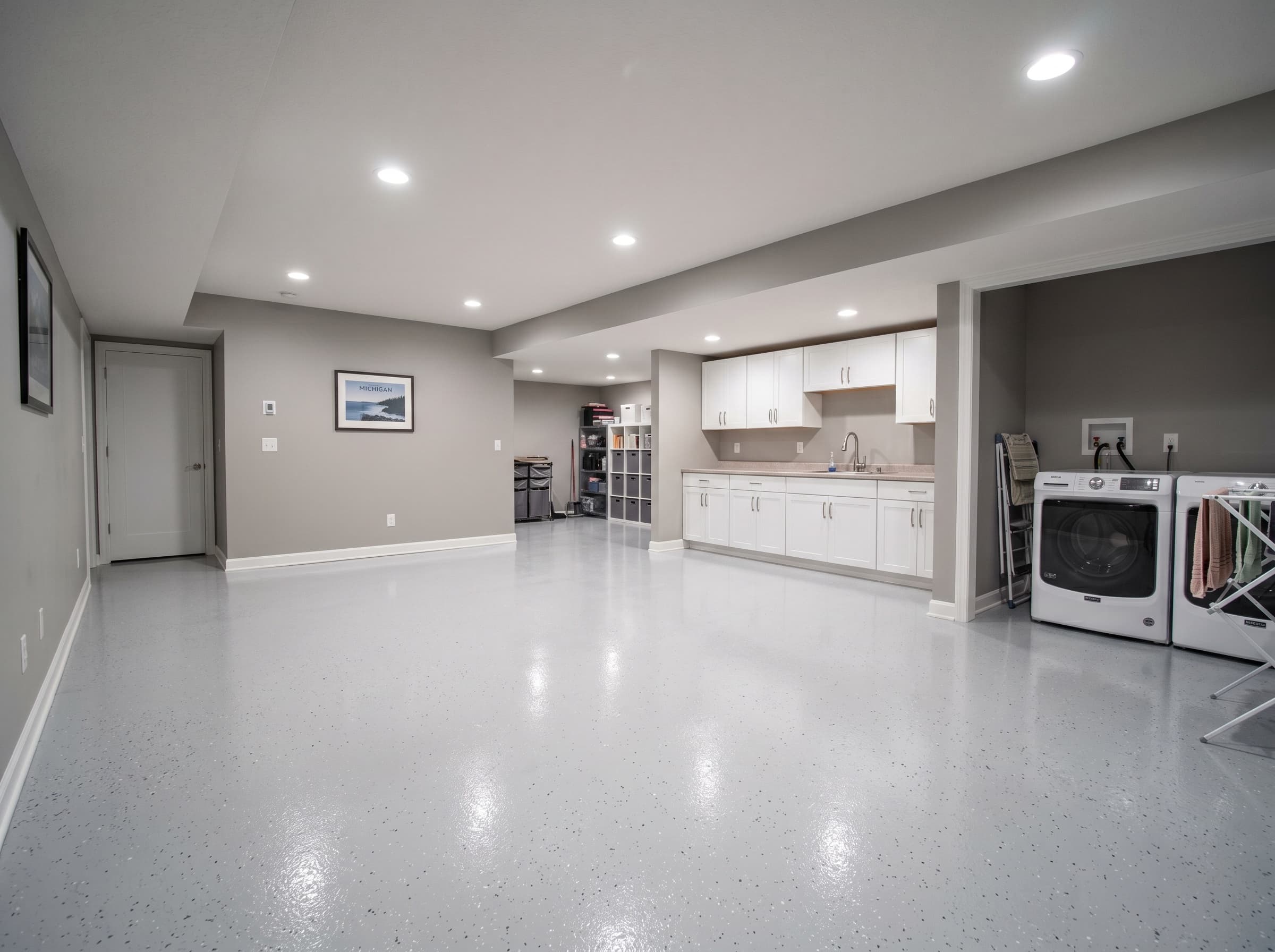
Wide finished empty Troy basement with warm grey epoxy floor.
FAQ · Basement Floor Epoxy

Questions Troy homeowners ask about basement epoxy

A properly installed three coat polyaspartic system on a home garage in Michigan usually lasts well past a decade before it needs any recoat. The wear layer is harder than industrial sealer. That hardness is why salt, warm tires, and the freeze and thaw swing of our winters never break it. Cheaper single day kits from a chain store tend to fail inside two or three winters, because they skip the moisture primer and lean on a softer topcoat.
Epoxy is the base layer that bonds to the concrete. Polyaspartic is the topcoat that adds UV stability, chemical resistance, and a fast cure. A floor that is epoxy only stays softer, yellows in sunlight, and stays tacky longer while it sets. A good install uses both, so an epoxy primer grips the slab and a polyaspartic top lets a car roll back in within a day. Most quality crews in Michigan run that same stack for that same reason.
The number rests on three things. Those are square footage, slab condition, and the finish you pick. A slab with deep cracks, oil soaked spots, or moisture trouble adds prep work, and that prep raises the cost. Metallic and heavy flake finishes sit at the upper end. You get a fixed written quote after a free walk through on site, with no vague ranges and no surprise extras once the crew starts. Most honest crews will not post a price per square foot, since that figure misleads anyone before they see the actual slab.
Yes, and the season barely matters. The whole job happens indoors. As long as the garage holds around 55 degrees while it cures, the coating sets fine. Most winter jobs run a portable heater for a few hours during the topcoat stage. Spring and fall stay the busiest stretch for crews around here, so a winter slot often books faster for a Troy homeowner who wants the floor done before the next salt season rolls in.
Warm tire pickup is the failure that quietly ruins cheap epoxy coatings. A polyaspartic topcoat cures harder than the rubber of a tire. Because of that, it stays locked to the base coat even after a long summer drive. Many quality crews fold a first year callback into the work for tire transfer or any lift, so it pays to ask each crew about their callback policy before you sign anything.
Ready when you are

Get a fixed quote on your Troy epoxy floor this week.

Free on-site walk-through and a one-day install on most residential garages.

Call (947) 218-1225Get My Free Quote
Call NowFree Quote