Troy Epoxy Flooring
Service · Troy, MI

Polyaspartic Coatings in Troy, MI

The sun stable topcoat that lets us finish a garage in a single day. It cures in two hours, so the floor is ready for foot traffic that same evening.

1 day
Typical install time
Free · 24-hour response

Quote: Polyaspartic Coatings

Response under 24 hours. No spam. Contact info is used only to send the quote.

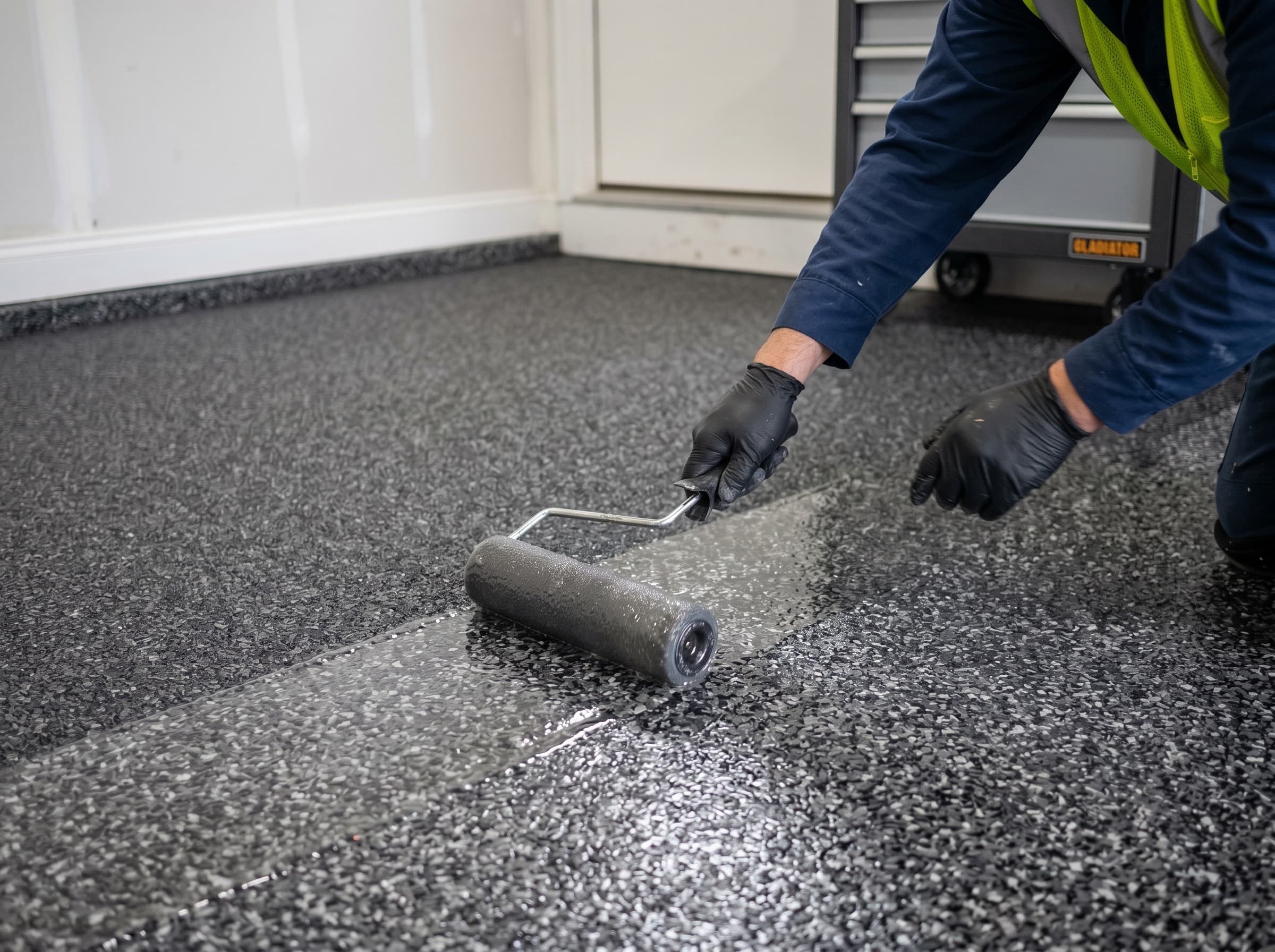
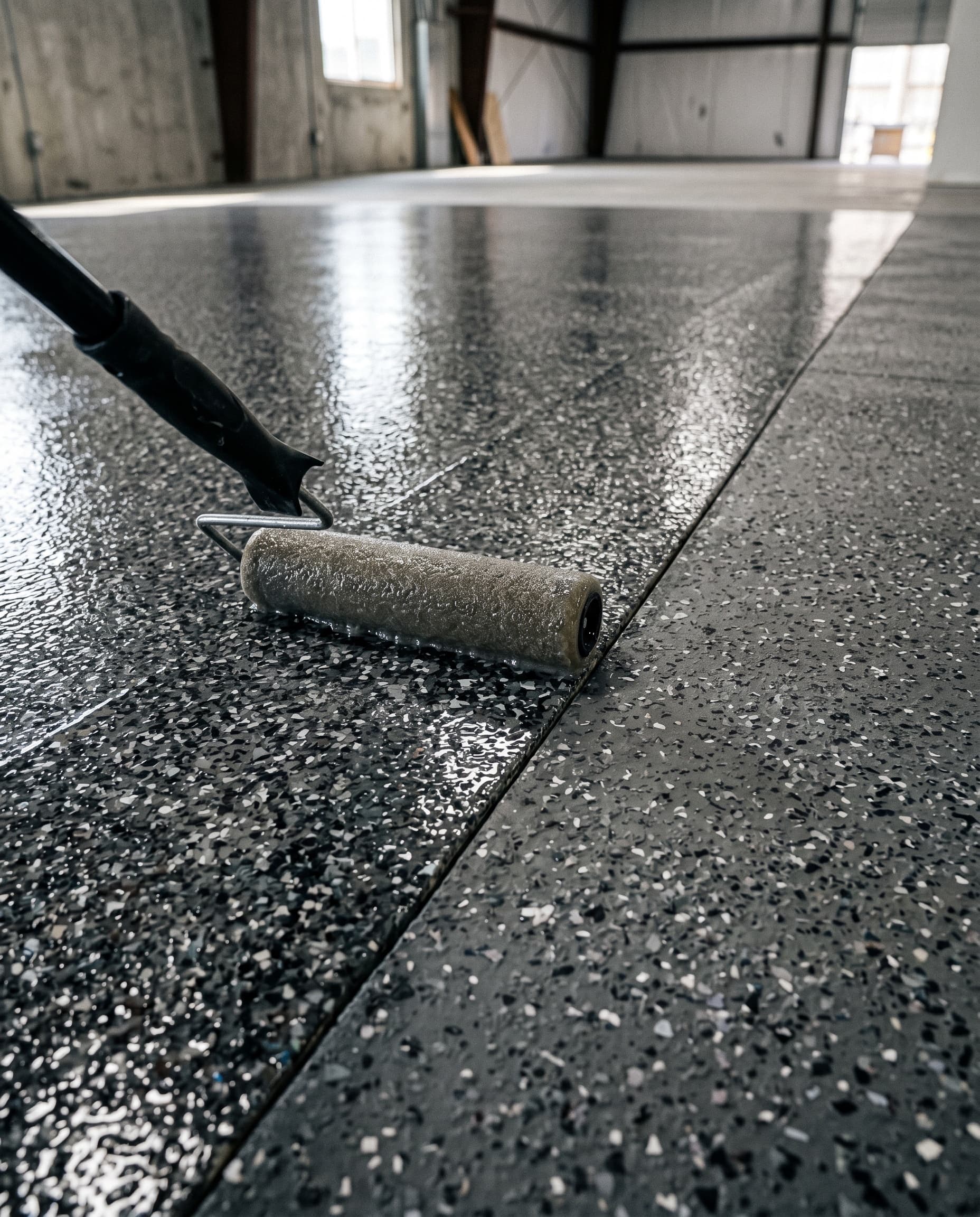
Polyaspartic topcoat over flake-broadcast epoxy base, one-day cure.
Roller applying clear polyaspartic over charcoal flake epoxy base.
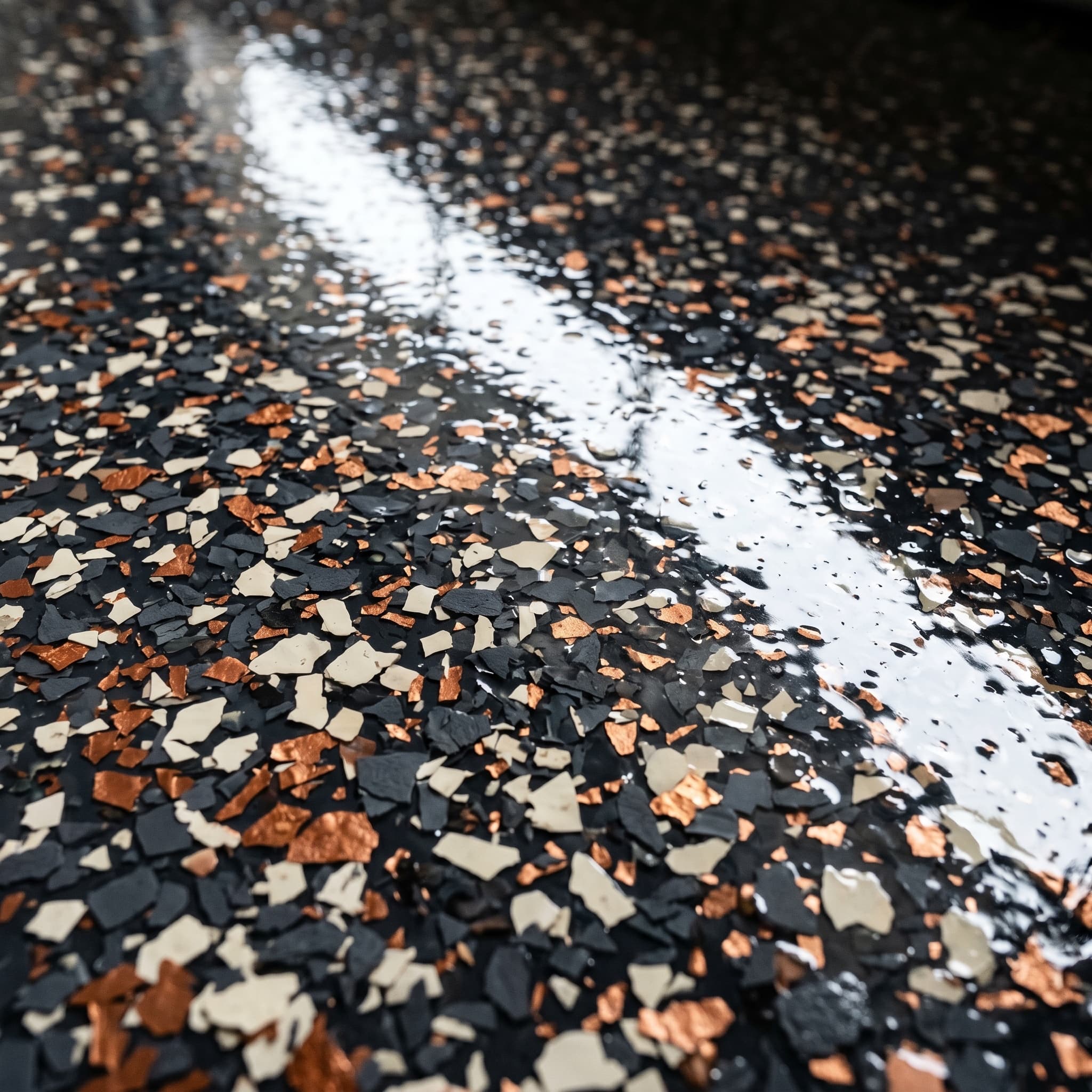
Macro of cured clear polyaspartic over charcoal vinyl flake.
Why polyaspartic coatings

Polyaspartic vs. epoxy: what's actually different

Most homeowners hear "epoxy floor" and assume the whole system is epoxy. It really isn't. Floors made of plain epoxy yellow under the sun, get tacky in summer, and take 24 to 72 hours to cure firm enough to walk on. Polyaspartic is the topcoat that fixes all three of those problems. It is also the layer that lets us install in a single day instead of running a three day project.

Polyaspartic is an aliphatic urethane that tolerates moisture well. It cures in roughly two hours through a chemical reaction with the humidity in the air. It stays stable in sunlight, so the floor never ambers. It also cures harder than industrial floor sealer, which is why it survives the hot tires that destroy a single coat of epoxy. A good install puts it as the final layer over a 100% solids epoxy base and a broadcast of flake, so you get the bond strength of epoxy with the sun stability and hardness of polyaspartic in one floor.

  • Cures in about two hours. You walk on it that same evening and drive on it within 24.
  • Stays clear under skylights and sun, so the floor will not amber.
  • Harder than industrial floor sealer, which means it survives a hot tire set down on it.
  • Bonds chemically to the epoxy base, so there is no delamination at the seam between layers.
  • Comes in finishes that rate for slip resistance and in a high gloss.

As you call around for quotes on epoxy floors, ask each installer whether the system finishes with polyaspartic or just a clearcoat of epoxy. The honest ones will tell you straight. It is the difference between a floor that fades in five years and one that lasts for decades.

The reason we can truly finish a garage in a single day is the polyaspartic. Take it out and the floor turns into a three day project.

Polyaspartic isn't a separate service to book by itself. It's the topcoat included on every quality coating system. If a competing quote seems suspiciously cheap, this is usually the line item missing.
The material

What polyaspartic actually is, in plain chemistry

Polyaspartic belongs to the aliphatic urethane family. Here is the short version. It is a clear coating that cures fast, made by reacting a polyaspartic ester with an aliphatic isocyanate. The aliphatic part is what keeps it clear under the sun, since aromatic urethanes amber over time and aliphatic ones do not. The quick cure comes from the polyaspartic ester chemistry, which reacts well with the isocyanate at room temperature instead of waiting days for solvents to flash off or for the resin to set up. The end result is a topcoat as clear as water, harder than the epoxy base beneath it, and ready for foot traffic in roughly two hours.

Polyaspartic does not bond to bare concrete. It bonds chemically to the cured epoxy base coat through the resin sites still active at the surface of the epoxy. That chemical bond is why a floor of polyaspartic over epoxy will not peel at the seam the way a clearcoat over dried paint does. Still, the system has to be sequenced right. The polyaspartic goes down inside the recoat window of the epoxy, usually 6 to 24 hours after the base, and that timing shifts with the room temperature and how fast the base cures. Outside that window, the surface needs a light scuff with sandpaper to wake it back up.

  • Part of the aliphatic urethane family. It stays clear under the sun instead of ambering.
  • Roughly a two hour cure before you can walk on it, so we can install the same day.
  • Bonds chemically to the wet or freshly cured epoxy base. It is not just glued on top.
  • Its hardness rating beats most industrial floor sealers, which is why hot tires release cleanly.
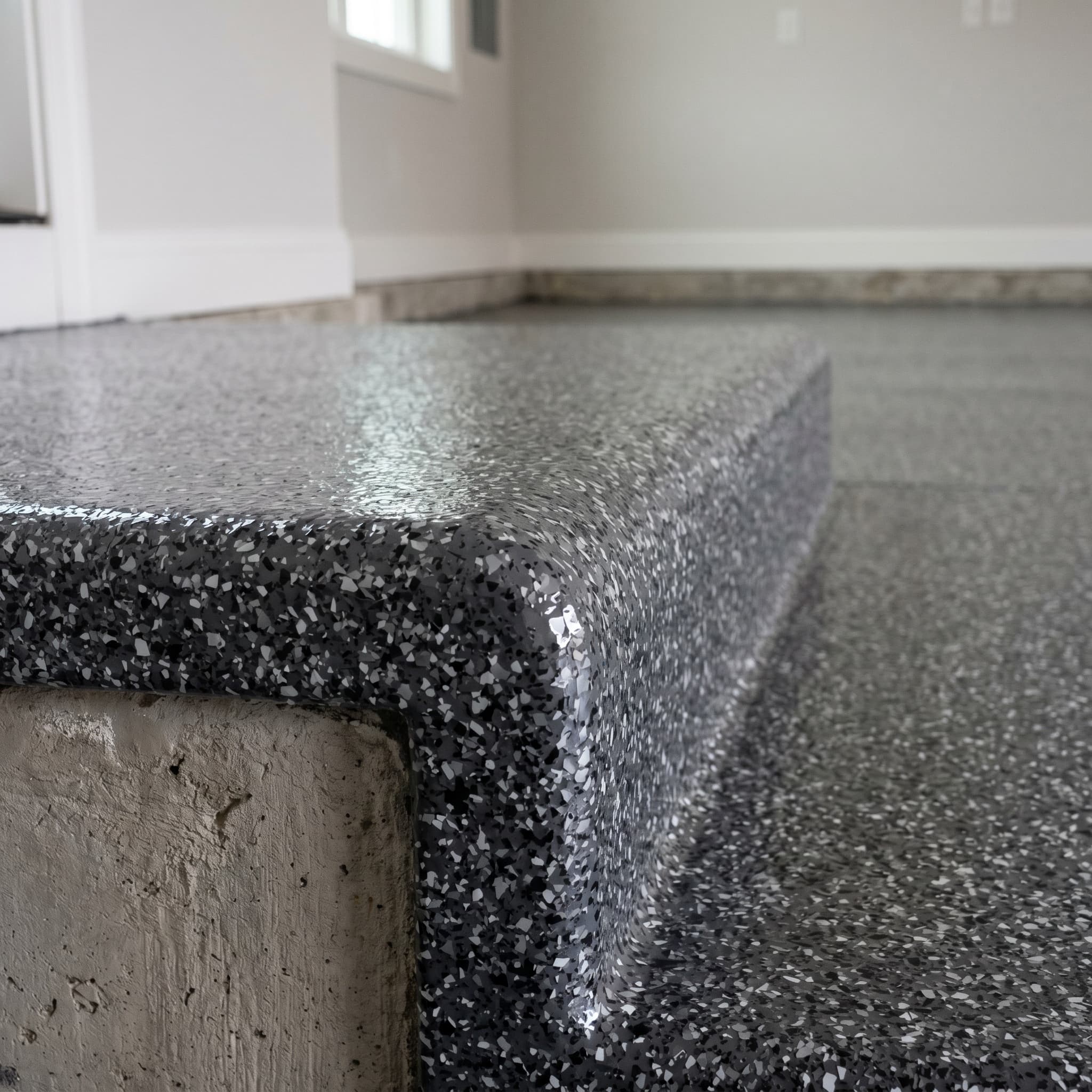
Polyaspartic rolled over a Troy garage step edge profile.
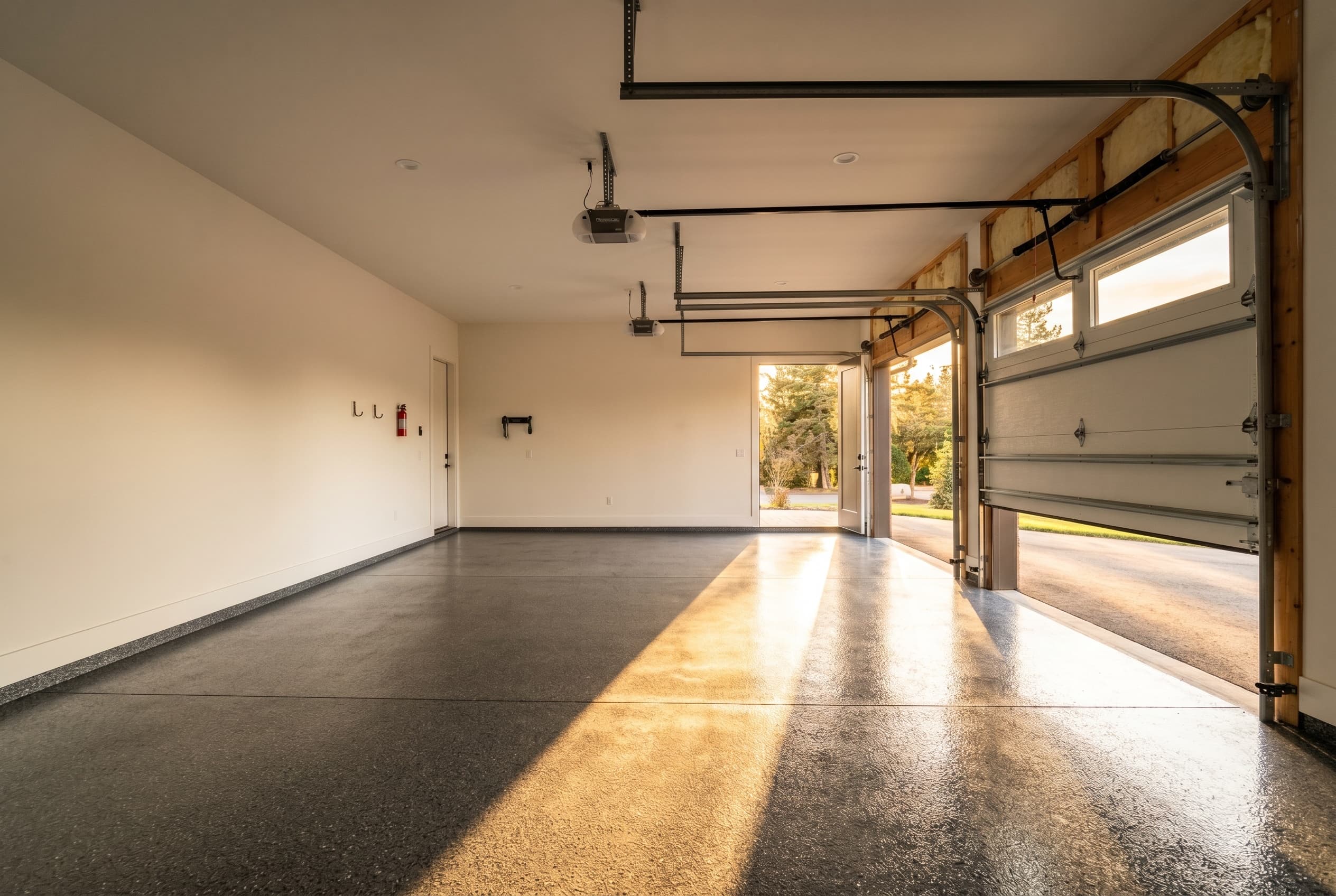
Troy garage at golden hour reflecting off glossy polyaspartic floor.
Compared to

Polyaspartic against the other clearcoat options

When a homeowner compares quotes for a coating system, the topcoat is the line item where the price gap usually hides. Here is what each common topcoat choice really does over time. The system beneath it, meaning the primer, the base coat, and the flake, stays the same across all five rows.

Clear epoxy topcoat
Cheapest topcoat. It yellows in the sun inside a year, stays tacky in summer heat, and the scratches show against the flake.
Skip
One stage oil based polyurethane
Durable enough and traditional. The solvent smell during the cure is strong, it ambers across decades, and it is slow to cure firm enough to walk on.
Acceptable
Water based acrylic floor sealer
Lowest in VOC. It wears through under hot tires and harsh chemicals within 2 to 4 years. It only suits a showroom with light traffic.
Acceptable
Aliphatic urethane mortar
The hardest option built for commercial use. It is overkill on a home garage, and gets specified mostly in food plants and places with heavy chemical exposure.
Recommended
Polyaspartic
The sweet spot for a home or a shop, with a fast cure and clarity that holds in the sun. You walk on it in two hours, drive on it in a day, and it stays clear for the life of the floor.
Recommended
The install

From quote to walk-on, fast.

STEP 01

Free Quote

Submit a few photos or book a free 15-minute on-site visit. The result: a fixed written quote, not an estimate range.

STEP 02

Floor Prep

Diamond-grind the slab, patch every crack, vacuum-fill control joints, and prime against moisture vapor.

STEP 03

Coating

100% solids epoxy base, a full flake broadcast for grip and depth, then a polyaspartic topcoat.

STEP 04

Cure & Enjoy

Walk on it the same evening. Park on it 24 hours later.

Before you book

What to confirm about the polyaspartic install before booking

Most polyaspartic failures aren't the chemistry, they're the install conditions. The questions below are what an honest installer will answer directly.

What ambient temperature and humidity is the install scheduled for?

Polyaspartic cures through a reaction with the humidity in the air. Very dry air slows the cure, and very wet air speeds it up, sometimes so much that the surface flaws. Most installers aim for a room temperature between 50 and 90 degrees and a relative humidity between 30 and 80 percent. The window is wide. Still, a January install in a cold garage at 25 degrees will not cure right. Ask what the installer plans to do if the conditions on the day fall outside that window.

How much polyaspartic actually gets applied, in mils?

A standard home topcoat runs roughly 4 to 6 dry mils, laid in one or two passes. Cheaper bids sometimes thin the topcoat to 2 to 3 mils to save material, and it wears through faster under hot tires. Put the mil thickness in writing as part of the quote. Then ask the installer to share the data sheet from the maker of the exact polyaspartic product they plan to use.

Is the polyaspartic going down inside the base coat's recoat window?

It should be. Most good installs lay the polyaspartic 6 to 24 hours after the epoxy base. That is when the surface is still active enough chemically for a direct bond, with no need to scuff it with sandpaper. Install plans that span several days and ignore the recoat window need a prep step in between, a scuff or a solvent wipe, that some cheaper crews skip. Skipping it sets up a spot where the floor will peel later.

When is polyaspartic NOT the right topcoat?

There are three. A basement floor with humidity that swings all day, where readings above 85% for days on end can rush the cure too fast. A garage with no heat or cooling, where a winter install would drop below the cure window. And a commercial space with harsh food acid or solvent exposure, where an aliphatic urethane mortar would beat it. In those cases an honest installer points you to a different topcoat rather than push polyaspartic anyway.

Can the polyaspartic be recoated years from now without ripping out the floor?

Yes. After 5 to 10 years of wear, a light scuff with sandpaper and a fresh pass of polyaspartic bring back the gloss and the wear layer, and the base and the flake beneath it stay put. A recoat costs roughly 30 to 40 percent of a full install. Ask the installer to note the current product on the paperwork so a future recoat uses one that is compatible with it.

After the install

How a polyaspartic floor ages over the years

A polyaspartic topcoat over a good epoxy base ages slower than almost any other clearcoat, but it is not immortal. Fine scratches build up from grit and dragged furniture, and they dull the gloss in a clear way around year 5 to 8 in a garage that sees heavy use. The sun does not yellow the coating, but it does slowly oxidize the very top layer, which shows most on floors near a skylight or a window. Neither issue needs a full reinstall. A scuff and a fresh recoat somewhere around the year 5 to 10 mark brings the look back and resets the wear layer.

  • Sweep weekly with a soft broom. Grit is the one thing that really scratches a polyaspartic floor.
  • Damp mop monthly with a cleaner that is neutral on the pH scale. Skip the harsh scrub pads and the straight bleach or ammonia.
  • Wipe spills the same day. The polyaspartic shrugs off chemicals, but it is not immune to a puddle of brake fluid left for a full day.
  • Set a doormat at every entry. The biggest cause of gloss loss over the years is salt grit dragged across the floor through winter.
  • Plan on a scuff and a fresh recoat around year 5 to 10 in heavy traffic. The base and the flake stay, and only the topcoat gets refreshed.
See the work

What a polyaspartic finish looks like

Polyaspartic topcoat over flake-broadcast epoxy base, one-day cure.
FAQ · Polyaspartic Coatings

Common polyaspartic questions Troy homeowners ask

A properly installed three coat polyaspartic system on a home garage in Michigan usually lasts well past a decade before it needs any recoat. The wear layer is harder than industrial sealer. That hardness is why salt, warm tires, and the freeze and thaw swing of our winters never break it. Cheaper single day kits from a chain store tend to fail inside two or three winters, because they skip the moisture primer and lean on a softer topcoat.
Epoxy is the base layer that bonds to the concrete. Polyaspartic is the topcoat that adds UV stability, chemical resistance, and a fast cure. A floor that is epoxy only stays softer, yellows in sunlight, and stays tacky longer while it sets. A good install uses both, so an epoxy primer grips the slab and a polyaspartic top lets a car roll back in within a day. Most quality crews in Michigan run that same stack for that same reason.
The number rests on three things. Those are square footage, slab condition, and the finish you pick. A slab with deep cracks, oil soaked spots, or moisture trouble adds prep work, and that prep raises the cost. Metallic and heavy flake finishes sit at the upper end. You get a fixed written quote after a free walk through on site, with no vague ranges and no surprise extras once the crew starts. Most honest crews will not post a price per square foot, since that figure misleads anyone before they see the actual slab.
Yes, and the season barely matters. The whole job happens indoors. As long as the garage holds around 55 degrees while it cures, the coating sets fine. Most winter jobs run a portable heater for a few hours during the topcoat stage. Spring and fall stay the busiest stretch for crews around here, so a winter slot often books faster for a Troy homeowner who wants the floor done before the next salt season rolls in.
Warm tire pickup is the failure that quietly ruins cheap epoxy coatings. A polyaspartic topcoat cures harder than the rubber of a tire. Because of that, it stays locked to the base coat even after a long summer drive. Many quality crews fold a first year callback into the work for tire transfer or any lift, so it pays to ask each crew about their callback policy before you sign anything.
Ready when you are

Get a fixed quote on your Troy epoxy floor this week.

Free on-site walk-through and a one-day install on most residential garages.

Call (947) 218-1225Get My Free Quote
Call NowFree Quote