Troy Epoxy Flooring
Service · Troy, MI

Decorative Flake and Chip Epoxy Floors in Troy, MI

Here is what a full flake broadcast looks like, and why it is the most common finish on garages around town.

1 day
Typical install time
Free · 24-hour response

Quote: Decorative Flake / Chip

Response under 24 hours. No spam. Contact info is used only to send the quote.

Decorative flake-and-chip epoxy floor finish. Full-broadcast vinyl flake system.
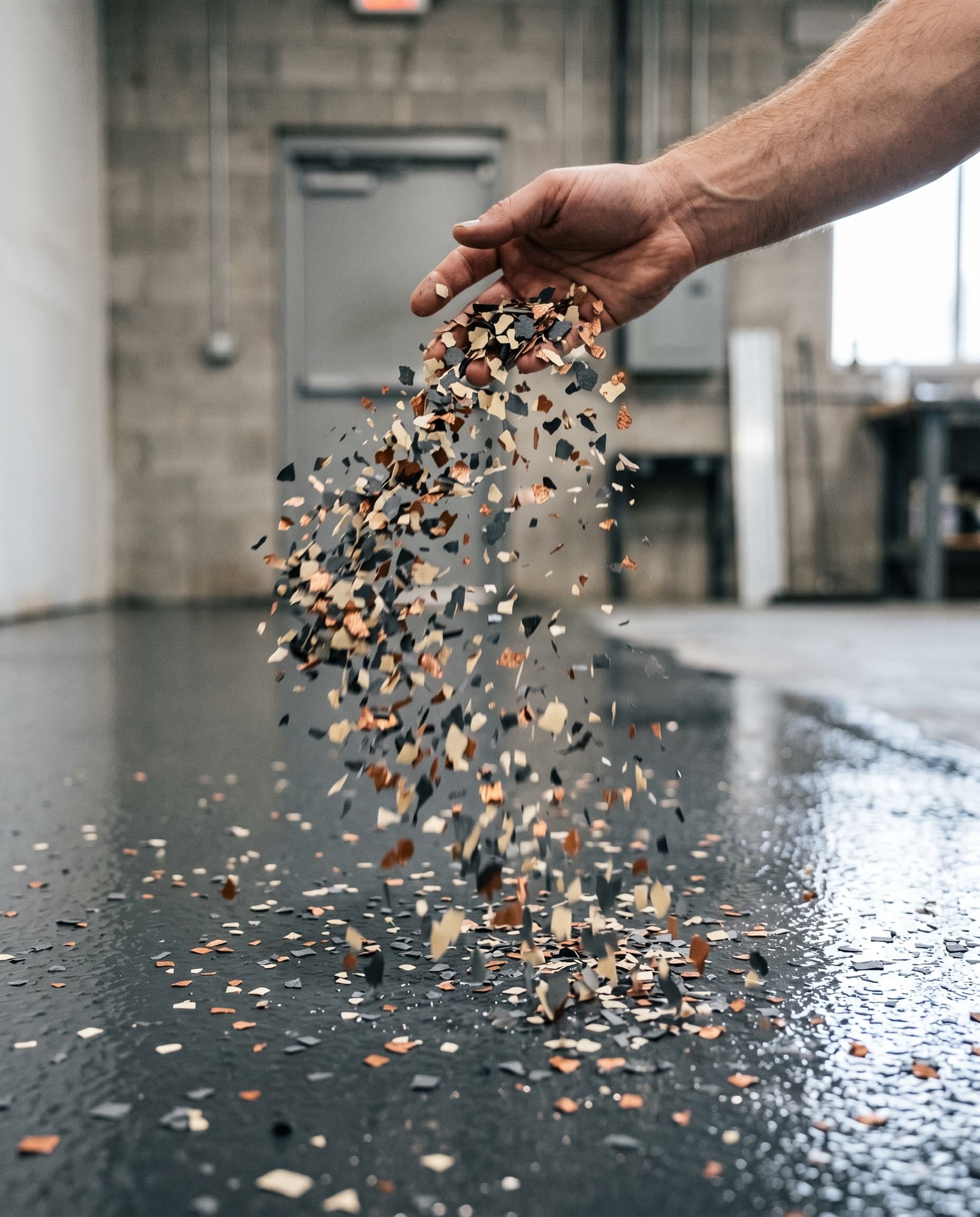
Hand broadcasting blended vinyl flake into wet charcoal epoxy base.
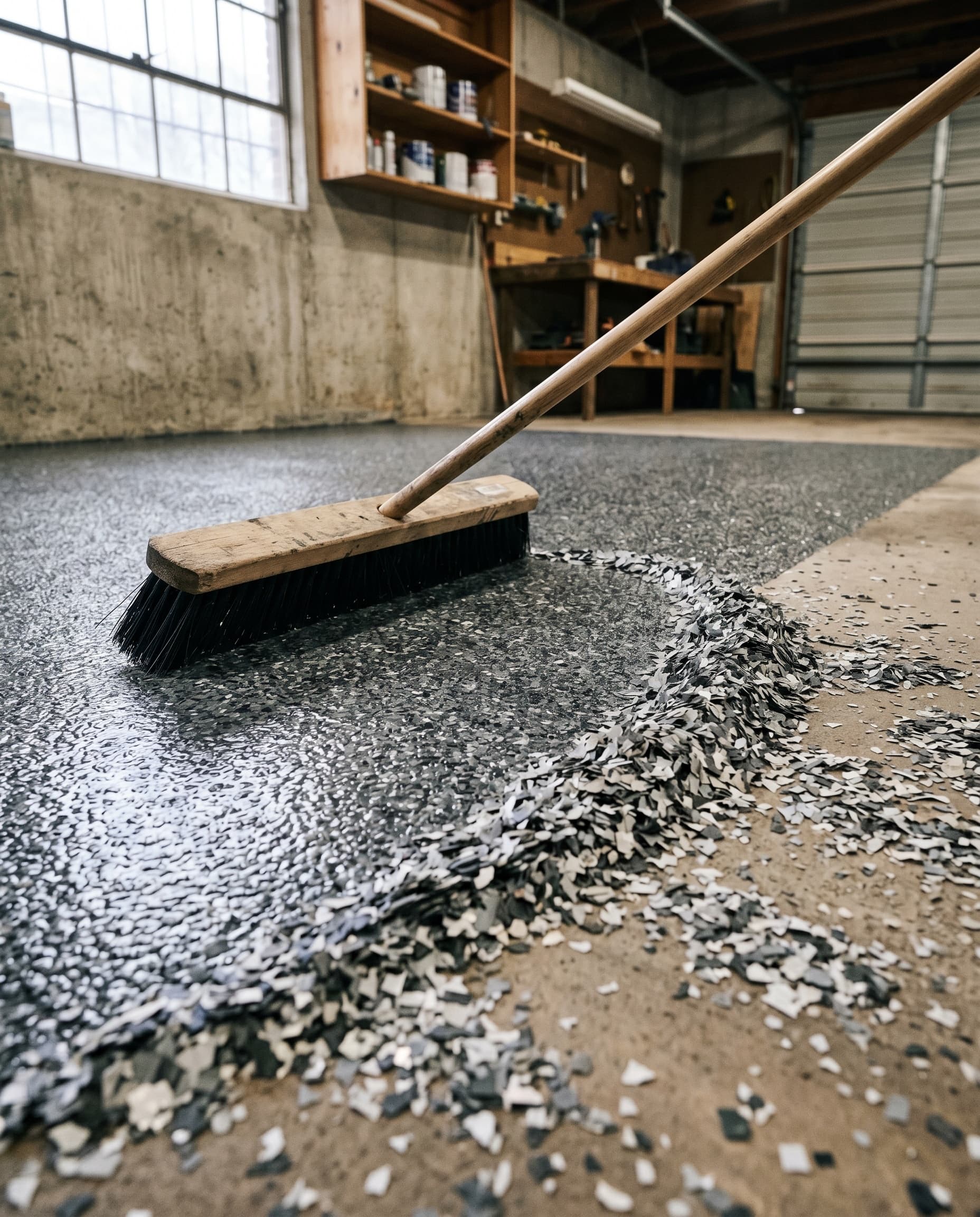
Push broom scraping excess flake morning after broadcast install.
Why decorative flake / chip

Why most Troy garages choose flake

If you have seen an epoxy garage floor in person, it almost surely had a flake or chip finish. A full vinyl flake broadcast is the most popular home finish, and there is a clear reason for that. The flake adds grip so the floor is never a slick sheet when wet, it hides minor scuffs and tire marks, and it builds a visual depth that plain solid color epoxy simply cannot match. It also forgives small slab flaws better than a clear coat metallic does.

A good install broadcasts flake "to rejection." That means I keep throwing flake until the wet base coat can no longer absorb a single chip more. It builds the dense, textured look you want instead of a thin, sparse pebble finish that reads as cheap. After it cures, the loose flake gets scraped off and the whole floor is locked down under polyaspartic. Stock color blends run from charcoal grey and white through brown, tan, and beige, and I can mix a custom blend to match your cabinets or walls.

  • Broadcast to rejection means full coverage, not sparse pebbles.
  • Hides scuffs, hairline cracks, and minor slab flaws.
  • Texture rated for grip, safer on snowy boots than a smooth gloss.
  • Custom flake blends to match cabinets or wall paint.
  • A single day install on a standard two car garage.

Most decorative flake installs in Troy go on home garages and finished basement entryways. Stock blends are usually fine for a garage. Finished basements often go custom so the floor matches the rest of the room. Real flake samples you can hold in your hand and review in person beat guessing from a small website thumbnail.

Flake floors look better as they age. Plain solid color epoxy starts perfect and only gets worse.

When you pick between a plain solid color floor and a flake floor, most homeowners choose flake once they see both side by side in person. A local installer should bring real samples to the walk through so you can compare them on the spot.
The material

What broadcast to rejection actually means

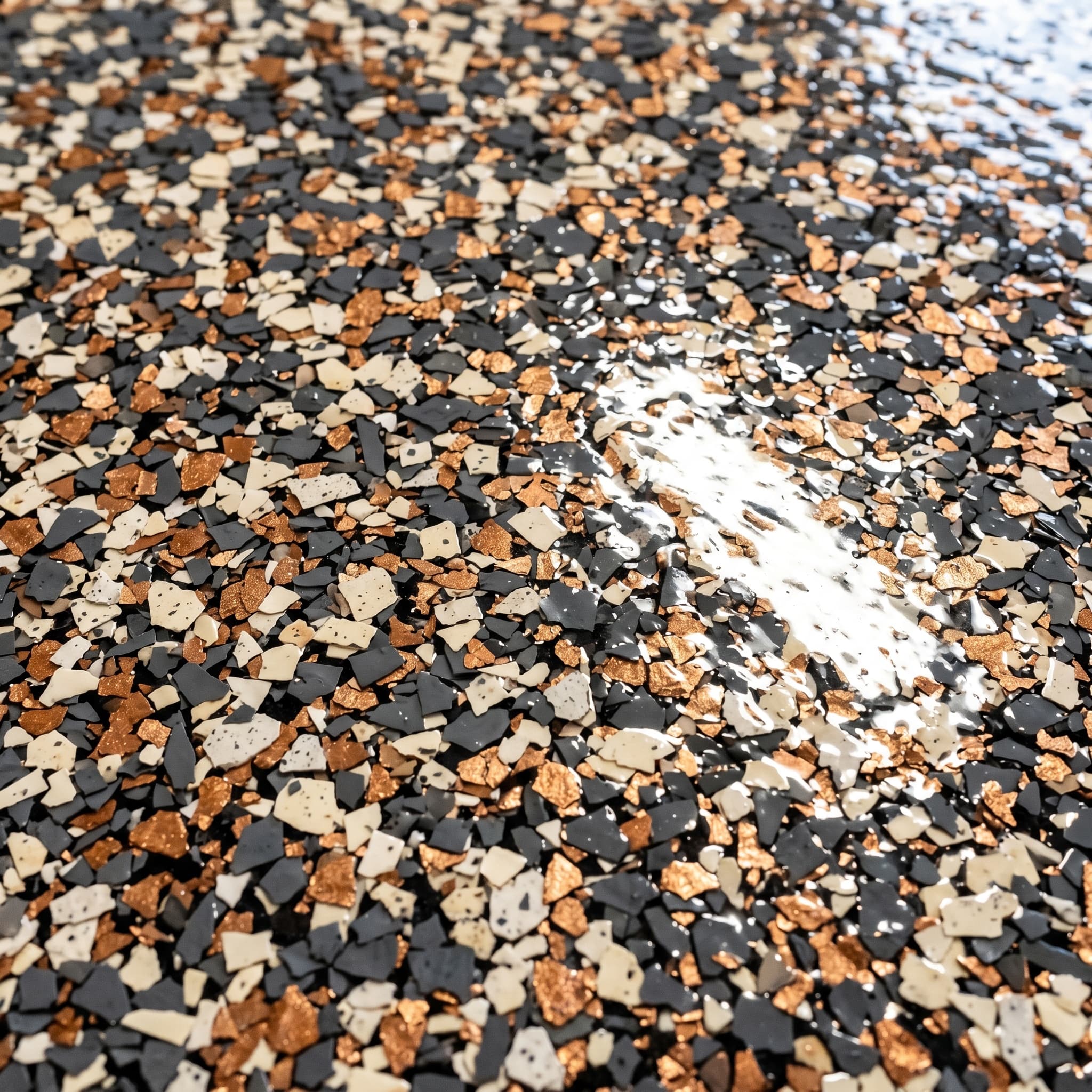
How a flake floor looks comes down almost entirely to broadcast density. The flake is small vinyl chips, usually 1/4 inch for a home floor and up to 1 inch for commercial decorative work, mixed into custom color blends. The chips do not bond chemically to the concrete or the resin. They get locked into the wet epoxy base coat by gravity and by simple surface tension as the resin grabs them. A partial broadcast, where the flake is sprinkled lightly across the floor, leaves base coat showing between the chips and reads as a thin, speckled pebble finish. A full broadcast throws chips until the wet base cannot take any more, and that is what gives you the dense, layered look people picture when they think of a real flake floor.

The install itself is simple. After the full solids epoxy base coat is rolled out, two crew members work from opposite sides of the room, throwing flake that was blended ahead of time. They throw it overhand in arcing patterns that overlap each other so coverage stays even. The throwing style matters here. A straight overhand throw piles flake into one tight zone, while a windmill throw fans it out and spreads it evenly. The crew keeps throwing until the wet base coat reads as fully covered, and that is the moment we call "to rejection." The next morning, any excess flake that never locked in gets scraped off with a wide push broom and vacuumed up. The flake that did lock in gets sealed under polyaspartic, which fills the gaps in the texture and gives the floor its glossy depth.

  • A full broadcast to rejection, never a thin, sparse pebble look.
  • Color mixes blended ahead of time in stock charcoal, earth, and warm tones, with custom blends to match the room.
  • Overhand or windmill throw, with overlapping coverage from two crew members at once.
  • Loose flake scraped off the next morning, and the flake that locked in gets sealed under polyaspartic.
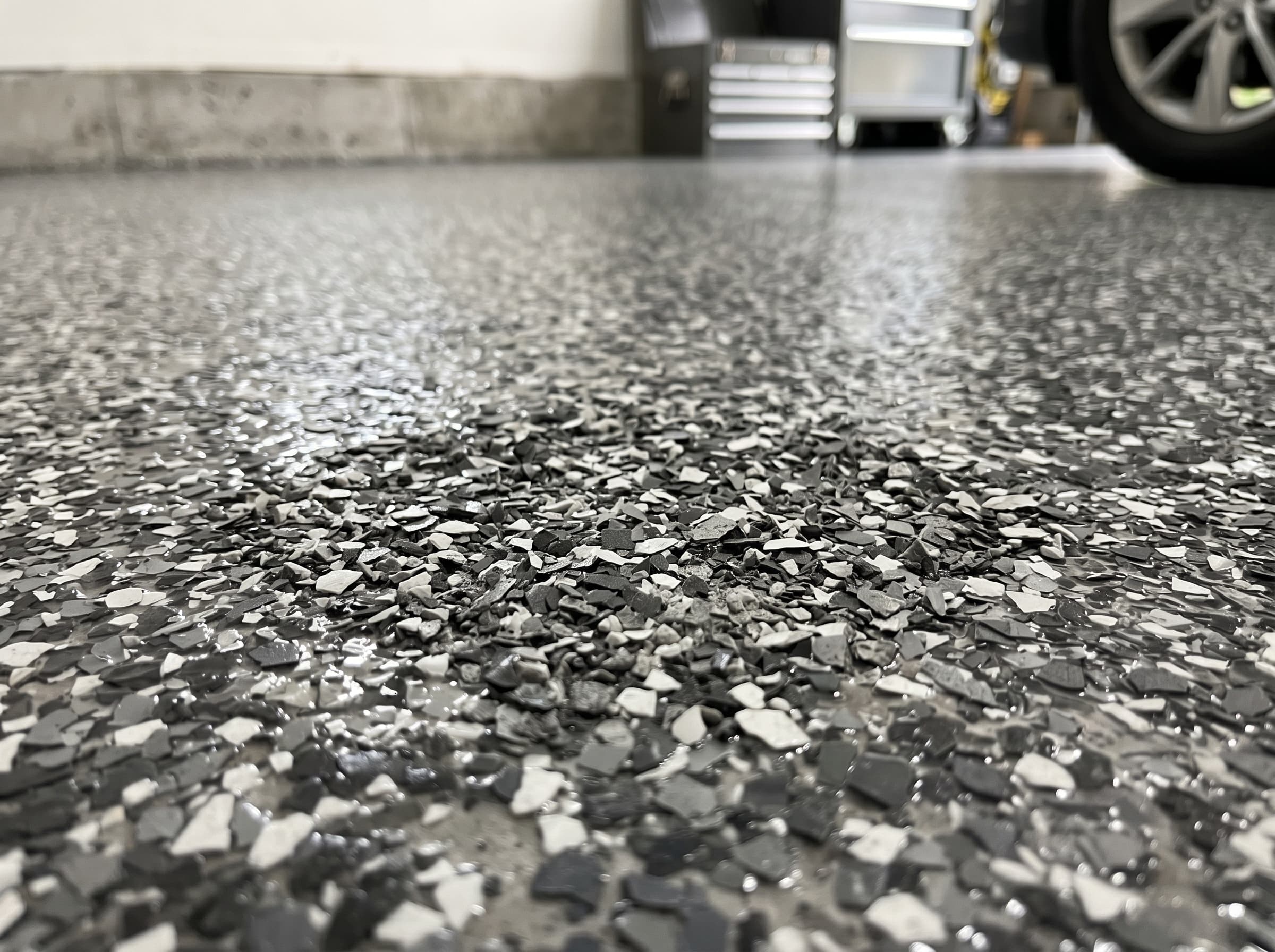
Macro of dense flake floor under polyaspartic, charcoal cream copper.
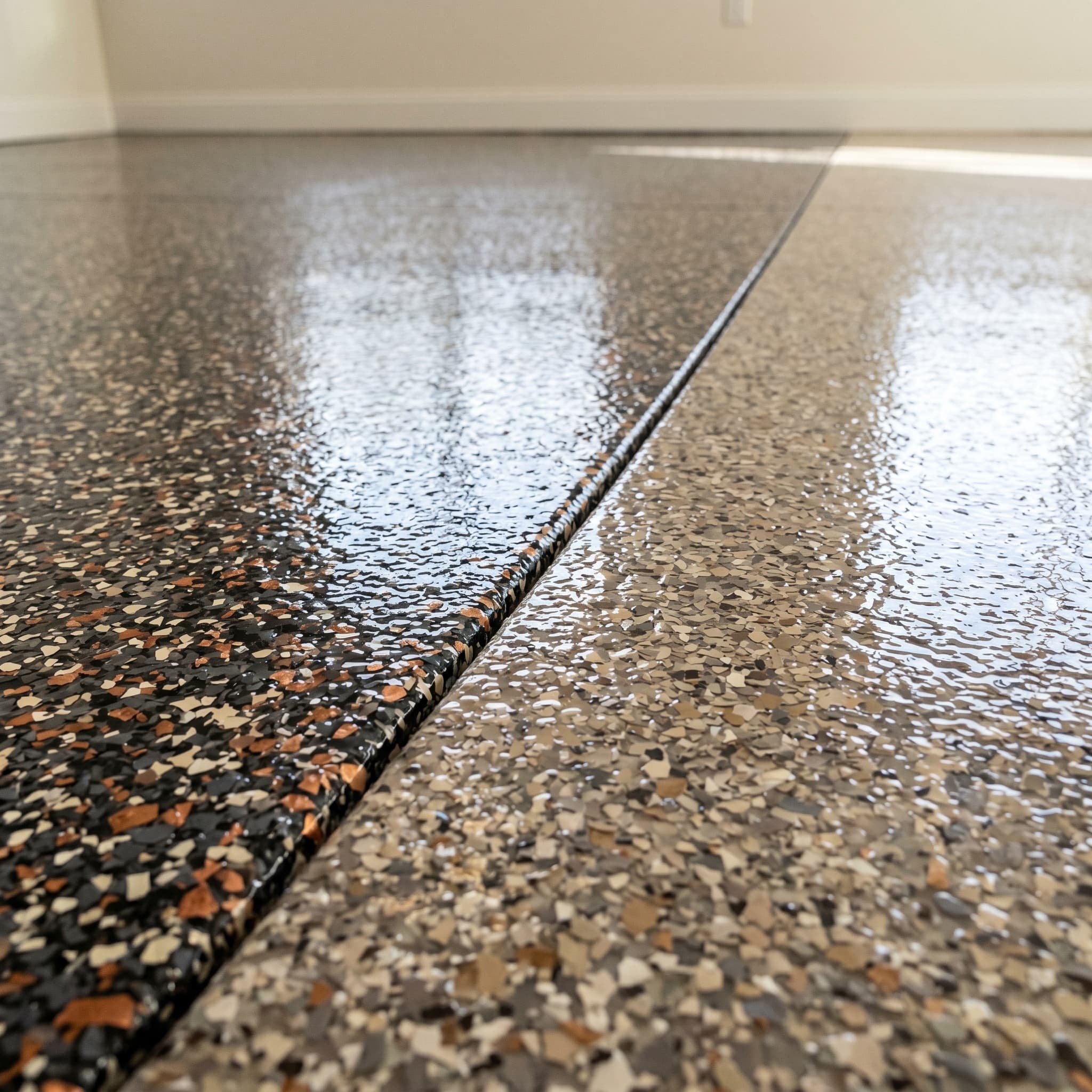
Clean transition between two custom flake color blends, finished floor.
Compared to

Flake against the other residential finishes

When a homeowner picks between residential finish options, the choice is usually between solid color, a sparse decorative finish, full flake, or a designer metallic. The honest version of what each delivers in daily use is below.

Solid color epoxy
The cleanest, most modern look of the bunch. The catch is that it shows every scratch, scuff, and tire mark within the first year, and it looks worst the older it gets.
Acceptable
Sparse decorative speckle
The cheapest decorative finish. It reads as unfinished next to a full broadcast and does little to hide slab flaws.
Skip
Full flake broadcast
The most popular home finish, and for good reason. It hides minor slab issues, scratches blend right into the texture, and custom color blends match any interior you have.
Recommended
Quartz broadcast instead of vinyl flake
A premium, commercial grade option. Quartz aggregate runs heavier and grips harder underfoot. It costs more and the color palette is more limited.
Acceptable
Metallic epoxy
The highest visual impact and the deepest color of any finish. It costs more, it shows every scratch in the topcoat, and it shines most in showroom style spaces.
Recommended
The install

From quote to walk-on, fast.

STEP 01

Free Quote

Submit a few photos or book a free 15-minute on-site visit. The result: a fixed written quote, not an estimate range.

STEP 02

Floor Prep

Diamond-grind the slab, patch every crack, vacuum-fill control joints, and prime against moisture vapor.

STEP 03

Coating

100% solids epoxy base, a full flake broadcast for grip and depth, then a polyaspartic topcoat.

STEP 04

Cure & Enjoy

Walk on it the same evening. Park on it 24 hours later.

Before you book

Things to confirm about a flake install specifically

Most flake floor letdowns come from one of two things, picking the wrong color blend or assuming every flake job is the same. The questions below catch both.

Will the flake look dated in 10 years?

Flake colors have shifted less than most people expect. Charcoal, grey, and white earth blends, warm mixes of copper, cream, and charcoal, and the brown, tan, and beige variations have all been the standard home palette for more than a decade, and they still read as current today. Flake floors only look dated when someone picks a loud specialty blend, like bright blue with white or bright red with black, that locks the floor into one era. If you want a floor that ages well for years, stick with the neutral palette.

Can I get a custom color blend to match my cabinets or wall paint?

Yes, and most installers fold it in at no extra charge on home jobs. Bring a paint chip or a cabinet door sample to the walk through and we work from that. The installer hand blends the colored vinyl flake from manufacturer stock until it matches your sample. Blends usually get mixed in bags of 5 to 10 pounds so the color stays consistent across the whole floor. A bigger space just means more bags pulled from the same blend batch.

Will the loose flake all over the garage be a problem during cure?

It is messy, but only for a day. Right after the broadcast, the extra flake covers the whole wet floor in one even layer. The next morning that excess gets scraped off with a wide push broom, and the floor underneath is your finished surface. The garage door stays shut while it cures so wind cannot blow loose flake into the rest of the property. Keep cars off the driveway near the door overnight, because some flake always blows out the moment the door first opens.

Will the flake hide existing slab cracks?

Static hairline cracks, yes. The polyurea crack repair plus the flake texture on top renders them invisible. Active, moving cracks are a different story, and no amount of flake will hide a crack that still shifts with temperature swings. The walk through before your quote should sort out which kind of crack your slab has. Active cracks may call for an expansion joint detail, where the coating stops at the joint and picks back up on the far side, instead of trying to bridge the crack with flake and hoping it holds.

What happens if I want to change the color in 10 years?

A full color change means grinding the whole coating off and starting from bare slab again. A smaller shift is easier. To add depth or blend in a new accent color, I scuff sand the existing topcoat and lay a thin recoat with fresh flake broadcast at a lower density. The original color underneath still shows through, just with more depth on top. Most homeowners who recoat after ten or more years pick the same blend again, because they like how it aged the first time.

After the install

Living with a flake floor

Flake floors are the most forgiving home floor on the market when it comes to daily abuse. The vinyl chips sit suspended under the polyaspartic, and they work as a visual buffer against scratches, scuffs, salt staining, and tire marks. A scratch on a plain solid color epoxy reads as a clean white line cutting across a dark field. That same scratch on a flake floor lands inside the texture and nearly vanishes. Daily upkeep is honestly minimal, and most homeowners under clean their flake floors compared to the constant care a hardwood or polished concrete floor would demand.

  • A soft broom once a week keeps it clear. The one thing that wears at the finish here is road salt that boots track in over the winter months.
  • Damp mop monthly with a pH neutral cleaner or just plain water. The flake texture lifts the solution off the surface, so very little residue is left behind.
  • Spilled fluids like oil, brake fluid, or antifreeze wipe right off the polyaspartic within a day. Left sitting for weeks, they can leave a faint ring at the edge.
  • Deep clean once a year using a soft brush attachment on a vacuum. It pulls grit out of the flake texture far better than a damp mop can on its own.
  • If a chip ever comes loose, which is rare and usually only from a heavy point load or a chemical spill, call the installer for a quick spot repair within a few months while the original flake batch is still in stock.
See the work

What a finished flake install looks like

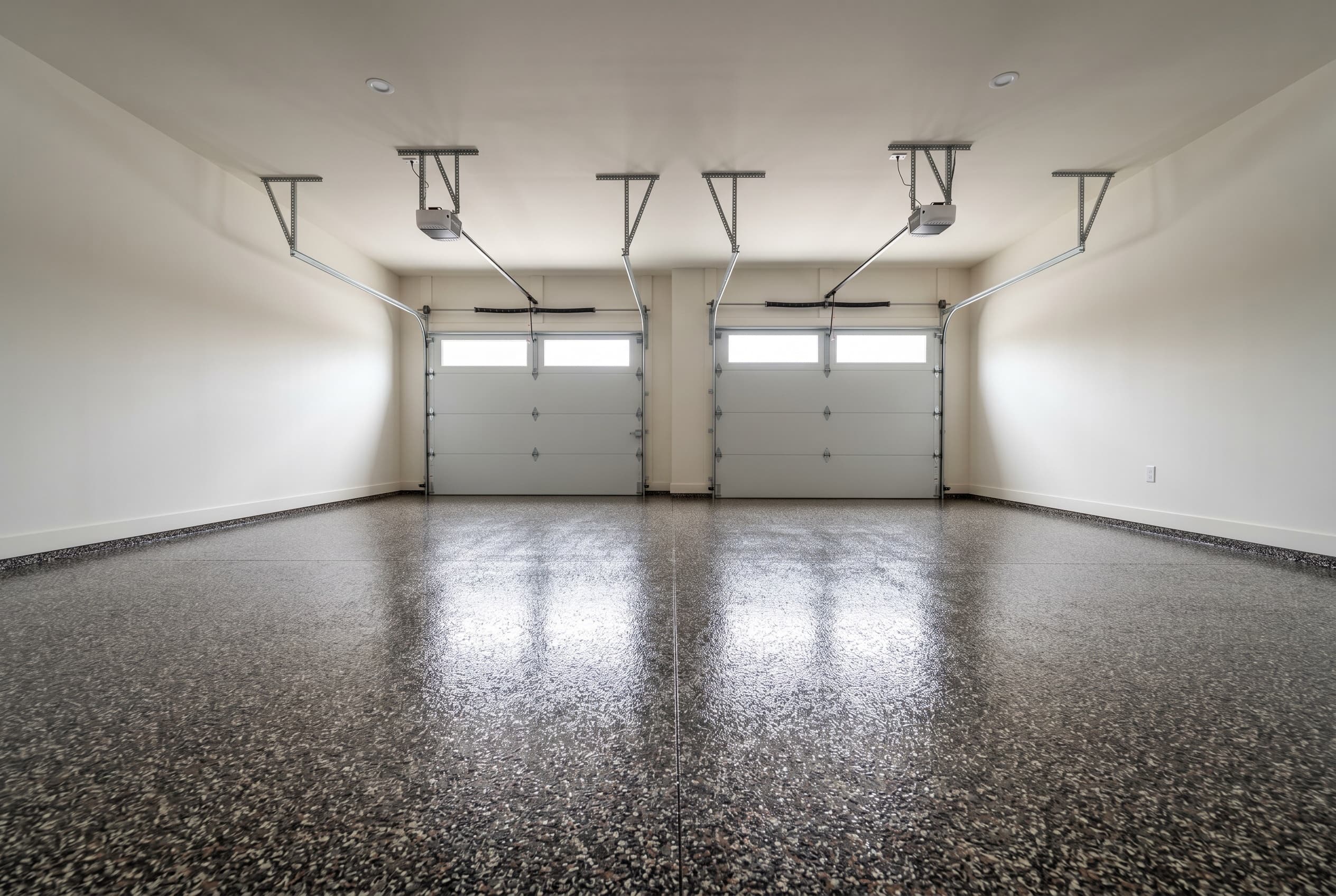
Wide two-car Troy garage with full-broadcast decorative flake epoxy.
FAQ · Decorative Flake / Chip

Common flake floor questions

A properly installed three coat polyaspartic system on a home garage in Michigan usually lasts well past a decade before it needs any recoat. The wear layer is harder than industrial sealer. That hardness is why salt, warm tires, and the freeze and thaw swing of our winters never break it. Cheaper single day kits from a chain store tend to fail inside two or three winters, because they skip the moisture primer and lean on a softer topcoat.
Epoxy is the base layer that bonds to the concrete. Polyaspartic is the topcoat that adds UV stability, chemical resistance, and a fast cure. A floor that is epoxy only stays softer, yellows in sunlight, and stays tacky longer while it sets. A good install uses both, so an epoxy primer grips the slab and a polyaspartic top lets a car roll back in within a day. Most quality crews in Michigan run that same stack for that same reason.
The number rests on three things. Those are square footage, slab condition, and the finish you pick. A slab with deep cracks, oil soaked spots, or moisture trouble adds prep work, and that prep raises the cost. Metallic and heavy flake finishes sit at the upper end. You get a fixed written quote after a free walk through on site, with no vague ranges and no surprise extras once the crew starts. Most honest crews will not post a price per square foot, since that figure misleads anyone before they see the actual slab.
Yes, and the season barely matters. The whole job happens indoors. As long as the garage holds around 55 degrees while it cures, the coating sets fine. Most winter jobs run a portable heater for a few hours during the topcoat stage. Spring and fall stay the busiest stretch for crews around here, so a winter slot often books faster for a Troy homeowner who wants the floor done before the next salt season rolls in.
Warm tire pickup is the failure that quietly ruins cheap epoxy coatings. A polyaspartic topcoat cures harder than the rubber of a tire. Because of that, it stays locked to the base coat even after a long summer drive. Many quality crews fold a first year callback into the work for tire transfer or any lift, so it pays to ask each crew about their callback policy before you sign anything.
Ready when you are

Get a fixed quote on your Troy epoxy floor this week.

Free on-site walk-through and a one-day install on most residential garages.

Call (947) 218-1225Get My Free Quote
Call NowFree Quote