Troy Epoxy Flooring
Service · Troy, MI

Concrete Polishing in Troy, MI

We diamond grind, densify with lithium, then seal. Nothing on top to peel. No recoat clock.

1-2 days
Typical install time
Free · 24-hour response

Quote: Concrete Polishing

Response under 24 hours. No spam. Contact info is used only to send the quote.

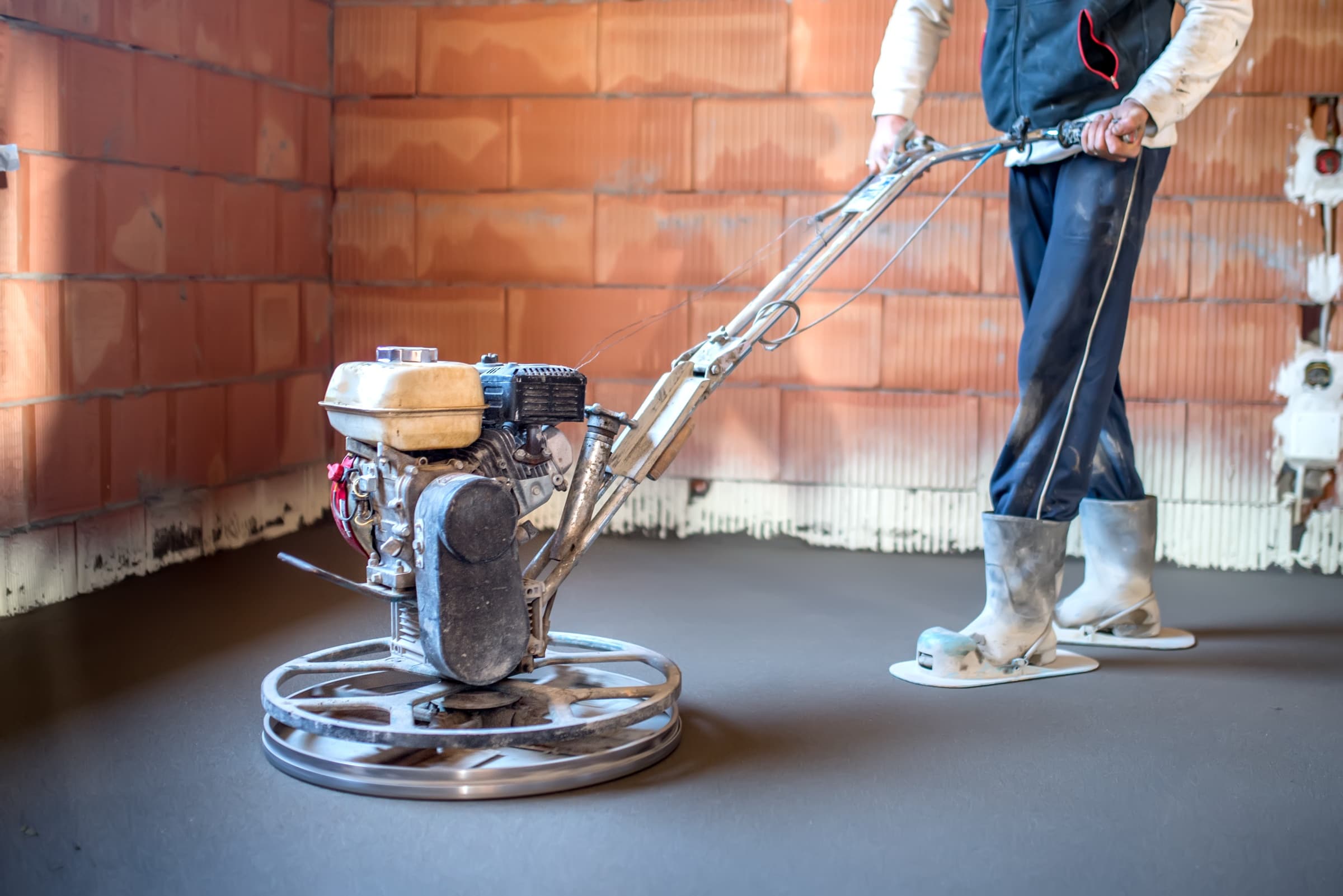
Power trowel finishing a smooth epoxy-ready concrete surface.
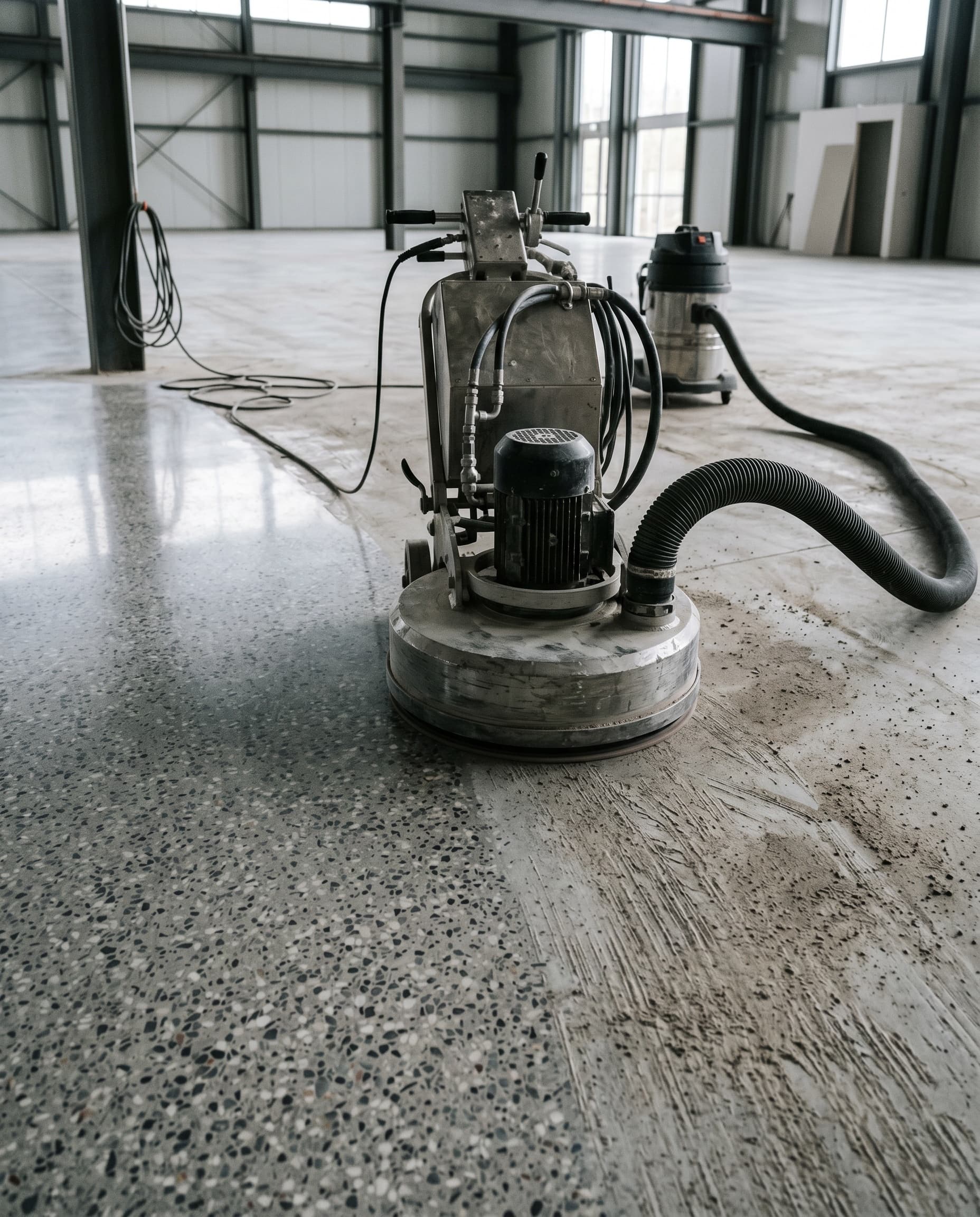
Concrete polisher with 800-grit pad on a commercial slab.
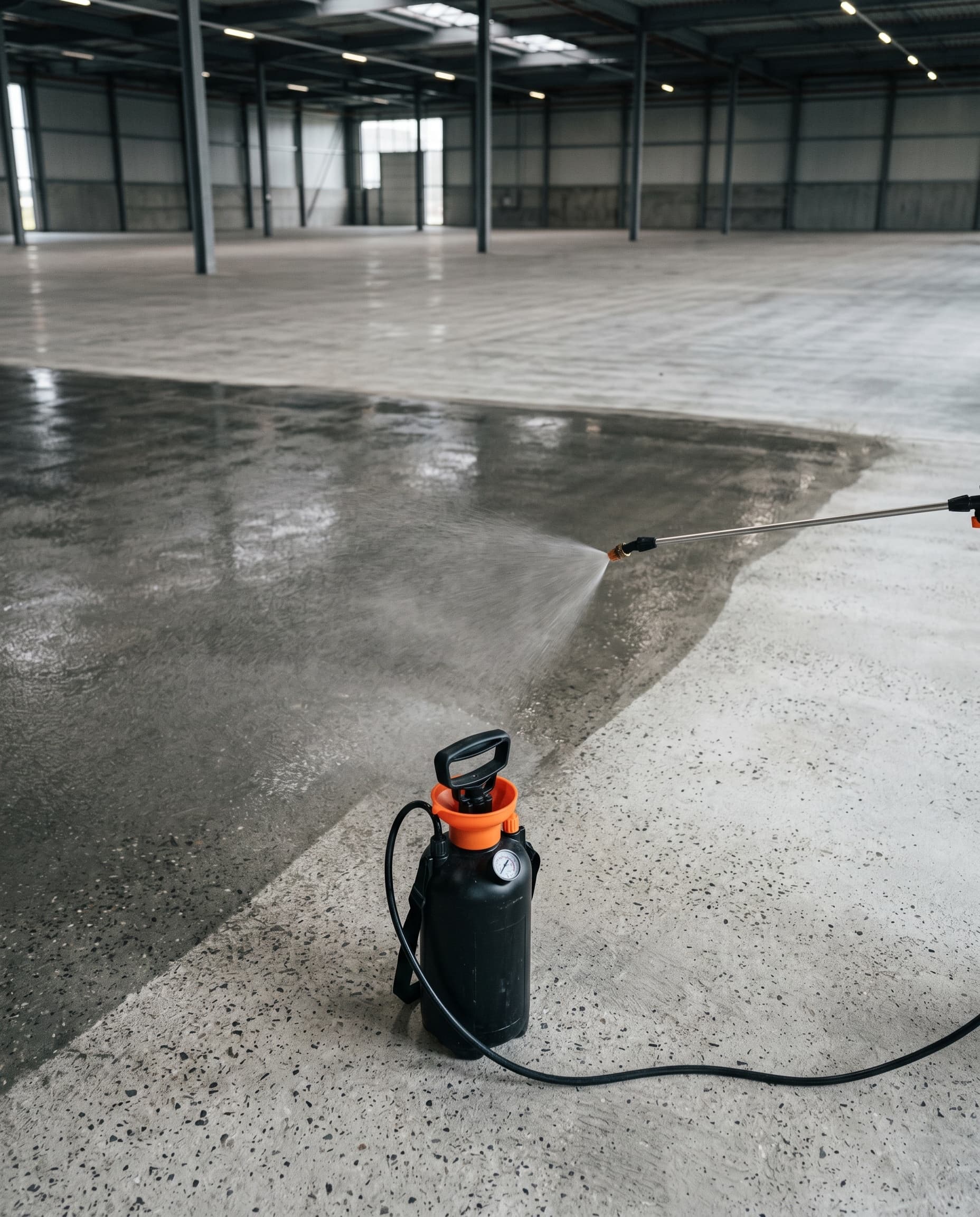
Pump sprayer applying lithium-silicate densifier to ground commercial slab.
Why concrete polishing

Polishing isn't a coating, it IS the slab

Polished concrete is the one common floor finish that is not a coating. No resin to peel. No topcoat to fail. We diamond grind the slab through three to seven grit steps, each one finer than the last, then harden the top of it with a lithium silicate that locks the surface into a denser stone. The look runs from satin to mirror, set by how many steps we take.

Most polished jobs in Troy land in commercial spaces, like auto shops and retail showrooms, or in modern basements where the owner wants an industrial look. We run a moisture test first, because vapor can dull a polished slab too. Then we work the grit steps, the densifier, and a siloxane seal that soaks in and fends off stains. Upkeep is easy. You sweep, and you damp mop now and then.

  • No coating to peel. The floor is hardened concrete, not a layer sitting over it.
  • Three looks to pick from: satin at eight steps, satin gloss at five steps, or mirror at three.
  • A lithium silicate hardener works into the slab and densifies the top of it.
  • You sweep, and you damp mop. There is no recoat to ever schedule.
  • It will not yellow or peel, and most household chemistry leaves no stain.

It fits homeowners after a modern industrial look, builders finishing a slab on a budget, and shops that want a floor of lower cost that still holds up to forklift traffic. It is not the cheapest finish to start, since the grinding labor adds up. Over the life of the floor, though, the upkeep cost comes in under every coated option.

Polished concrete is not a coating with a clock on it. It is a finish that lasts the life of the slab.

If you have a clean slab and a natural look is the goal, polished concrete is the call. We will walk the floor for free and quote the grit steps and the seal spec.
The material

What densification actually does to the slab

Polished concrete is the one common floor finish with no coating at all. The work is mechanical and chemical, done right to the slab you have. The first half of the install is the grit steps. A planetary polisher runs finer diamond pads in turn, often starting at 30 grit and climbing through 80, 150, 400, 800, and at times 1500 or 3000. That removes the soft top layer, opens up the stone trapped in the concrete, and grinds the slab flat. Each pass trades the fine scratches left by the last one for finer ones, until the surface shines enough to stand as a finish on its own.

The chemistry step is where the slab turns harder. Between grit passes, usually after the 80 grit step, we spray a lithium silicate densifier on the slab and work it into the surface. Lithium silicate reacts with the calcium hydroxide left in cured concrete and forms more calcium silicate hydrate, the same stuff that gives concrete its strength. That reaction packs the top of the slab into a denser, harder layer than what sat there before. After the last grit pass, a siloxane sealer goes down. It does not sit on top. It soaks into the surface pores and fends off chemicals, with no film that can peel.

  • Grit steps run from 30 up to 800 for satin gloss, or past 1500 for mirror, with three to seven passes in all.
  • The lithium silicate densifier reacts with the concrete itself and hardens the top of the slab.
  • A siloxane sealer soaks into the surface, with no film layer that can fail.
  • No coating, no recoat clock, no risk of a layer lifting. The floor IS the slab.
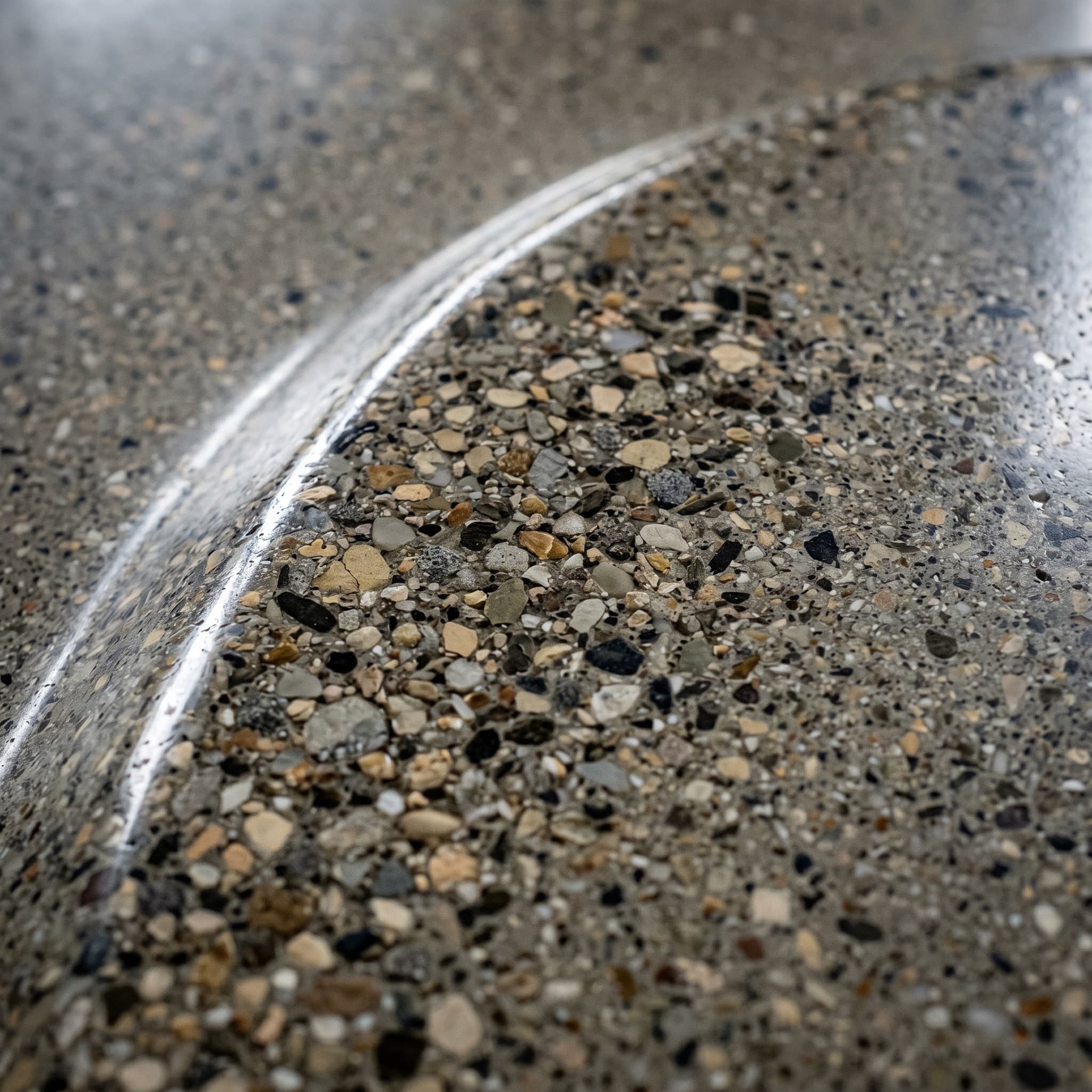
Macro of mirror-polished concrete showing revealed aggregate in cement.
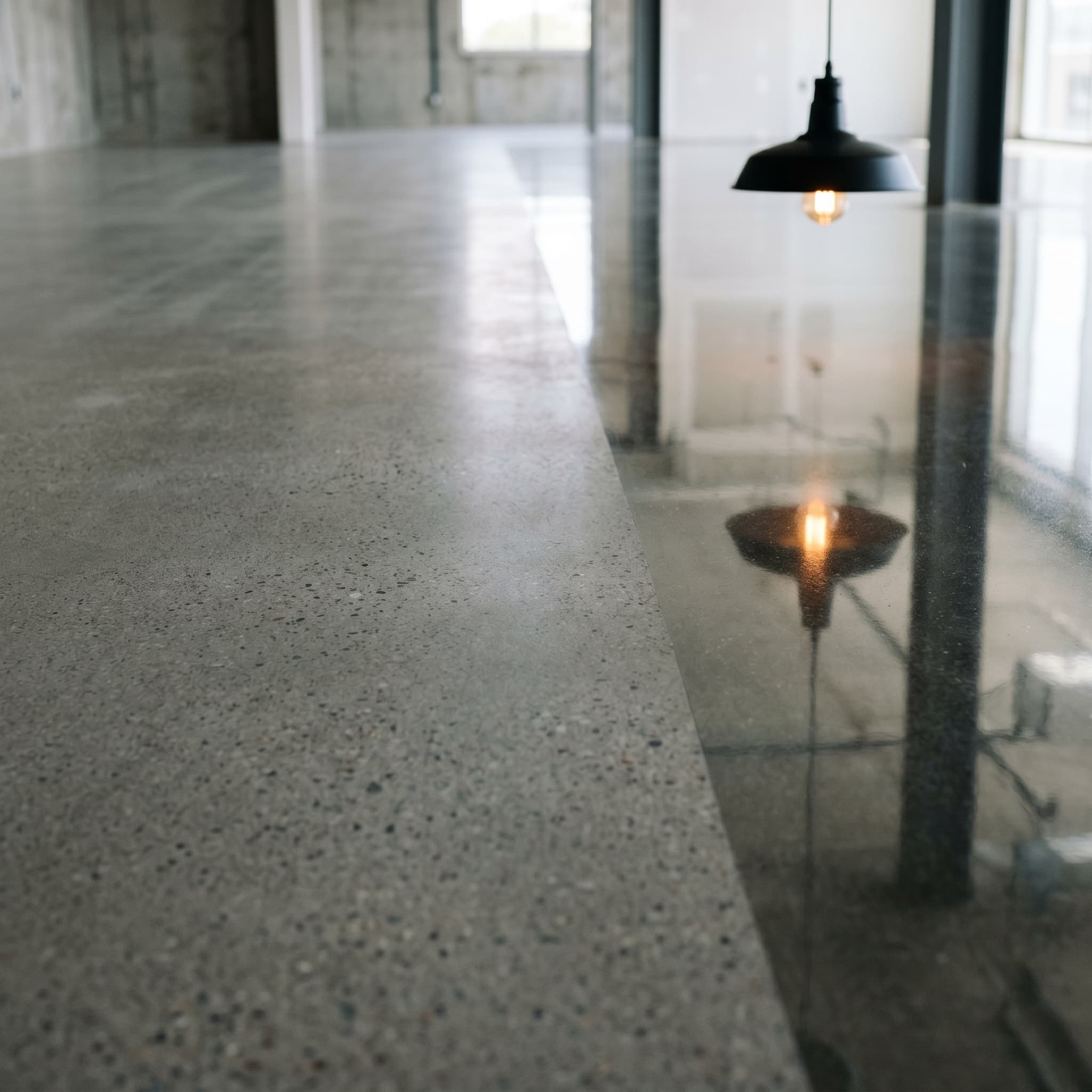
Polished concrete gradient from matte satin to mirror finish.
Compared to

Polished concrete against the coated alternatives

When you weigh polished concrete, the other choices on the table are almost always coatings, not other natural finishes. Here is the honest rundown.

Bare concrete with a topical sealer
The cheapest finish you can get. The sealer wears off in one to three years, the slab dusts, and you see no stone and no shine.
Skip
One layer of epoxy floor paint
A thin coat that sits over the slab. It peels under traffic or moisture, and it does nothing to harden the concrete underneath.
Skip
Full epoxy and polyaspartic coating
A premium coated finish with the strength of a real system. It does carry a recoat job somewhere around five to ten years out.
Recommended
Polished concrete at satin, eight steps
The polished option of lower cost. It reads as a clean industrial look with no mirror shine. The labor runs less and the upkeep is simple.
Recommended
Polished concrete at mirror, three steps past 1500 grit
The natural finish with the highest gloss you can get. Premium labor. It reads like a stone slab and reflects the ceiling lights clearly.
Recommended
The install

From quote to walk-on, fast.

STEP 01

Free Quote

Submit a few photos or book a free 15-minute on-site visit. The result: a fixed written quote, not an estimate range.

STEP 02

Floor Prep

Diamond-grind the slab, patch every crack, vacuum-fill control joints, and prime against moisture vapor.

STEP 03

Coating

100% solids epoxy base, a full flake broadcast for grip and depth, then a polyaspartic topcoat.

STEP 04

Cure & Enjoy

Walk on it the same evening. Park on it 24 hours later.

Before you book

Things to confirm before booking a polish job

Polishing fails differently than coating, so the diligence is different. Below is what catches the bad polishing bids.

What's the existing slab condition? Will it polish well?

Not every slab will take a high gloss. A slab with a soft top layer, deep tire stains, or big swings in the trowel marks may polish to satin but not to a mirror. We do a small test grind in a hidden corner before we quote the final grit level. That confirms the stone you will see and the color you will actually get. A quote with no test grind is a guess.

Does the slab need a moisture test before polishing?

Yes, even though polishing is not a coating. Heavy vapor keeps pushing up through a polished slab and can leave stains or a white haze on the surface over time. A calcium chloride test runs 60 to 72 hours. It tells us whether the slab needs a vapor sealer on top of the standard siloxane. Skip this step on a slab below grade and you get the classic "polished concrete that started looking dirty after six months."

Which gloss level should I really pick: satin, satin gloss, or mirror?

It comes down to the space and the light. Satin runs around 800 grit at eight steps. It reads as a clean industrial floor and hides small scratches well, so it suits basements, retail with track lighting, and modern homes. Satin gloss runs around 1500 grit at five steps, the middle ground you often see in showrooms. Mirror climbs past 1500 grit at three steps. It is the top of the line, yet it shows every scuff and footprint, so it fits rooms with light, steady traffic. Pick the gloss to match how the room really gets used.

What happens if the slab stains years later?

Surface stains on polished concrete come out with a spot polish. The top of the slab is the hardened working layer, and a stain that reaches past it is rare, short of something harsh that sat there for weeks. A spot polish on the stained area takes a few hours per square foot and blends back to the gloss around it. A whole floor polish is almost never needed. Even then it runs at most 30 to 40 percent of the first install.

Is residential polish the same spec as commercial polish?

The process is the same, but the choices shift. Home floors often take a higher gloss for the look and run a lighter seal. Commercial floors weigh gloss against how scuffs show, so they lean toward satin or satin gloss with a tougher sealer made for forklift traffic and chemicals. The grit steps stay the same. We tune the densifier and the sealer to the job.

After the install

What maintenance looks like on a polished slab

Polished concrete asks the least of you of any common floor finish, since there is no coating to fail. In most homes and light commercial spaces, a daily sweep and a damp mop now and then is the whole program. The siloxane sealer we put down on install day never needs a recoat. It soaked into the surface and is part of the floor now. Two things can dull a polished floor over the years. One is grit dragged across it again and again, the same foe as any floor. The other is acid spills left to sit, like citrus, vinegar, or soda, which can etch the surface. Both are easy to head off.

  • Sweep daily under commercial traffic, weekly at home. Grit is the one thing that really wears a polished floor down.
  • Damp mop with plain water or a neutral cleaner. Keep acid cleaners like citrus and vinegar off polished concrete.
  • Wipe up acid spills within the hour. A soda or wine puddle left overnight can etch a faint mark.
  • No coating means no recoat clock. If one spot stains or scratches, a quick spot polish brings the gloss right back.
  • Check commercial floors once a year for wear at busy turn points, like dock corners and doorways. A light densifier refresh around year five to ten keeps the floor going for the long haul.
See the work

What a polished concrete floor looks like

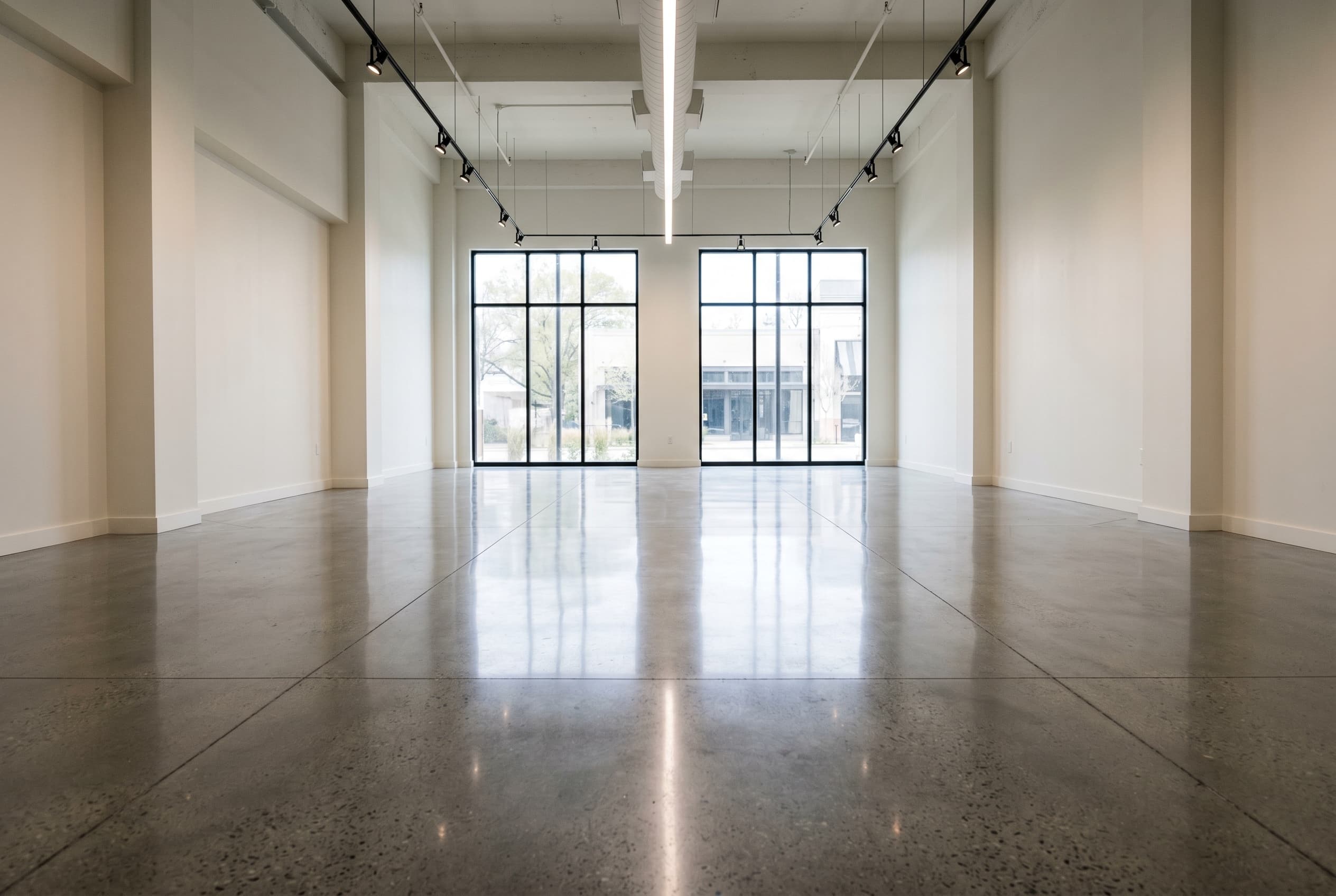
Wide retail showroom with polished concrete floor and track lighting.
FAQ · Concrete Polishing

Common concrete polishing questions

A properly installed three coat polyaspartic system on a home garage in Michigan usually lasts well past a decade before it needs any recoat. The wear layer is harder than industrial sealer. That hardness is why salt, warm tires, and the freeze and thaw swing of our winters never break it. Cheaper single day kits from a chain store tend to fail inside two or three winters, because they skip the moisture primer and lean on a softer topcoat.
Epoxy is the base layer that bonds to the concrete. Polyaspartic is the topcoat that adds UV stability, chemical resistance, and a fast cure. A floor that is epoxy only stays softer, yellows in sunlight, and stays tacky longer while it sets. A good install uses both, so an epoxy primer grips the slab and a polyaspartic top lets a car roll back in within a day. Most quality crews in Michigan run that same stack for that same reason.
The number rests on three things. Those are square footage, slab condition, and the finish you pick. A slab with deep cracks, oil soaked spots, or moisture trouble adds prep work, and that prep raises the cost. Metallic and heavy flake finishes sit at the upper end. You get a fixed written quote after a free walk through on site, with no vague ranges and no surprise extras once the crew starts. Most honest crews will not post a price per square foot, since that figure misleads anyone before they see the actual slab.
Yes, and the season barely matters. The whole job happens indoors. As long as the garage holds around 55 degrees while it cures, the coating sets fine. Most winter jobs run a portable heater for a few hours during the topcoat stage. Spring and fall stay the busiest stretch for crews around here, so a winter slot often books faster for a Troy homeowner who wants the floor done before the next salt season rolls in.
Warm tire pickup is the failure that quietly ruins cheap epoxy coatings. A polyaspartic topcoat cures harder than the rubber of a tire. Because of that, it stays locked to the base coat even after a long summer drive. Many quality crews fold a first year callback into the work for tire transfer or any lift, so it pays to ask each crew about their callback policy before you sign anything.
Ready when you are

Get a fixed quote on your Troy epoxy floor this week.

Free on-site walk-through and a one-day install on most residential garages.

Call (947) 218-1225Get My Free Quote
Call NowFree Quote