Troy Epoxy Flooring
Service · Troy, MI

Garage Floor Epoxy in Troy, MI

Here is what a coating system built in four real passes looks like, and why it lasts through Michigan garages.

1 day
Typical install time
Free · 24-hour response

Quote: Garage Floor Epoxy

Response under 24 hours. No spam. Contact info is used only to send the quote.

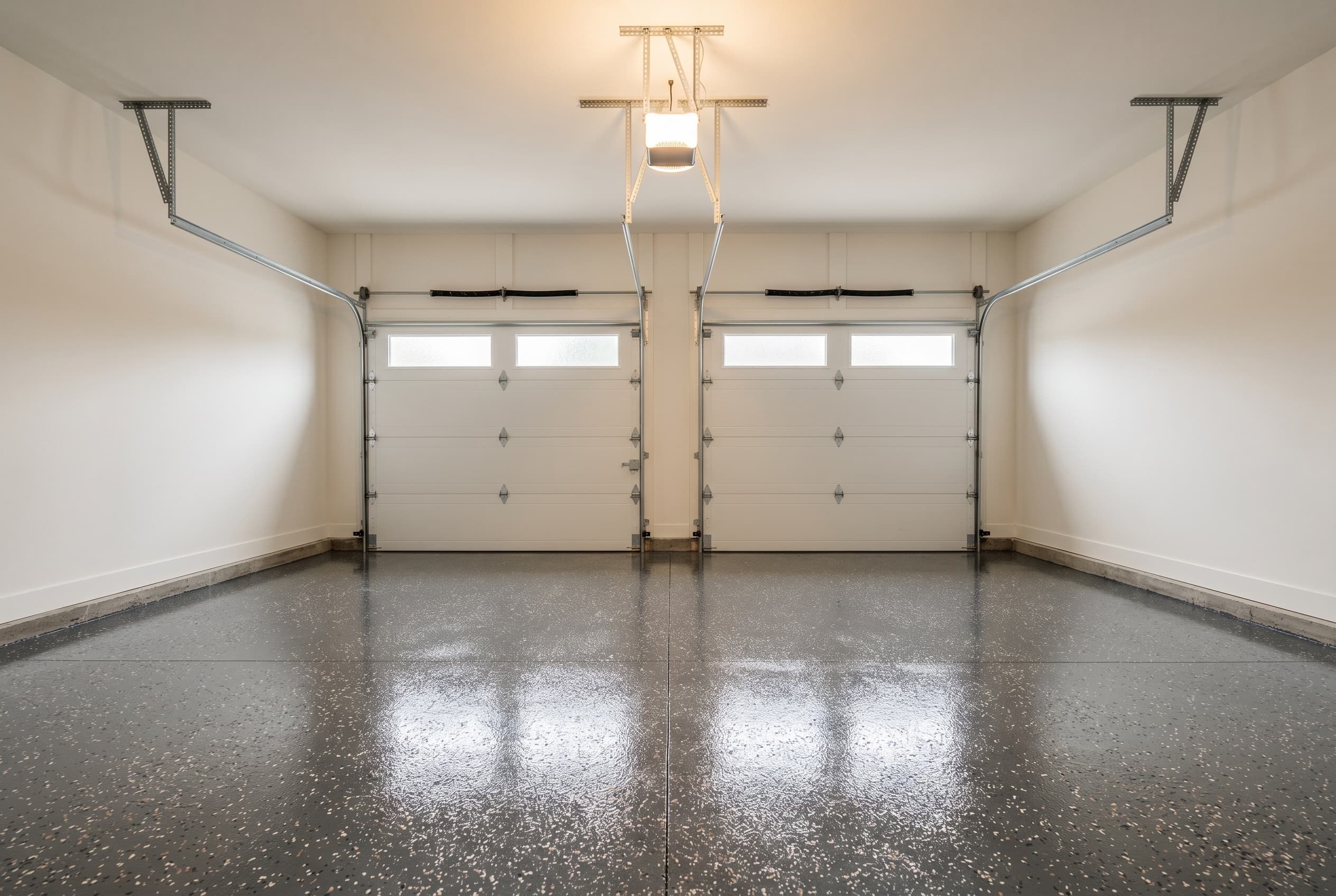
Finished Troy garage with glossy charcoal vinyl-flake epoxy floor.
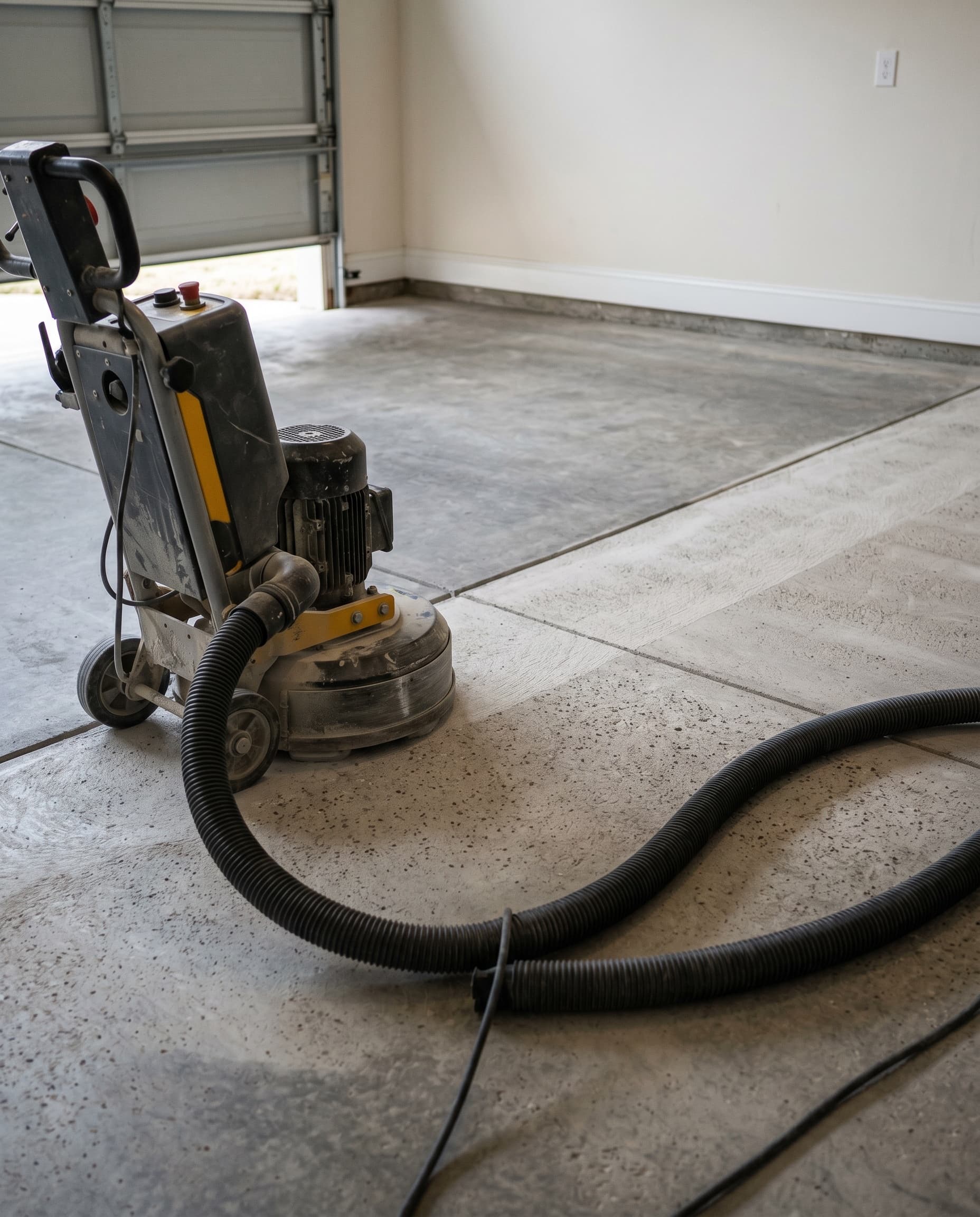
Diamond grinder profiling a Troy garage slab to CSP-3.
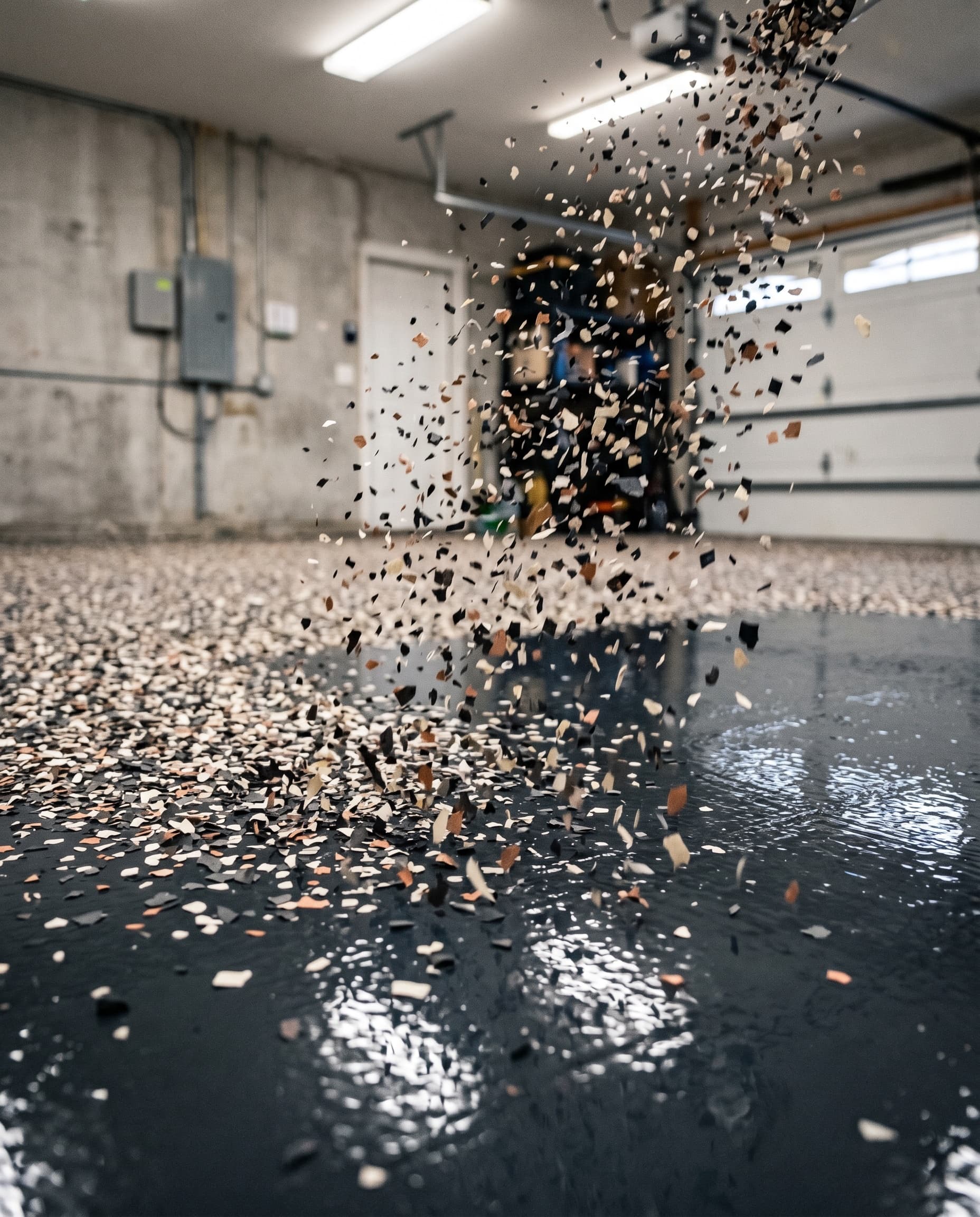
Vinyl flake broadcast into wet charcoal base, Troy garage.
Why garage floor epoxy

What goes into a garage floor that holds up to Michigan winters

Most Troy garages start as bare concrete. That slab has caught road salt, brake fluid, gear oil, and warm tires for years, and left alone it pits, dusts, and stains. The epoxy kits you grab at the chain store cover the damage for one season. Then they yellow, turn tacky in summer, and peel the first time a warm tire rolls over them. The fix is not another coat of paint. It is a coating system built for the real chemistry of a Michigan garage.

A good garage system goes down in four passes. First we grind the slab with a diamond head to a CSP 3 profile. Next comes a moisture vapor reading on the slab, then a primer rated for that exact reading. Third is a base coat of 100% solids epoxy, the layer that fuses to the concrete, with a full flake broadcast settling into the wet base for grip and depth. Last is a polyaspartic topcoat that cures harder than industrial floor sealer, locks the flake in, and stays UV stable instead of yellowing over the years.

  • Most standard two car garages install in one working day. You can walk on the floor that same evening.
  • It is tough enough to park on roughly 24 hours after the topcoat goes down.
  • The flake finish is rated for grip, so it feels safer under snowy boots than a smooth gloss does.
  • It shrugs off road salt, gear oil, battery acid, and brake fluid.
  • The work happens indoors, so we install all year. A portable heater handles winter cures with no trouble.

Troy and the nearby Oakland and Macomb cities all run on the same Michigan freeze and thaw chemistry. That list takes in Royal Oak, Birmingham, Rochester Hills, Sterling Heights, Madison Heights, Ferndale, Bloomfield Hills, Auburn Hills, Clawson, and Warren. A solid installer here quotes a fixed written number after a free 15 minute walk through at your home, never a vague range over the phone.

Most epoxy floors don't fail because the slab is bad. They fail because the coating wasn't built for this climate.

Is your garage floor cracking, dusting, peeling, or just a little embarrassing to open the door on? The fix is a real coating system, not one more bucket of paint. Use the form or the number above to request a free quote from a local Troy installer.
The material

The four layers, and why each one is there

The system runs heavier than a garage floor strictly needs, and that is on purpose. The diamond grind does three jobs at once. It opens the surface pores of the concrete so the coating has something to bite into, it knocks down high spots and trowel ridges, and it exposes any cracks or blown pop spots that we patch before primer goes down. A garage that was sealed, painted, or has soaked oil into the slab still has to come back to bare concrete first. Skip this step or rush it, and that is the single most common reason a coating peels away two years later.

Next we read the moisture vapor coming off the slab, because concrete in Michigan basements and ground level garages can wick water up through the pad. The base coat is 100% solids epoxy. There is no solvent to flash off and shrink the film, and we lay it roughly 16 to 20 mils thick. The vinyl flake broadcasts into the wet base while the resin is still tacky, so the chips anchor into the structural layer instead of perching on top of it. The polyaspartic topcoat that follows comes from a different family of chemistry than the base. It cures fast, you can walk on it in hours and park on it in a day, it stays clear under UV instead of ambering like a polyurethane, and it scratches and chips far less than an epoxy topcoat would on its own.

  • A 100% solids base coat means no solvents, no shrinkage, and no thin spots.
  • Vinyl flake broadcasts into the wet base, so it anchors in rather than just sitting glued on top.
  • The polyaspartic topcoat shrugs off road salt, warm tires, brake fluid, and gear oil.
  • Four layers in all over a ground concrete profile: primer, base, flake, then topcoat.
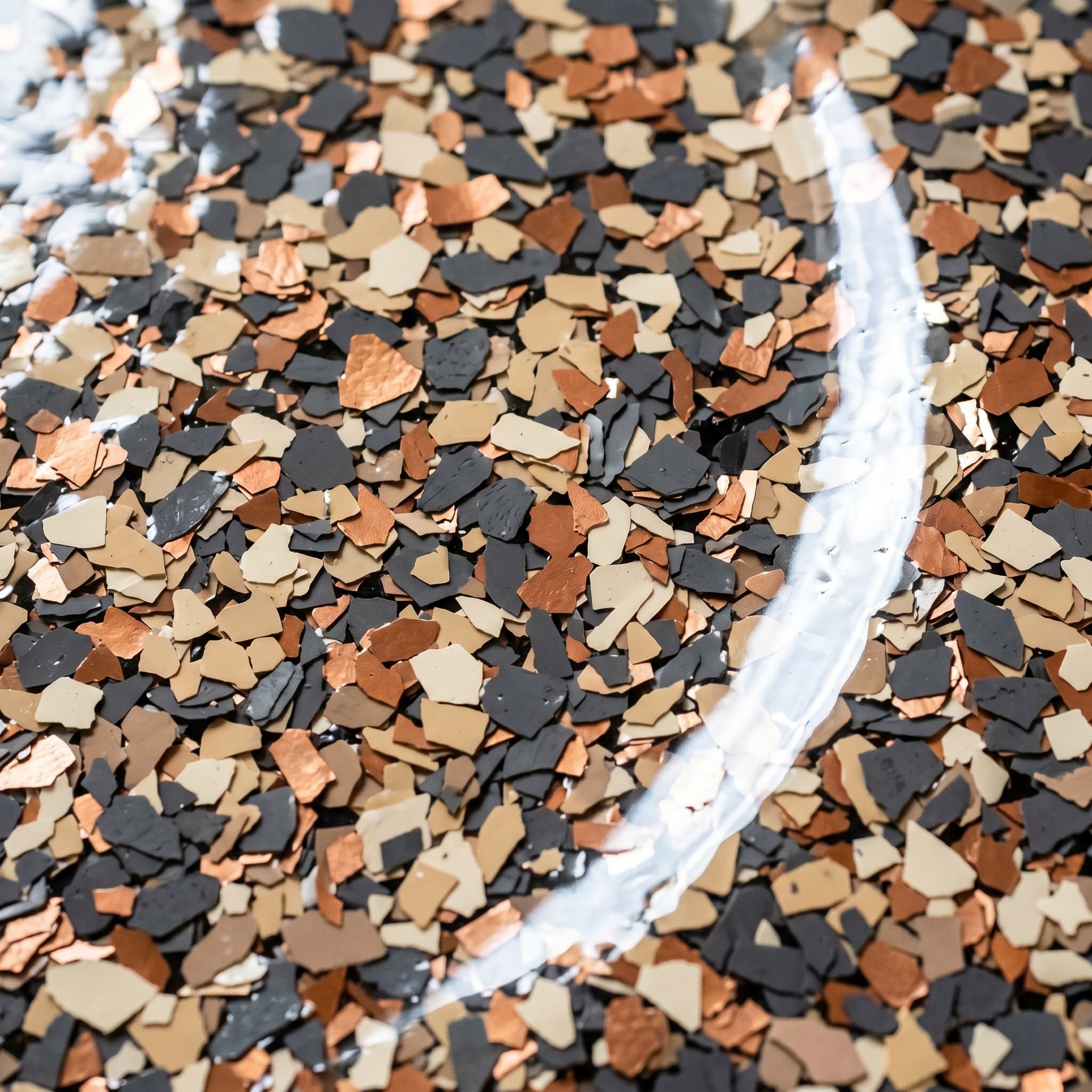
Macro of cured polyaspartic with charcoal, cream, copper flake.
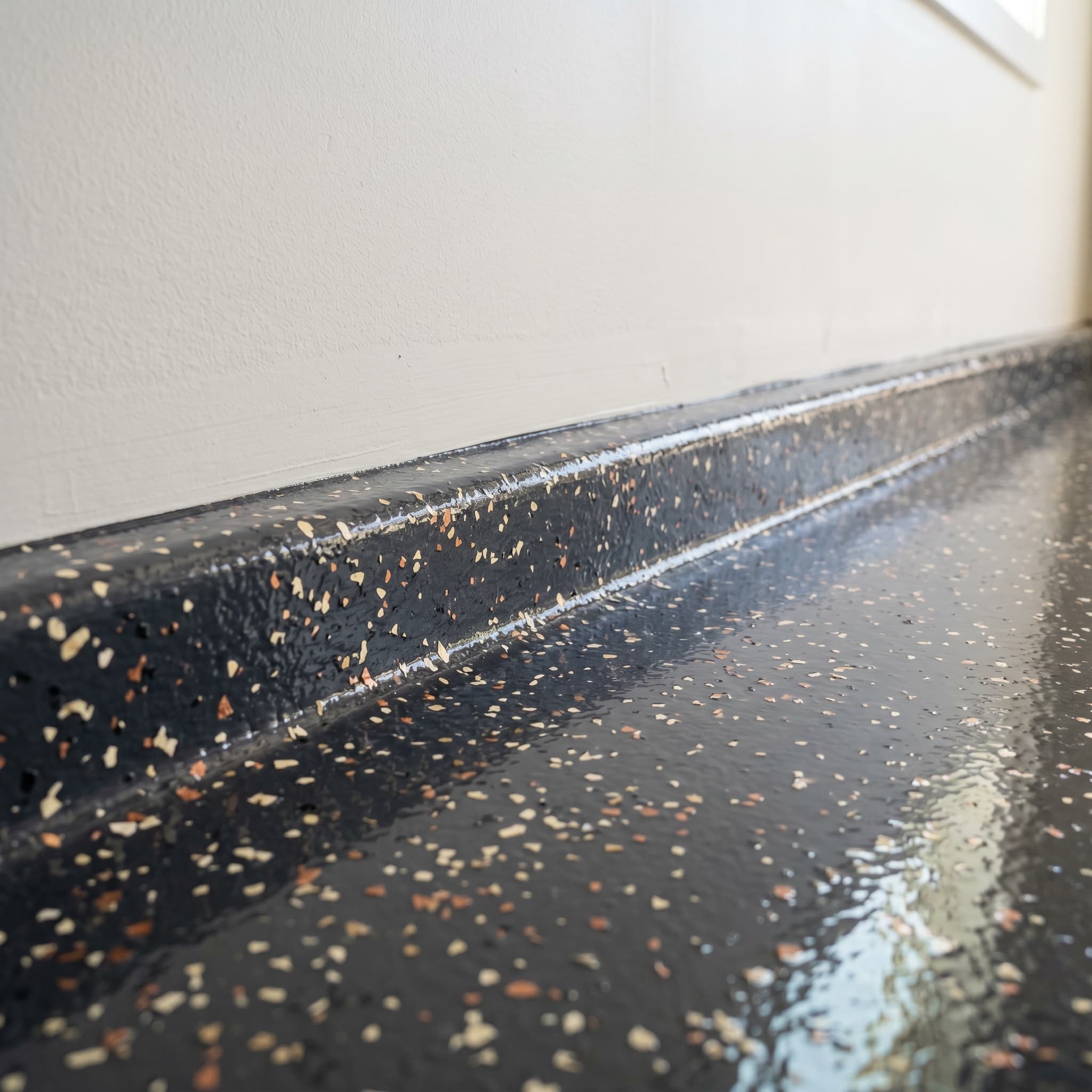
Clean floor-to-wall cove transition on finished Troy garage floor.
Compared to

What else people consider, and the trade offs

Plenty of cheaper looking options exist for a garage floor, and most are fine for a couple of seasons. Here is the honest version of the comparison. Each row says what the option really does in a Michigan garage, not what the marketing claims.

Latex floor paint
Cheap, and it looks decent for the first summer. It peels when a warm tire rolls over it and never survives a winter of snow boots.
Skip
Roll-out garage mats
Easy to install and fully reversible. They trap moisture against the slab, which speeds up concrete dusting and salt damage underneath.
Acceptable
Concrete sealer or stain
Better than paint, and the slab still breathes. It does not stop a warm tire from lifting the surface, and the dusting comes back fast.
Acceptable
DIY epoxy kit from the chain store
Looks fine in year one. It yellows by year two and peels under warm tires by year three. No prep step comes in the box.
Skip
Full epoxy and polyaspartic system
The four pass install described above. Built for Michigan freeze and thaw, ready to park on in a day, and the flake hides scratches.
Recommended
The install

From quote to walk-on, fast.

STEP 01

Free Quote

Submit a few photos or book a free 15-minute on-site visit. The result: a fixed written quote, not an estimate range.

STEP 02

Floor Prep

Diamond-grind the slab, patch every crack, vacuum-fill control joints, and prime against moisture vapor.

STEP 03

Coating

100% solids epoxy base, a full flake broadcast for grip and depth, then a polyaspartic topcoat.

STEP 04

Cure & Enjoy

Walk on it the same evening. Park on it 24 hours later.

Before you book

Things to confirm before signing a contract

Reputable installers in the Troy area will answer all of these without dodging. If a contractor pushes back on any of them, that's the signal to keep looking.

How is the slab prepped, exactly?

The honest answer is a diamond grind. Not an acid etch, and not a pressure wash. Acid etching leaves an uneven profile plus chemical residue that fights adhesion, and a pressure wash on its own simply does not open the concrete surface enough for the coating to bite in. A planetary grinder running under a vacuum shroud is the only prep that lands a steady CSP 3 profile on a home slab every time.

What happens to existing cracks?

Static hairline cracks get chased open with a saw blade, vacuumed clean, and filled with a flexible polyurea crack repair before the primer goes down. Active moving cracks, usually at the expansion joints, get isolated and handled in a different way, because anything fused straight across a live joint will telegraph through and tear. A walk through before the quote should call out which cracks are which.

Will it survive hot tires?

Yes, when the topcoat is polyaspartic. The lifting you see when warm tires roll over a floor happens with softer coatings, usually uncured DIY epoxy or single stage urethane paints. The warm rubber grabs that soft film as it cools and peels it off the slab. A fully cured polyaspartic topcoat is harder than the tire rubber, so the tire lets go cleanly even after a long summer drive on the highway.

Color and flake options?

You pick the flake from manufacturer color blends. Common garage choices are a charcoal, cream, and copper mix, a charcoal, grey, and white earth tone mix, or a custom blend matched to your home exterior. Solid color with no flake is an option, but it gives up the grip and hides slab repairs less well. We leave a small sample board at the walk through so you can choose in natural light.

How long until we can park on it?

Foot traffic comes back in about 4 to 6 hours after the topcoat. Light things like toolboxes and shelving can go back on the floor by the next morning. You can park on it roughly 24 hours after the last topcoat pass. The full chemical cure, the point where it shrugs off spills and washing, lands around 7 days. Most homeowners reload the whole garage over a weekend with no issue.

After the install

Once the floor cures, here's what keeps it looking new

A finished epoxy and polyaspartic floor asks for less care than the bare concrete it replaced. The topcoat resists chemical staining, so dropped oil and salt brine wipe off instead of soaking in. Most owners sweep weekly and damp mop monthly with plain water or a floor cleaner that is gentle on the pH scale. Two things shorten a floor's life. The first is grit dragged across the surface over and over, which a doormat at the entry door solves. The second is harsh degreaser used at full strength, so always dilute it per the label. The floor will scratch under enough force, but a scratch on a flake floor reads as part of the texture rather than as damage, unlike a single color coating where every mark shows.

  • Sweep weekly with a soft broom or a vacuum. Grit is the only real enemy this floor has.
  • Damp mop monthly with plain water or a gentle floor cleaner. Keep acids and strong ammonia off it.
  • Set a rough fiber doormat or a rubber mat just inside the entry doorway to catch snow grit.
  • Wipe oil, brake fluid, or antifreeze within a day. None of it soaks in, but it leaves a residue ring if it sits for weeks.
  • Did a heavy tool drop on edge and leave a chip or gouge? Call the installer for a small spot repair within a few months, since the flake stock on hand lets them match it.
See the work

What a finished garage floor looks like

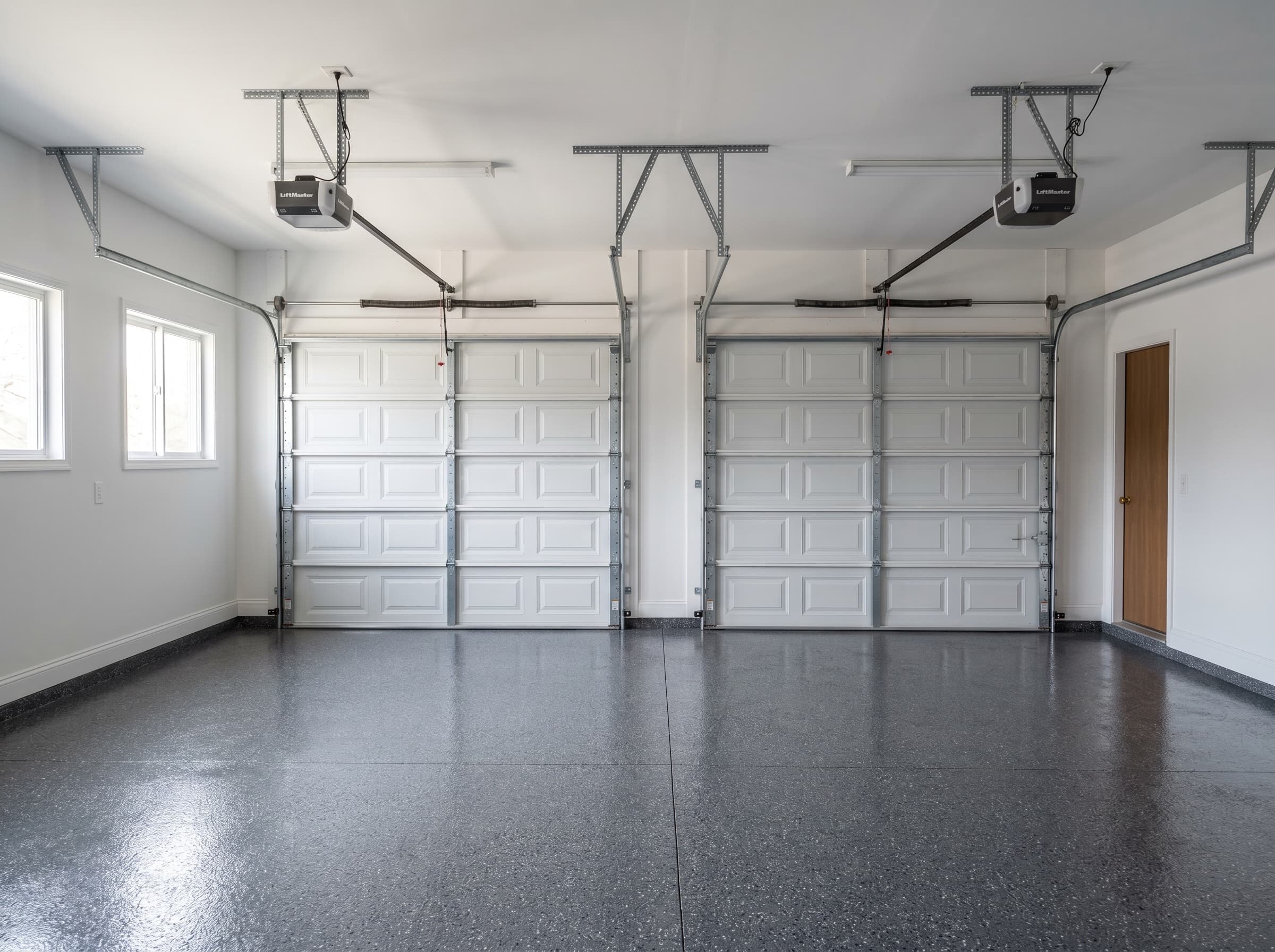
Wide finished two-car Troy garage with charcoal flake epoxy.
FAQ · Garage Floor Epoxy

Questions Troy homeowners ask about garage epoxy

A properly installed three coat polyaspartic system on a home garage in Michigan usually lasts well past a decade before it needs any recoat. The wear layer is harder than industrial sealer. That hardness is why salt, warm tires, and the freeze and thaw swing of our winters never break it. Cheaper single day kits from a chain store tend to fail inside two or three winters, because they skip the moisture primer and lean on a softer topcoat.
Epoxy is the base layer that bonds to the concrete. Polyaspartic is the topcoat that adds UV stability, chemical resistance, and a fast cure. A floor that is epoxy only stays softer, yellows in sunlight, and stays tacky longer while it sets. A good install uses both, so an epoxy primer grips the slab and a polyaspartic top lets a car roll back in within a day. Most quality crews in Michigan run that same stack for that same reason.
The number rests on three things. Those are square footage, slab condition, and the finish you pick. A slab with deep cracks, oil soaked spots, or moisture trouble adds prep work, and that prep raises the cost. Metallic and heavy flake finishes sit at the upper end. You get a fixed written quote after a free walk through on site, with no vague ranges and no surprise extras once the crew starts. Most honest crews will not post a price per square foot, since that figure misleads anyone before they see the actual slab.
Yes, and the season barely matters. The whole job happens indoors. As long as the garage holds around 55 degrees while it cures, the coating sets fine. Most winter jobs run a portable heater for a few hours during the topcoat stage. Spring and fall stay the busiest stretch for crews around here, so a winter slot often books faster for a Troy homeowner who wants the floor done before the next salt season rolls in.
Warm tire pickup is the failure that quietly ruins cheap epoxy coatings. A polyaspartic topcoat cures harder than the rubber of a tire. Because of that, it stays locked to the base coat even after a long summer drive. Many quality crews fold a first year callback into the work for tire transfer or any lift, so it pays to ask each crew about their callback policy before you sign anything.
Ready when you are

Get a fixed quote on your Troy epoxy floor this week.

Free on-site walk-through and a one-day install on most residential garages.

Call (947) 218-1225Get My Free Quote
Call NowFree Quote