Troy Epoxy Flooring
Service · Troy, MI

Commercial and Warehouse Epoxy Flooring in Troy, MI

See what a coating built for forklift traffic and made to spec looks like. We phase the install around your production schedule.

Quoted per project
Typical install time
Free · 24-hour response

Quote: Commercial / Warehouse Epoxy

Response under 24 hours. No spam. Contact info is used only to send the quote.

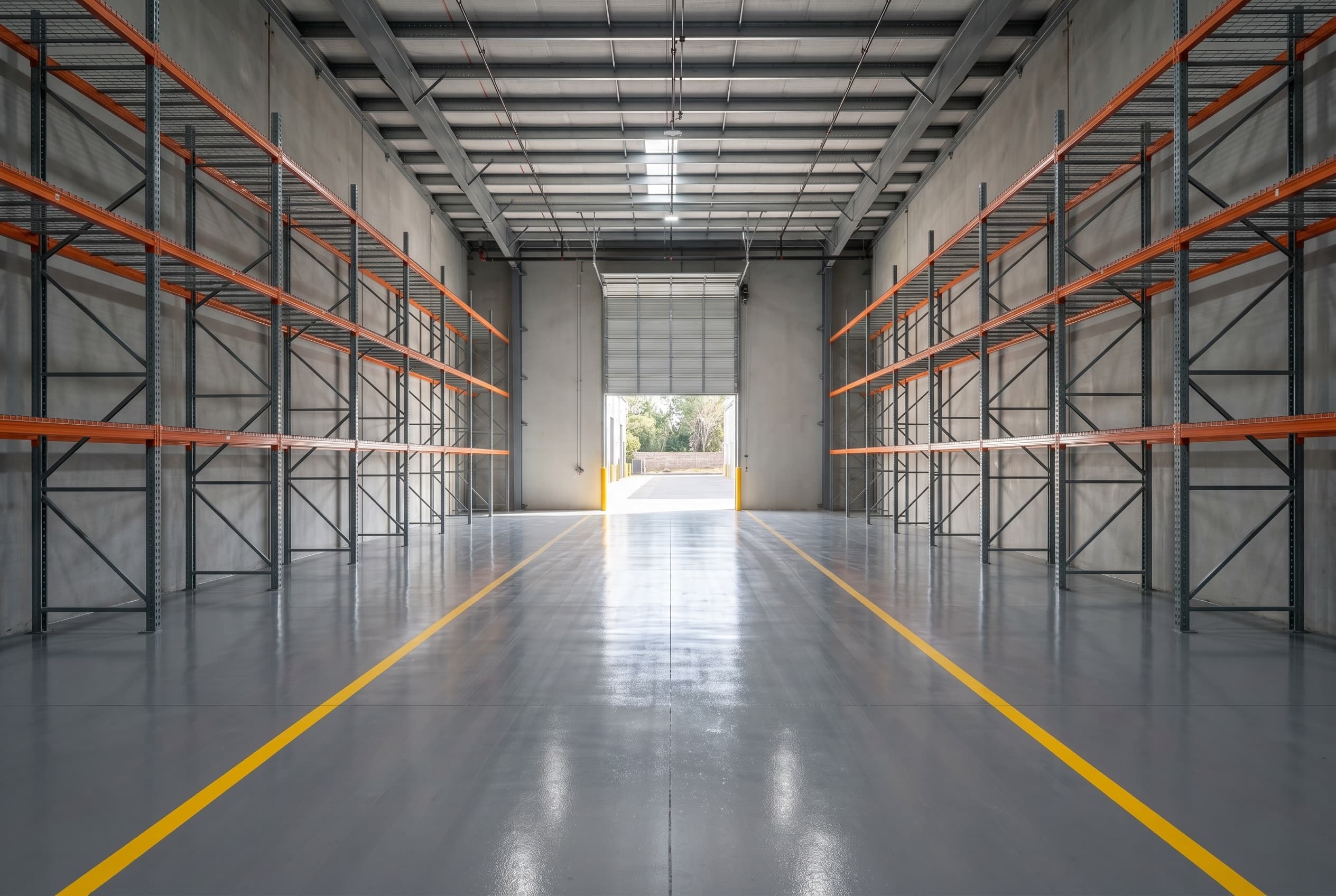
Commercial warehouse epoxy flooring. Forklift-rated grey coating system.
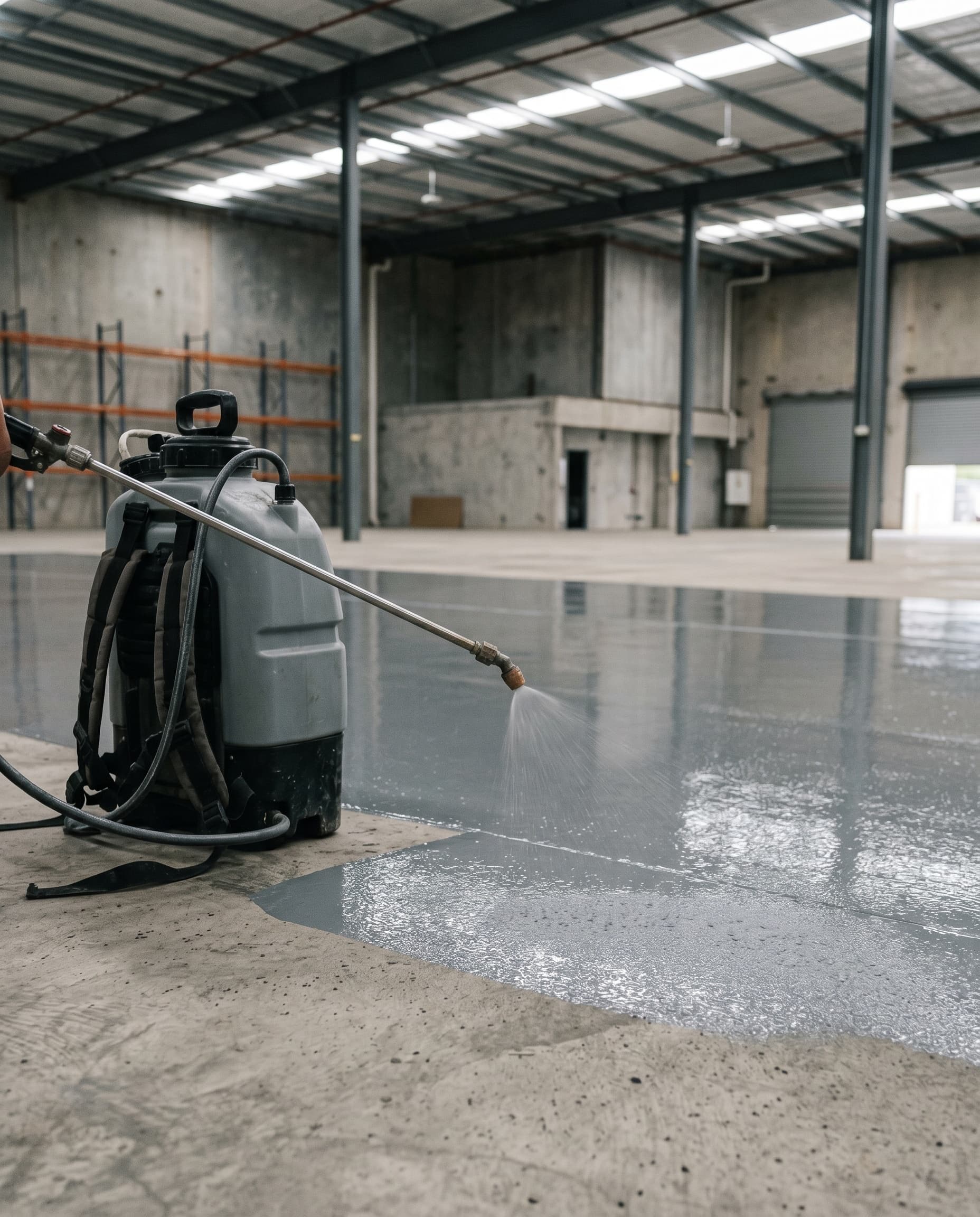
Backpack sprayer applying industrial grey epoxy on commercial slab.
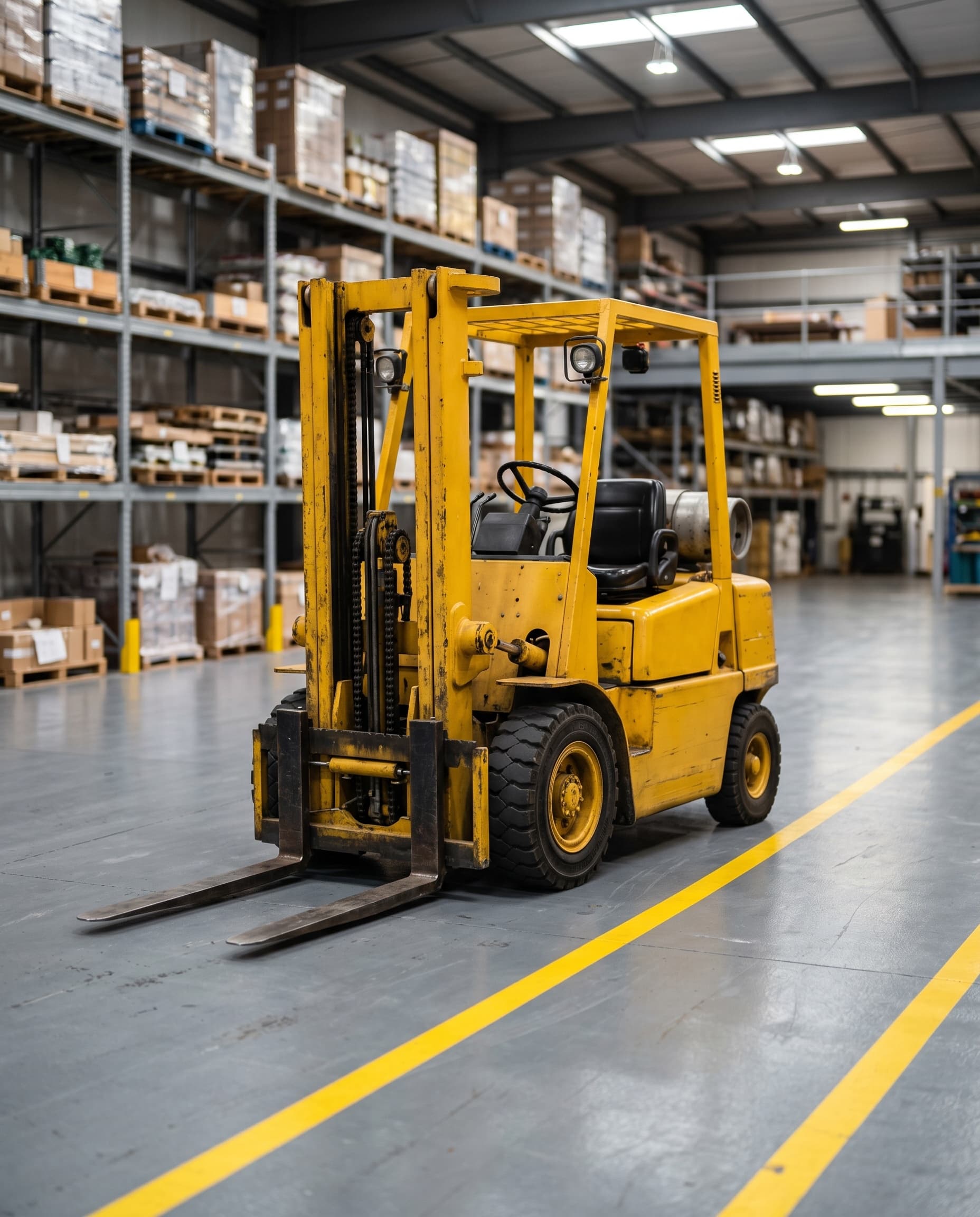
Forklift on finished grey commercial epoxy floor with lane stripes.
Why commercial / warehouse epoxy

Industrial floors don't have to shut down your operation

Commercial floors fail in their own way. Think forklift skids, oil drips, weekend install windows, and the need to stripe traffic lanes inside the coating. Each one changes the spec. A residential garage system simply isn't enough for a shop that runs three shifts. What works here is a heavier version of the same stack, plus a plan that keeps your floor open during business hours.

Commercial systems start with a shot blast profile, which is rougher than a diamond grind. Then comes a thick epoxy mortar in the busy zones, a full base coat, and a topcoat. The topcoat is either polyaspartic or aliphatic urethane, and which one we pick depends on how much chemical exposure the floor sees. Traffic lanes, racking footprints, and safety zones get striped inside the coating so they don't fade. We price per square foot after a free walk through. For shops that can't close in the daytime, we install on weekends or overnight.

  • Systems rated for forklift traffic in your busiest zones.
  • We install on weekends and overnight, so the floor stays open during business hours.
  • Traffic lanes, racking footprints, and safety zones striped inside the coating.
  • Resists warm tires, brake fluid, hydraulic oil, and most solvents.
  • We can share references from current accounts when you ask.

Commercial accounts across Troy, the rest of Oakland County, and Macomb usually get a written quote within three business days of the walk through. We phase every install around your production schedule.

A good commercial install phases around your production schedule, not the other way around.

If you're speccing a new floor for a warehouse, auto shop, manufacturing line, or commercial garage, use the form to send floor plans. We'll get back to you with a fixed quote.
The material

What a commercial system has that a residential system doesn't

A residential garage system has to survive warm tires, salt brine, and the odd gear oil drip. A commercial floor has to survive all of that plus forklift skids, pallet jack wheels, repeated chemical exposure, weekend install windows, and years of wear in the traffic lanes. So the commercial spec changes in three places. First, slab prep moves from diamond grinding to shot blasting, which throws fine steel shot at high speed and leaves a deeper, rougher profile for the coating to grab. Second, the base layer changes. Instead of straight epoxy, we use a thick epoxy mortar in any zone that takes forklift traffic, building it up to between 30 and 60 mils.

The topcoat is the third change. Residential garages get polyaspartic for a fast cure and good UV stability. Commercial floors pick between polyaspartic for general traffic and light chemicals, or aliphatic urethane for heavier chemical exposure and hot wash downs. Traffic stripes, racking footprints, safety zones, and the walkways OSHA wants get painted inside the coating with a matched epoxy stripe paint. Then we seal them under the topcoat, so they don't fade or scrub off the way painted stripes on top do. The whole install phases around your schedule. We pour and cure on alternating bays overnight or on weekends, so your operation never fully closes.

  • Shot blast profile, rougher than a diamond grind, sized for forklift traffic.
  • Thick epoxy mortar in the busy zones, 30 to 60 mils.
  • Traffic stripes set inside the coating, not painted on top.
  • Polyaspartic or aliphatic urethane topcoat chosen by chemical exposure.
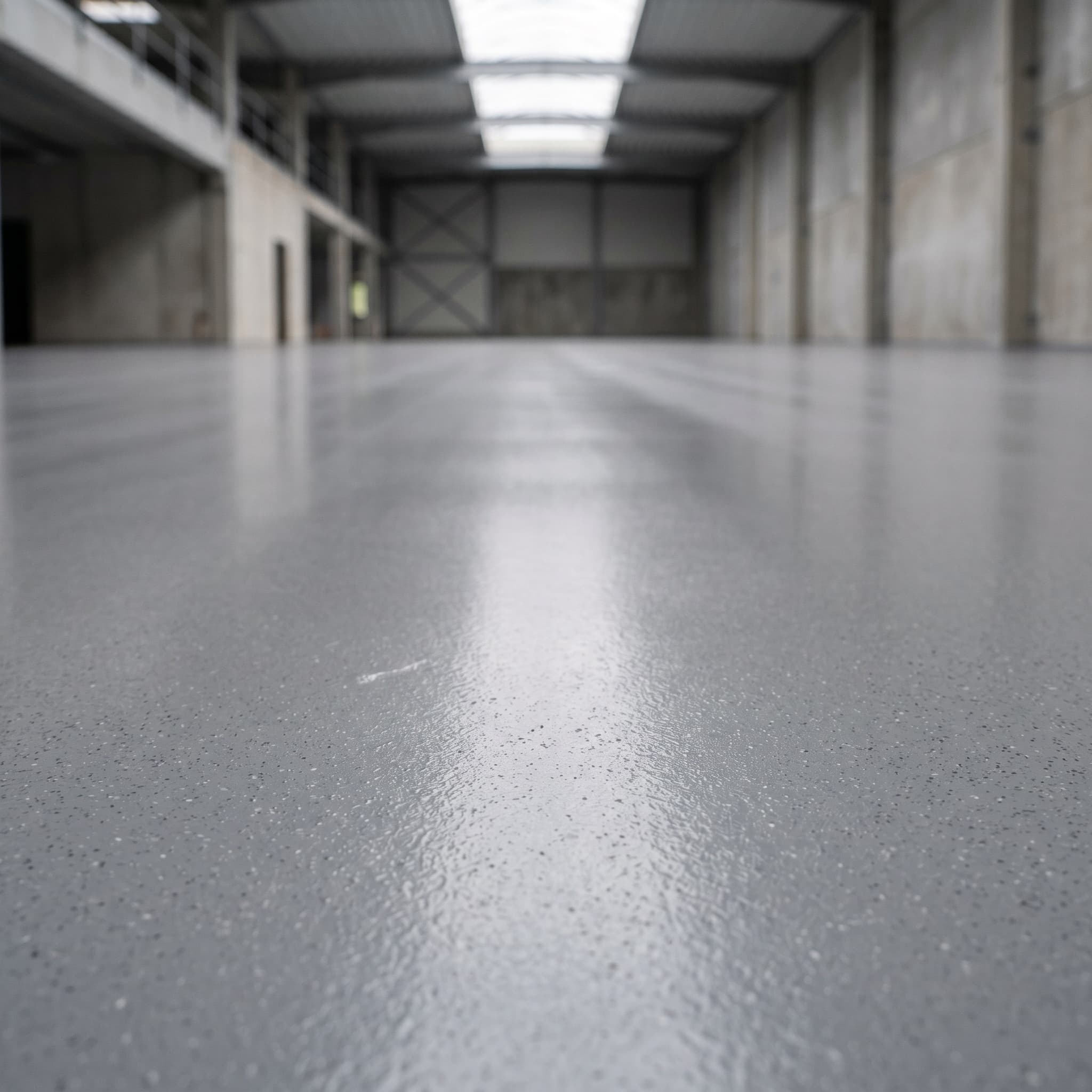
Macro of cured industrial grey commercial epoxy topcoat.
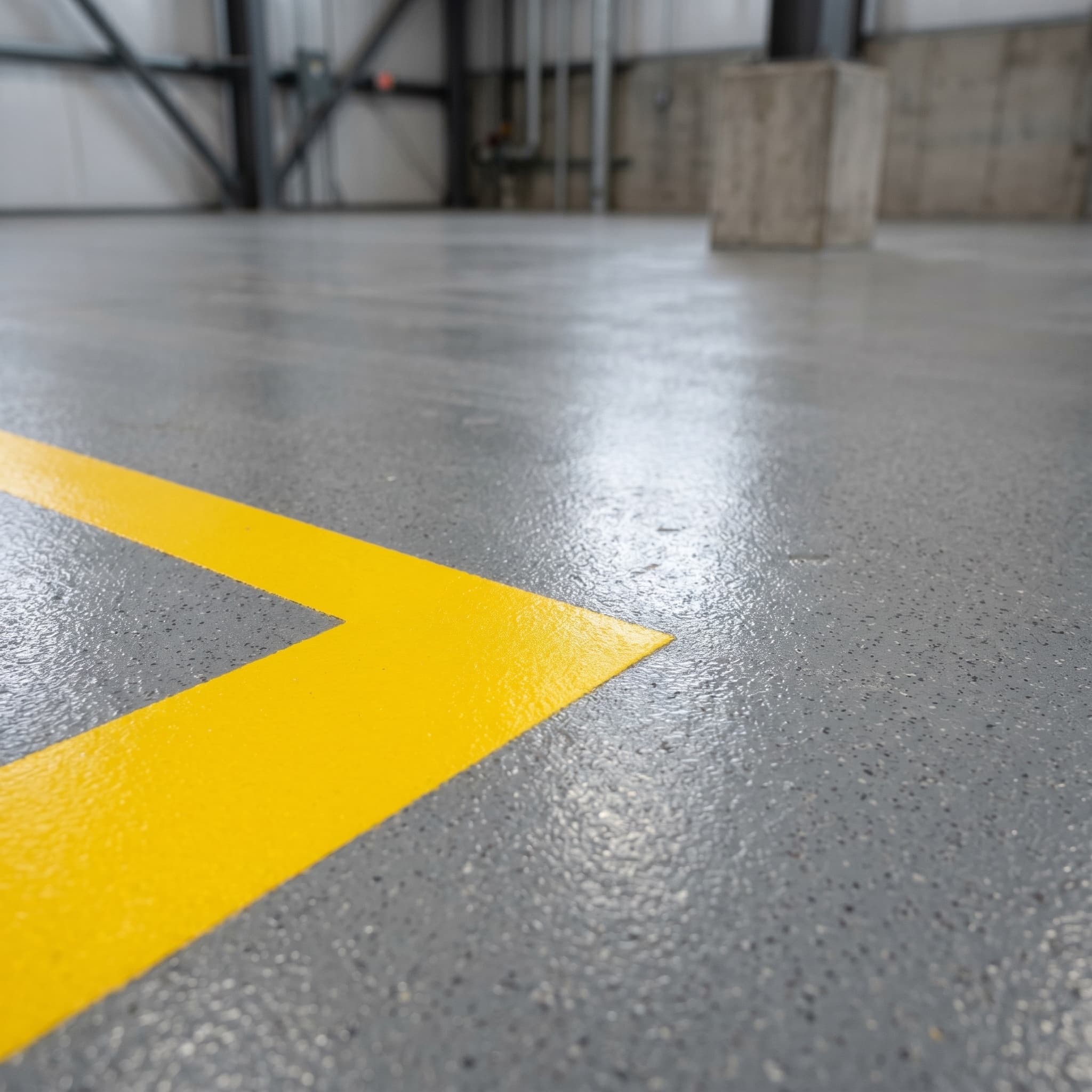
Yellow safety lane stripe against grey commercial epoxy floor.
Compared to

Commercial floor options compared, by what they actually deliver

A commercial buyer usually weighs a few options that show up in every vendor pitch. Those are polished concrete, industrial vinyl tile, a single coat of epoxy from a low bid, and the full system built in layers. Here is the honest breakdown. Each row shows what the option really costs you in daily use, not what the sales deck claims.

Polished concrete
No coating to peel, and the upkeep stays low for years. The catch is forklift point loads on softer slabs, plus chemical staining that needs sealer recoats.
Acceptable
Industrial vinyl tile (VCT)
Cheapest spec up front. It needs regular stripping and waxing, and it lifts at the seams under warm tires and forklift traffic.
Skip
Single coat epoxy from a low bid
Looks like a real system on day one. It skips the shot blast and the mortar layer, then fails in 18 to 30 months in any forklift zone.
Skip
Urethane mortar for food and chemical plants
The hardest commercial flooring made. It runs a premium price, and it's overkill outside hot wash down food plants or harsh chemical exposure.
Recommended
Commercial epoxy and polyaspartic built in layers
The system we described above. Built for forklift traffic, striped inside the coating, and phased around your production.
Recommended
The install

From quote to walk-on, fast.

STEP 01

Free Quote

Submit a few photos or book a free 15-minute on-site visit. The result: a fixed written quote, not an estimate range.

STEP 02

Floor Prep

Diamond-grind the slab, patch every crack, vacuum-fill control joints, and prime against moisture vapor.

STEP 03

Coating

100% solids epoxy base, a full flake broadcast for grip and depth, then a polyaspartic topcoat.

STEP 04

Cure & Enjoy

Walk on it the same evening. Park on it 24 hours later.

Before you book

What a commercial buyer should confirm before issuing a PO

The questions that catch a bad commercial bid aren't the ones a homeowner asks. Here is what to push on before you sign the contract.

What cure window do you need, and how does it fit our production schedule?

Standard polyaspartic over a thick epoxy mortar needs about 24 hours before foot traffic and 72 hours before heavy forklift use. A well phased install does one bay or one aisle at a time on weekends or overnight, so the operation never shuts down. Get the phasing plan in writing as part of the quote, not as a spoken promise.

What's the VOC level of the products you're installing, and do we need to ventilate or shut down nearby workstations during install?

Both 100% solids epoxy and polyaspartic give off low to moderate VOC. The cheaper urethane paints give off more. Still, low is not the same as zero. A good installer hands over the SDS sheet for every product used on the job. They set a ventilation plan for the cure window. They also work with your facility manager on which nearby areas to seal off. If nobody can produce those SDS sheets when they walk the floor, treat it as a warning.

Are the traffic lane stripes really inside the coating, or painted on top after?

The durability gap is real. Stripes painted after the topcoat get scrubbed and worn off in 12 to 24 months, then they need a repaint. Stripes set between the base and the topcoat last as long as the coating itself, because the polyaspartic seals them in. Specify which method the quote covers.

What does the installer stand behind, bond failure or normal wear?

Pin down the coverage with your installer in writing before any work starts. On a commercial floor, the thing that matters is whether the coating stays stuck to the slab through years of forklift traffic and washdowns. Ask them to spell out, on paper, what they stand behind and what counts as normal wear. Be wary of anyone who promises a floor that lasts forever. On a working warehouse slab, that kind of claim rarely holds up.

Can you share references from current accounts in our weight class?

A real commercial installer has live accounts you can walk through. Ask for two or three references where the floor is at least three years old. Then go visit one in person. The condition of a floor that age tells you far more than any spec sheet ever will.

After the install

How a commercial floor holds its finish over the years

Commercial upkeep is operational, not optional. Floor scrubbers that match epoxy and polyaspartic topcoats are fine. Rotary buffers with harsh pads, though, will slowly polish through the topcoat. Spilled hydraulic oil, brake fluid, and most solvents wipe off if you catch them the same shift. The most common reason a topcoat dulls at the dock door is salt brine tracked in by delivery trucks in winter, so a winter mat and a damp pass on Monday morning keeps the gloss intact. In a busy warehouse, a fresh polyaspartic topcoat every few years is normal, and it goes on without disturbing the base mortar. Quiet offices can usually wait far longer.

  • Run a floor scrubber daily in production areas. Pad choice matters, so check with the installer first.
  • Catch salt and de icer at the dock doors with a winter mat and a damp pass on Monday.
  • Wipe up hydraulic oil, brake fluid, and solvent spills the same shift. Sitting overnight is when staining bakes in.
  • Check the topcoat at the racking footprints once a year. Wear there is the early warning that a fresh coat is due.
  • Plan a topcoat refresh every few years in heavy traffic, and far less often in office and showroom space.
See the work

What a finished warehouse floor looks like

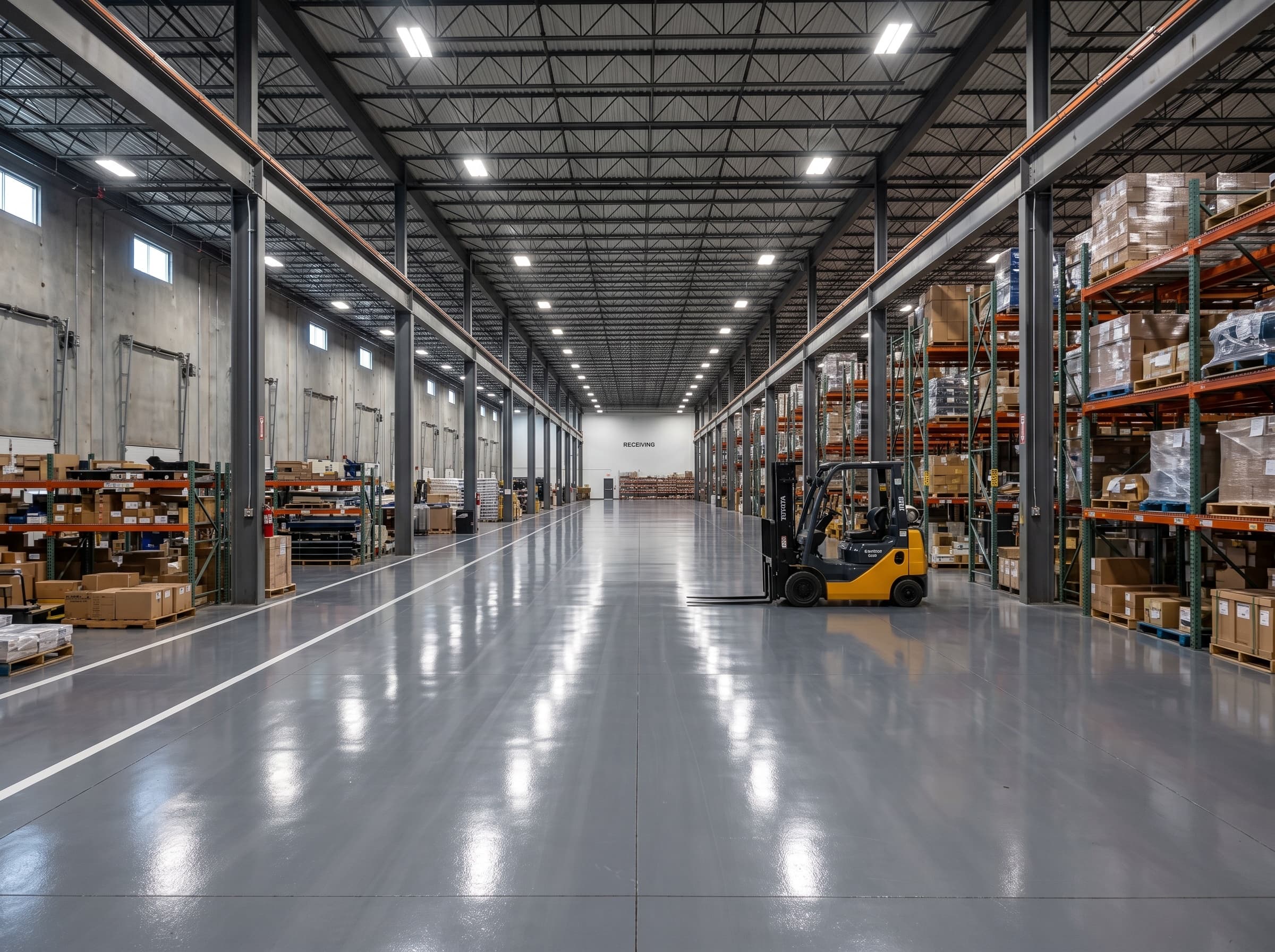
Wide commercial warehouse with grey epoxy floor and traffic lanes.
FAQ · Commercial / Warehouse Epoxy

Questions commercial accounts ask before installing

A properly installed three coat polyaspartic system on a home garage in Michigan usually lasts well past a decade before it needs any recoat. The wear layer is harder than industrial sealer. That hardness is why salt, warm tires, and the freeze and thaw swing of our winters never break it. Cheaper single day kits from a chain store tend to fail inside two or three winters, because they skip the moisture primer and lean on a softer topcoat.
Epoxy is the base layer that bonds to the concrete. Polyaspartic is the topcoat that adds UV stability, chemical resistance, and a fast cure. A floor that is epoxy only stays softer, yellows in sunlight, and stays tacky longer while it sets. A good install uses both, so an epoxy primer grips the slab and a polyaspartic top lets a car roll back in within a day. Most quality crews in Michigan run that same stack for that same reason.
The number rests on three things. Those are square footage, slab condition, and the finish you pick. A slab with deep cracks, oil soaked spots, or moisture trouble adds prep work, and that prep raises the cost. Metallic and heavy flake finishes sit at the upper end. You get a fixed written quote after a free walk through on site, with no vague ranges and no surprise extras once the crew starts. Most honest crews will not post a price per square foot, since that figure misleads anyone before they see the actual slab.
Yes, and the season barely matters. The whole job happens indoors. As long as the garage holds around 55 degrees while it cures, the coating sets fine. Most winter jobs run a portable heater for a few hours during the topcoat stage. Spring and fall stay the busiest stretch for crews around here, so a winter slot often books faster for a Troy homeowner who wants the floor done before the next salt season rolls in.
Warm tire pickup is the failure that quietly ruins cheap epoxy coatings. A polyaspartic topcoat cures harder than the rubber of a tire. Because of that, it stays locked to the base coat even after a long summer drive. Many quality crews fold a first year callback into the work for tire transfer or any lift, so it pays to ask each crew about their callback policy before you sign anything.
Ready when you are

Get a fixed quote on your Troy epoxy floor this week.

Free on-site walk-through and a one-day install on most residential garages.

Call (947) 218-1225Get My Free Quote
Call NowFree Quote